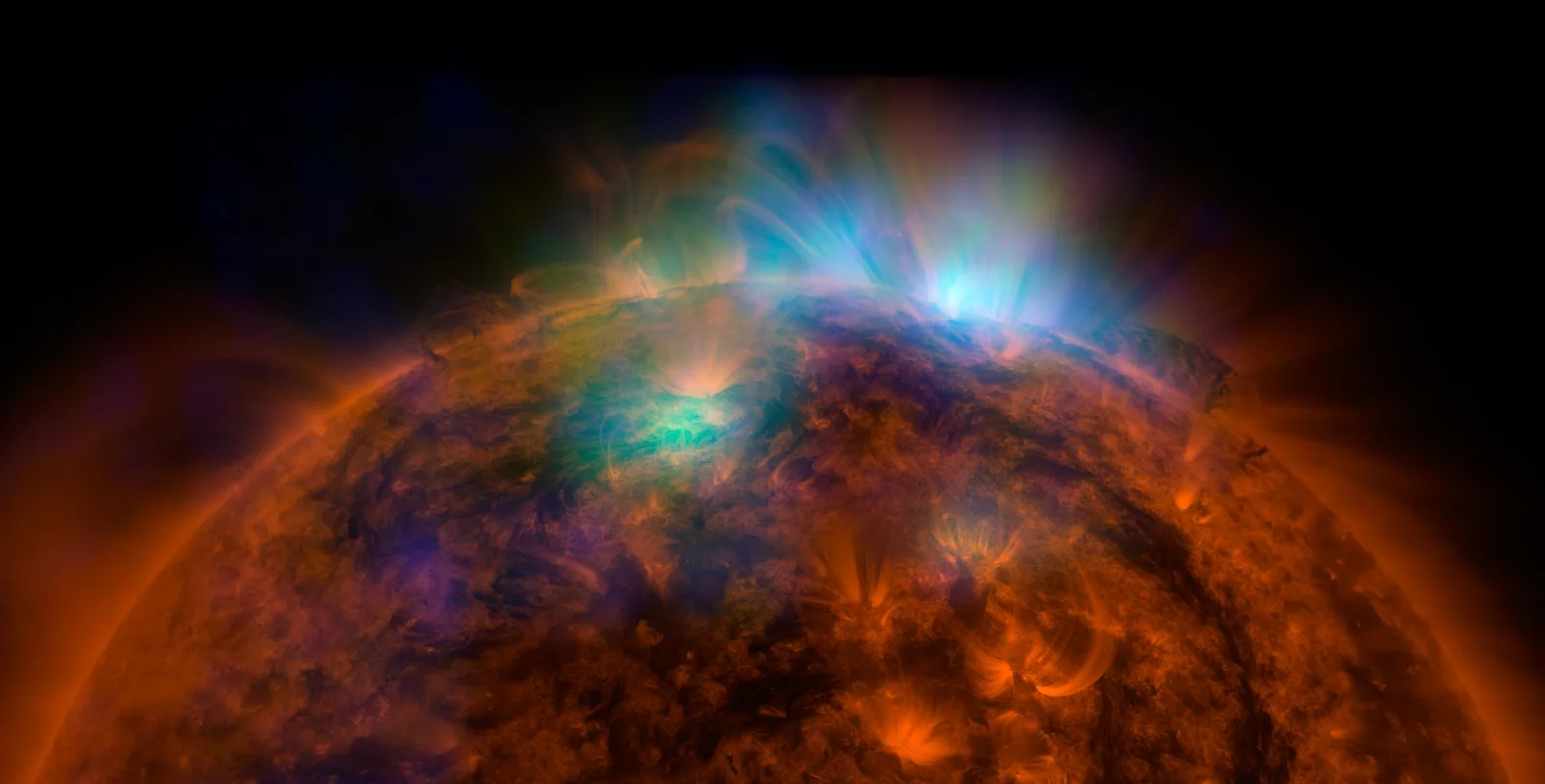
The Ghost Particles Passing Through You
Right now, trillions of them are streaming through your body every second, and almost none will touch a single atom. Catching a few has let us see inside the Sun and watch a star explode.
Read article
The Mission to Grab a Piece of a Martian Moon
Mars has two small, mysterious moons, and no one is sure where they came from. In late 2026 a Japanese spacecraft is set to launch, land on the larger one, and bring a piece of it home.

The Little Red Dots That Shouldn't Exist
When JWST looked deep into the early universe, it found a swarm of tiny, intensely red points of light. The leading answer would mean black holes appeared before the galaxies that should have made them.

The Black Hole Too Small to Be a Star's Ghost
Stars cannot leave a black hole lighter than the Sun. In late 2025 a gravitational-wave detector caught a signal hinting at exactly that, possibly a relic of the Big Bang, and dark matter.

The Telescope Mapping the Dark Universe
Ordinary matter, everything we can see, is a rounding error in the cosmos. The rest is dark matter and dark energy. A European space telescope is building a 3D map of the invisible across ten billion years.

The Search for the Sun's Lost Family
The Sun was not born alone. It formed in a cluster with thousands of sibling stars that long ago scattered across the galaxy. Using a spacecraft that mapped a billion stars, astronomers are hunting them down.

The Collision That Came In Sideways
Theory assumed colliding compact objects settle into near-perfect circles before merging. Then astronomers reanalyzed a black hole swallowing a neutron star and found the two spiraled in on an oval.

The Comet That Was Almost Great
It was billed as the great comet of 2026, a naked-eye visitor from the deep. It delivered a modest glow instead, and in that quiet disappointment lies an honest truth: comets cannot be predicted.

The Coldest World We Have Ever Photographed
Almost every planet we have imaged directly is a young, glowing furnace. Then JWST captured a mature, frigid super-Jupiter twelve light-years away, near the freezing point of water, with clouds of ice in its sky.

The Planet That Almost Had a Sign of Life
In 2025, a team announced a gas in a distant world's air that, on Earth, is made almost only by living things. Then the scrutiny began, and it became a case study in how hard it is to claim life.

How to Spot a Civilization From Light-Years Away
An advanced civilization might betray itself not with a message but with its machinery: the waste heat of a star wrapped in solar panels, a chemical stain in an alien sky, a structure too vast to hide.

The Equation That Tries to Count Alien Civilizations
In 1961, a young astronomer wrote seven terms on a blackboard to organize a single impossible question: how many civilizations in our galaxy might we be able to talk to?

The Giant Lobes Rising From the Milky Way
In 2010, a space telescope revealed two colossal balloons of energy tens of thousands of light-years above and below the center of our galaxy, the scar of something enormous the Milky Way did in its past.

How We Measure the Distance to the Stars
You cannot lay a tape measure to a galaxy. Astronomers built a ladder instead, each rung a different method calibrated by the one below, reaching from nearby stars to the edge of the observable universe.

The Fastest Particles in the Universe
Every second, particles from deep space slam into the atmosphere at nearly the speed of light. The most extreme carry the energy of a thrown baseball in a single atomic nucleus, and no one is certain what launches them.

The Ancient Cities of Stars
Scattered around every large galaxy are dense spheres of hundreds of thousands of stars, among the oldest things in the universe. They once revealed our true place in the Milky Way.

The Day We Left the Solar Bubble
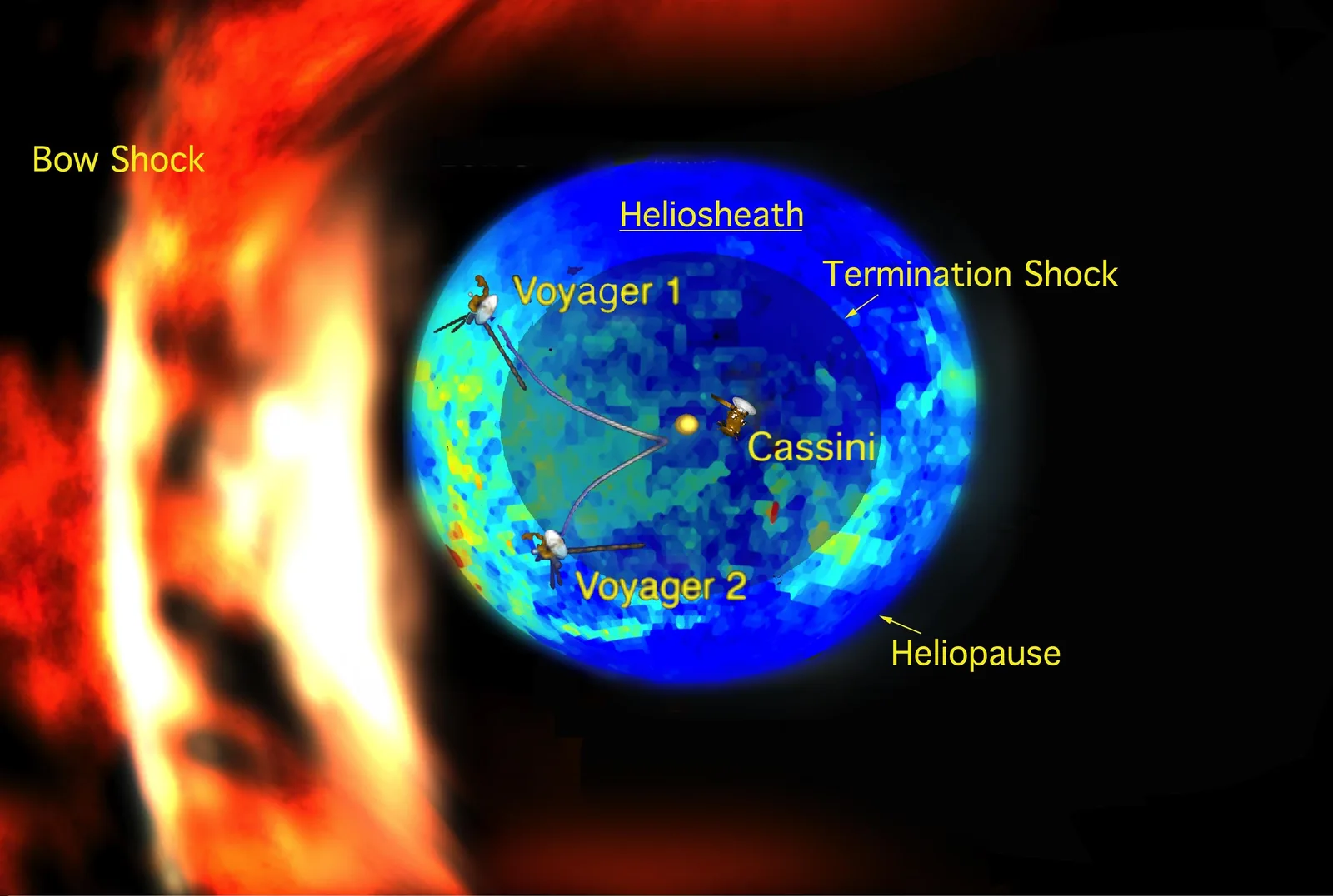
The Sun blows a vast bubble in the gas between the stars, and everything we call home lives inside it. In 2012 a spacecraft launched in 1977 crossed the invisible wall at its edge into interstellar space.

Where the Gold Came From
Every gold ring and platinum wire on Earth was forged in a collision so violent it shook spacetime. In 2017, astronomers watched two neutron stars merge in gravitational waves and light, and saw the universe make its heaviest elements in real time.

When a Black Hole Shreds a Star
Wander too close to a supermassive black hole and gravity becomes a weapon. The star is stretched into a stream of gas, half of it swallowed in a flare that can outshine a galaxy.

The Exploding Stars That Measure the Universe
A certain kind of stellar explosion always detonates at nearly the same brightness. That reliability turned dying white dwarfs into cosmic measuring rods, and in 1998 they revealed the universe's expansion is speeding up.

The Third Zone of the Solar System
Beyond Neptune lies a broad ring of icy worlds that no one confirmed until 1992. It reset the definition of a planet, demoted Pluto, and preserved a frozen record of how the solar system was born.

The Lighthouses at the End of a Star's Life
In 1967 a young researcher found a signal so regular it was half-jokingly labeled Little Green Men. It was a city-sized corpse of a star, spinning hundreds of times a second and sweeping a beam of radio light across the galaxy.

The Frozen Shell at the Edge of the Sun's Reach
Far beyond Pluto and the Kuiper Belt, the solar system may end in a vast spherical cloud of icy bodies reaching nearly a light-year out. We have never seen it, yet every great comet is a message from it.
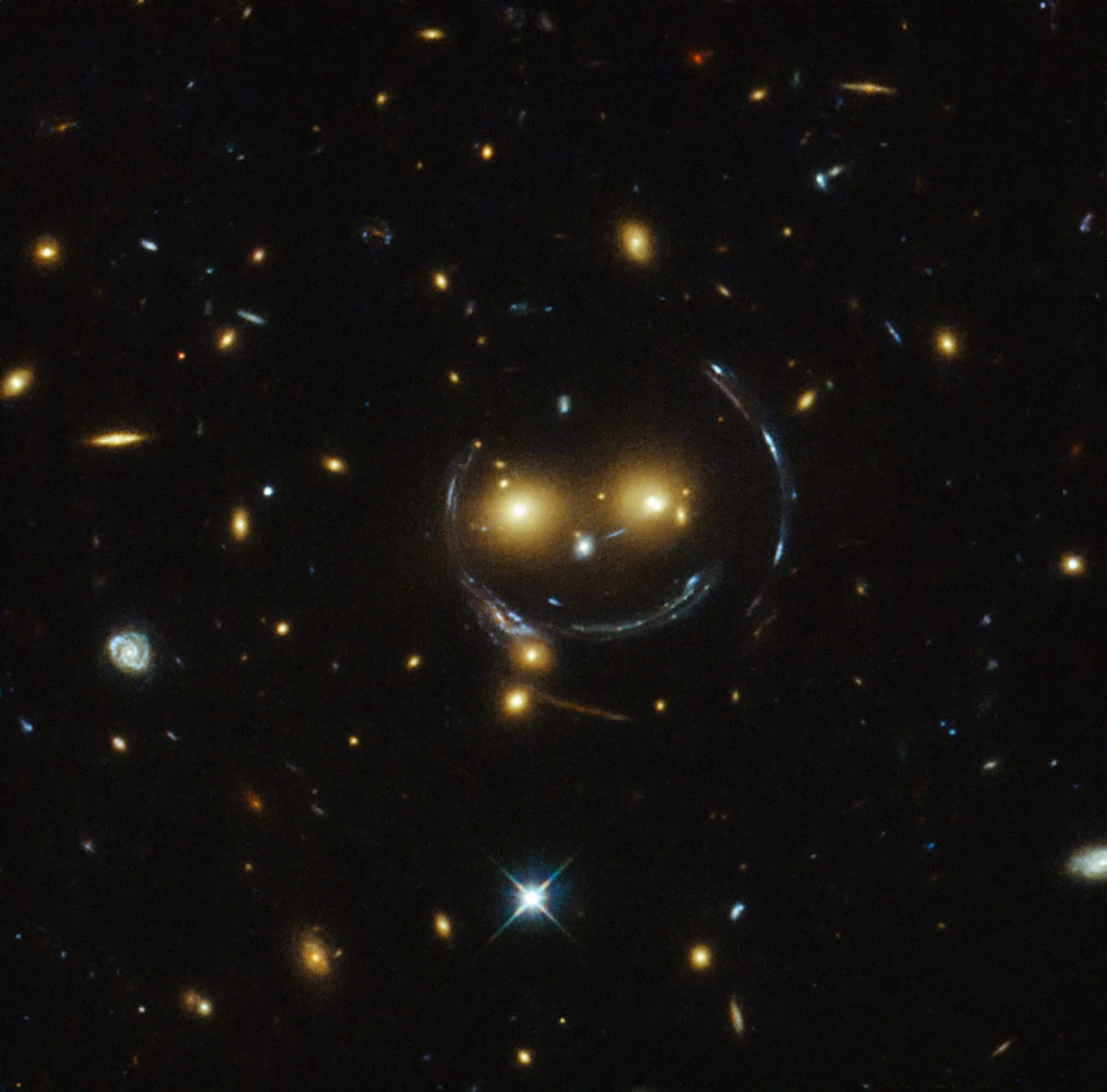
When Gravity Bends the Sky
Mass warps space, and light must follow the curves. Galaxies are smeared into arcs, multiplied into quartets, and bent into perfect rings, a cosmic lens astronomers now use to weigh the invisible.
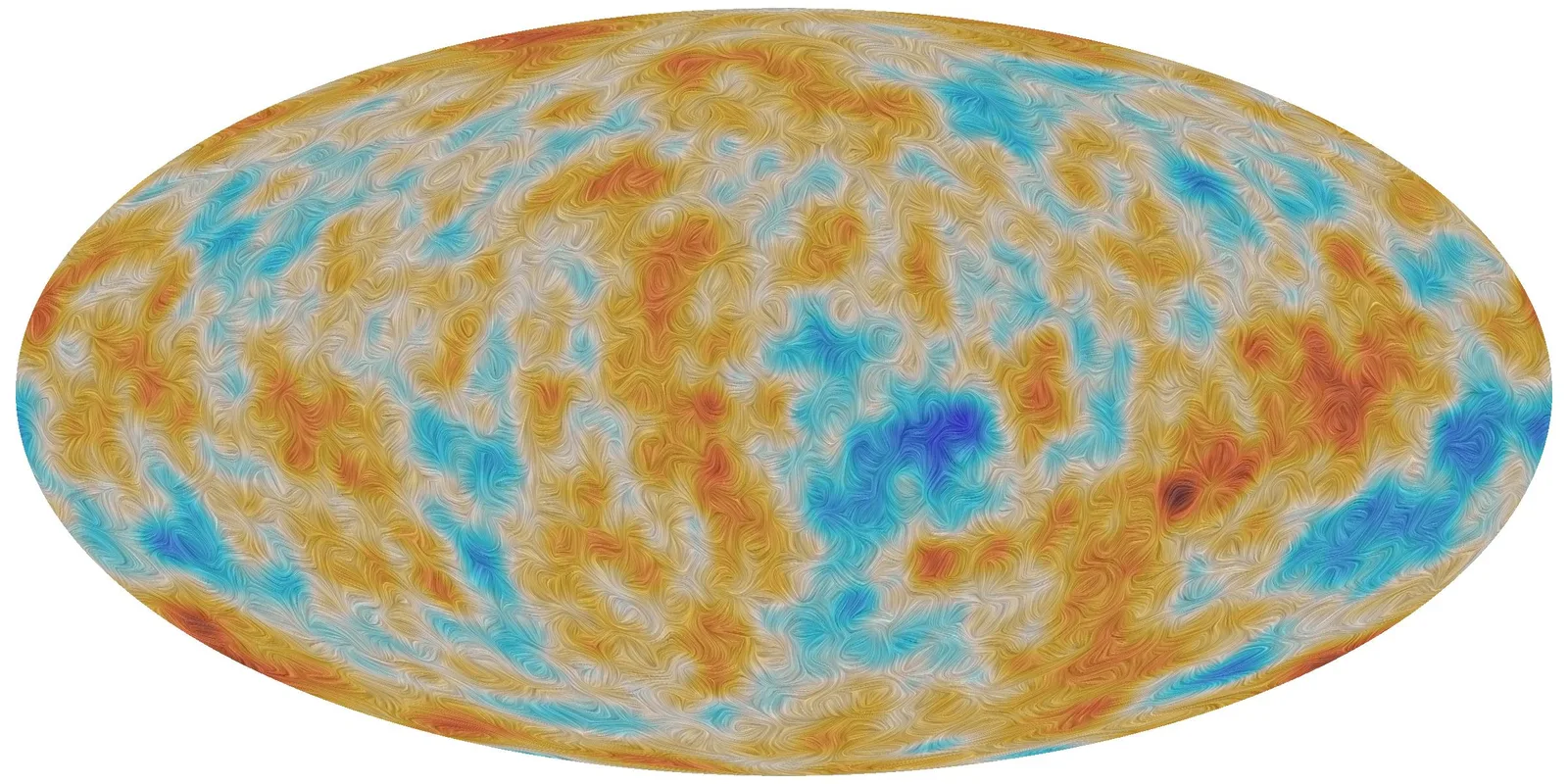
The Oldest Light in the Universe
Everywhere you point a radio dish, a faint glow answers back: the cooled afterglow of the Big Bang, released when the universe was 380,000 years old. It is the oldest light there is.

The Mission to a World Made of Metal
We can never drill to the center of the Earth. So NASA sent a spacecraft to the next best thing: 16 Psyche, a metal asteroid that may be the naked, exposed core of a planet that never finished forming.
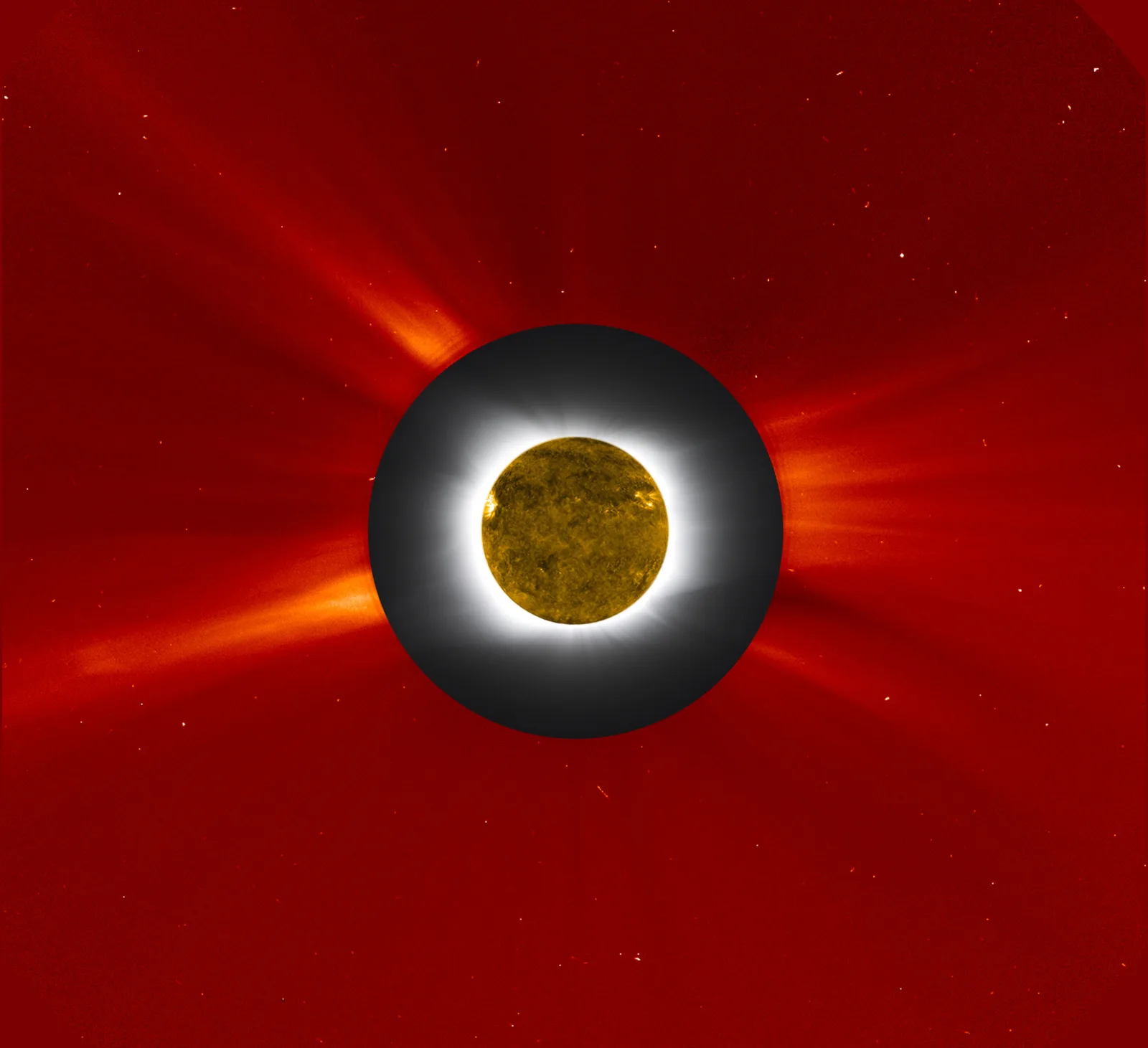
The Dust That May Solve the Sun's Hottest Mystery
The Sun's outer atmosphere is hundreds of times hotter than its surface, and nobody is sure why. Parker Solar Probe data points to an overlooked culprit: the charged dust drifting through the corona itself.
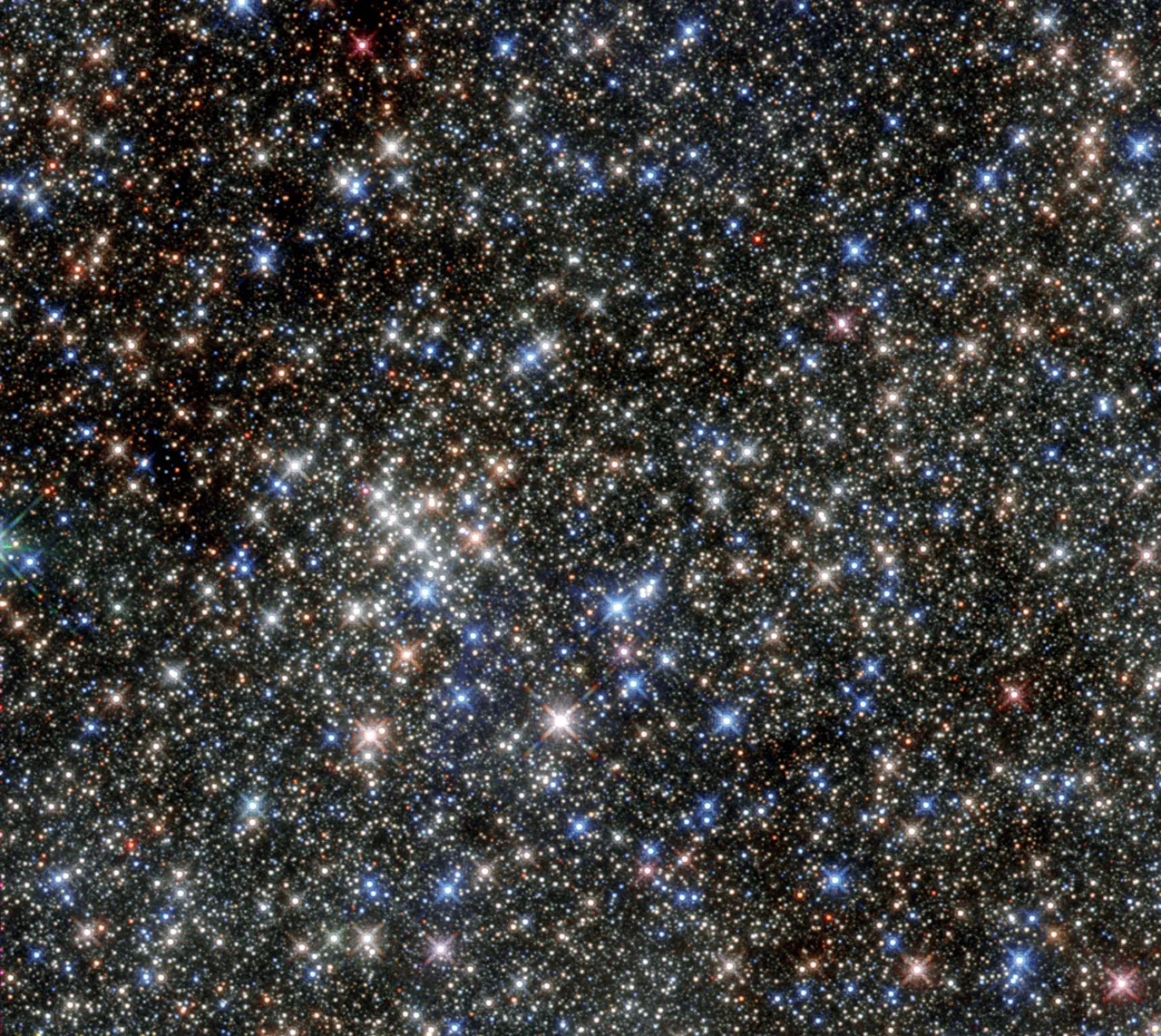
The Star We Saw Before It Died
For the first time, JWST identified the exact star that would become a supernova: a red supergiant hidden inside a cocoon of its own dust, blazing with the light of a hundred thousand Suns.
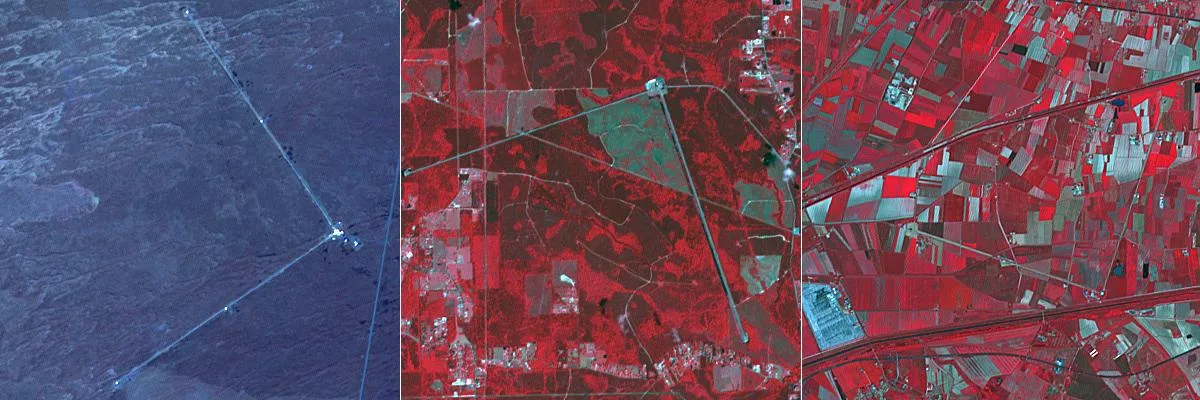
The Census of Colliding Black Holes
In one release, the number of gravitational-wave detections more than doubled. The fourth LIGO-Virgo-KAGRA catalog turned a handful of collisions into a population, and inside it sat a black hole that should not exist.
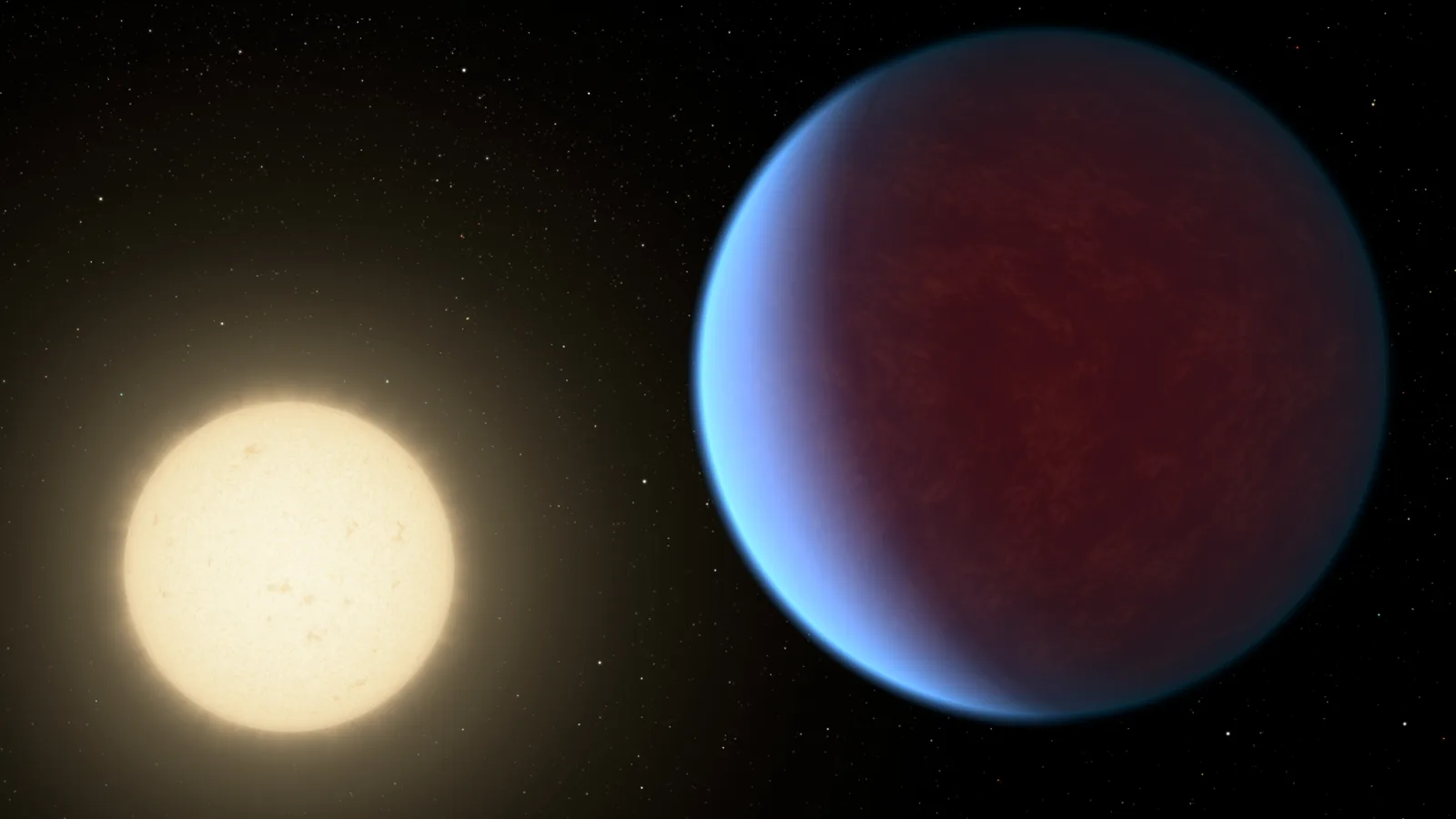
The World That Breathes Sulfur
Thirty-five light-years away, the super-Earth L 98-59 d has no solid ground. A permanent ocean of magma feeds a sky laced with sulfur, and it may be the first of a new class of planet.
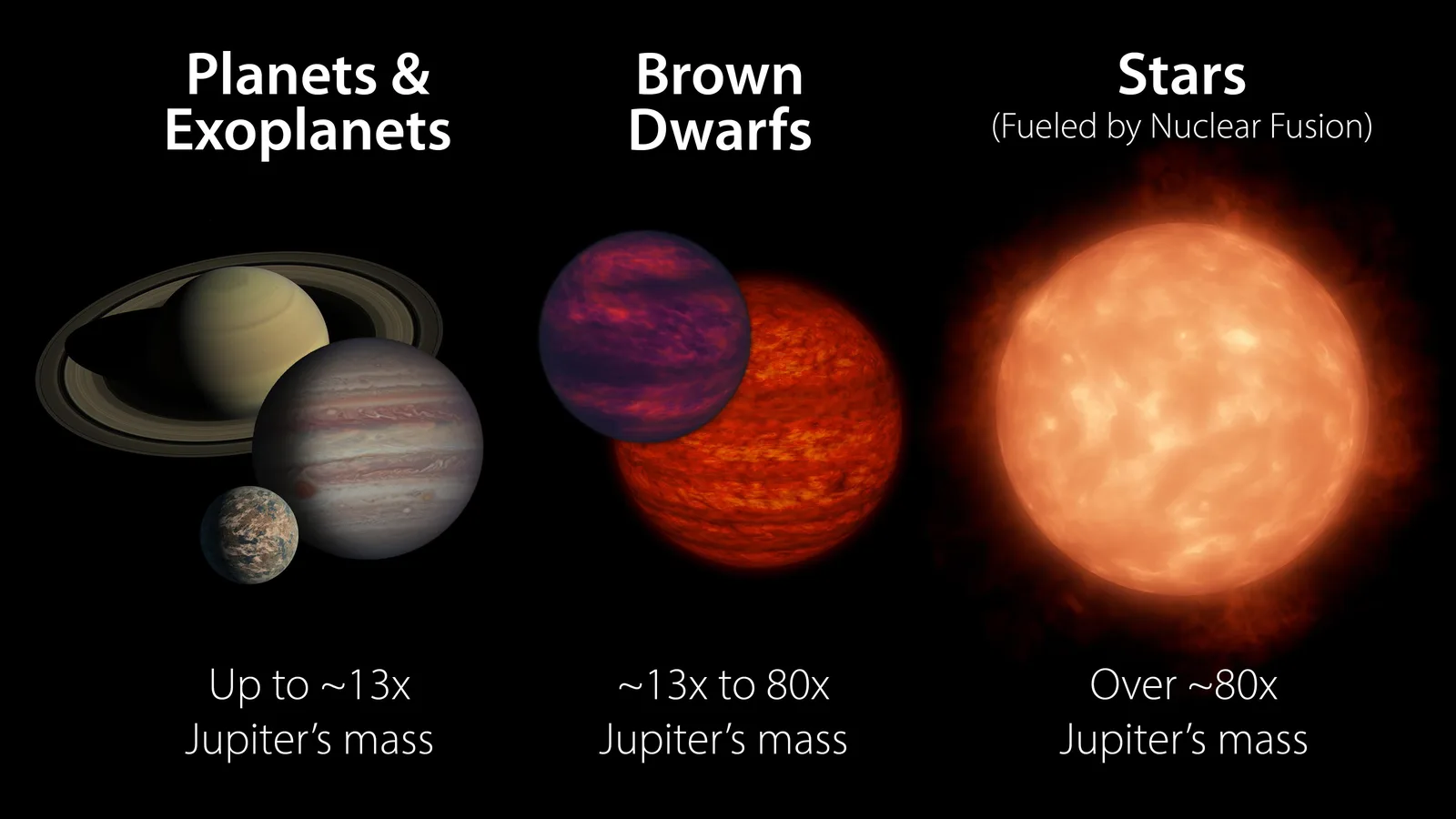
The Stars That Almost Were
Brown dwarfs are too heavy to be planets and too light to ignite as stars. They are the objects the galaxy started building and then quietly set aside, and the coldest of them now hovers near the freezing point of water.
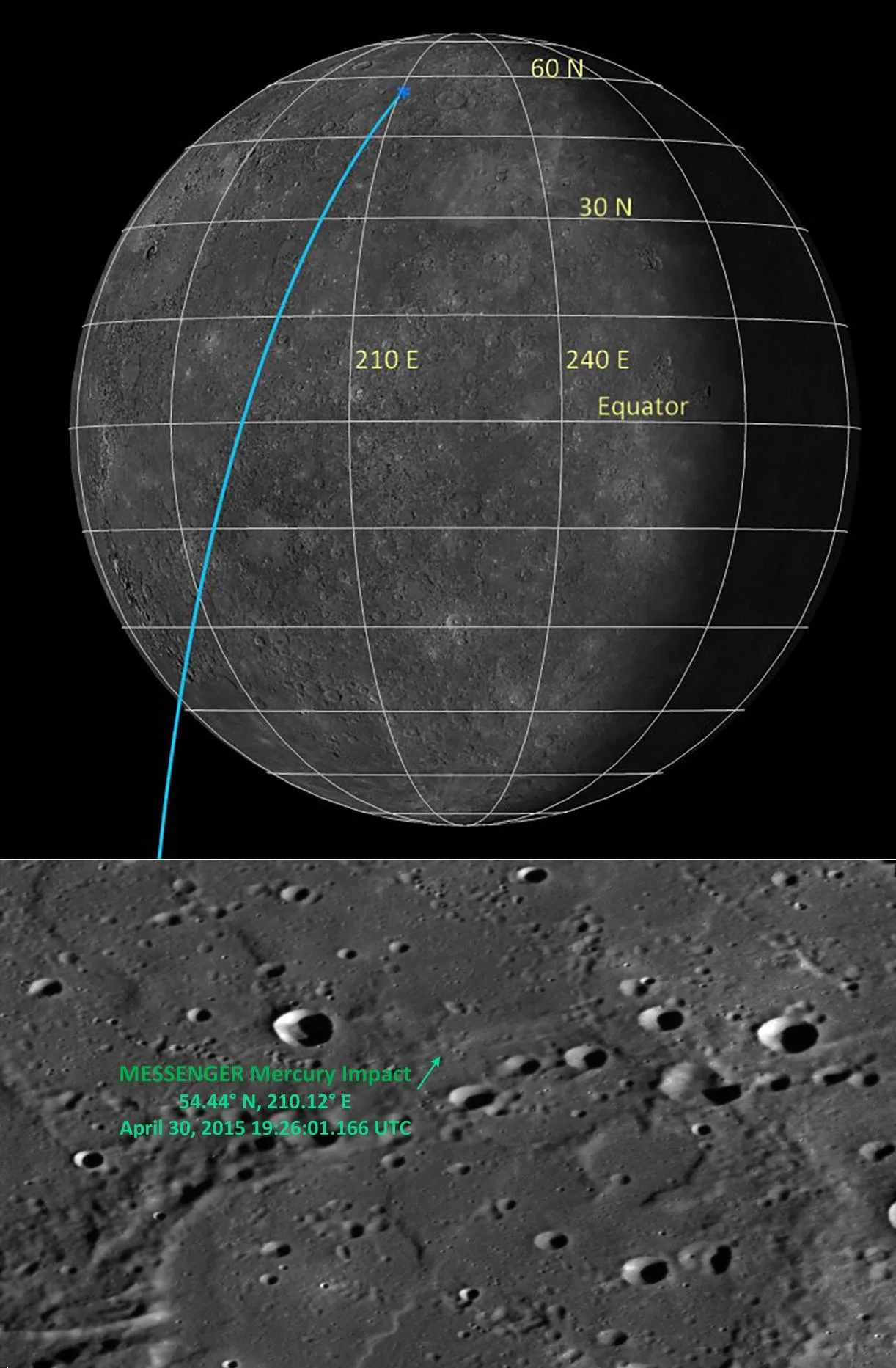
Three Missions That Make 2026 Europe's Year in Space
A planet hunter with 26 eyes, a spacecraft photographing Earth's invisible shield, and a probe finally reaching Mercury. Inside the science of ESA's flagship year.
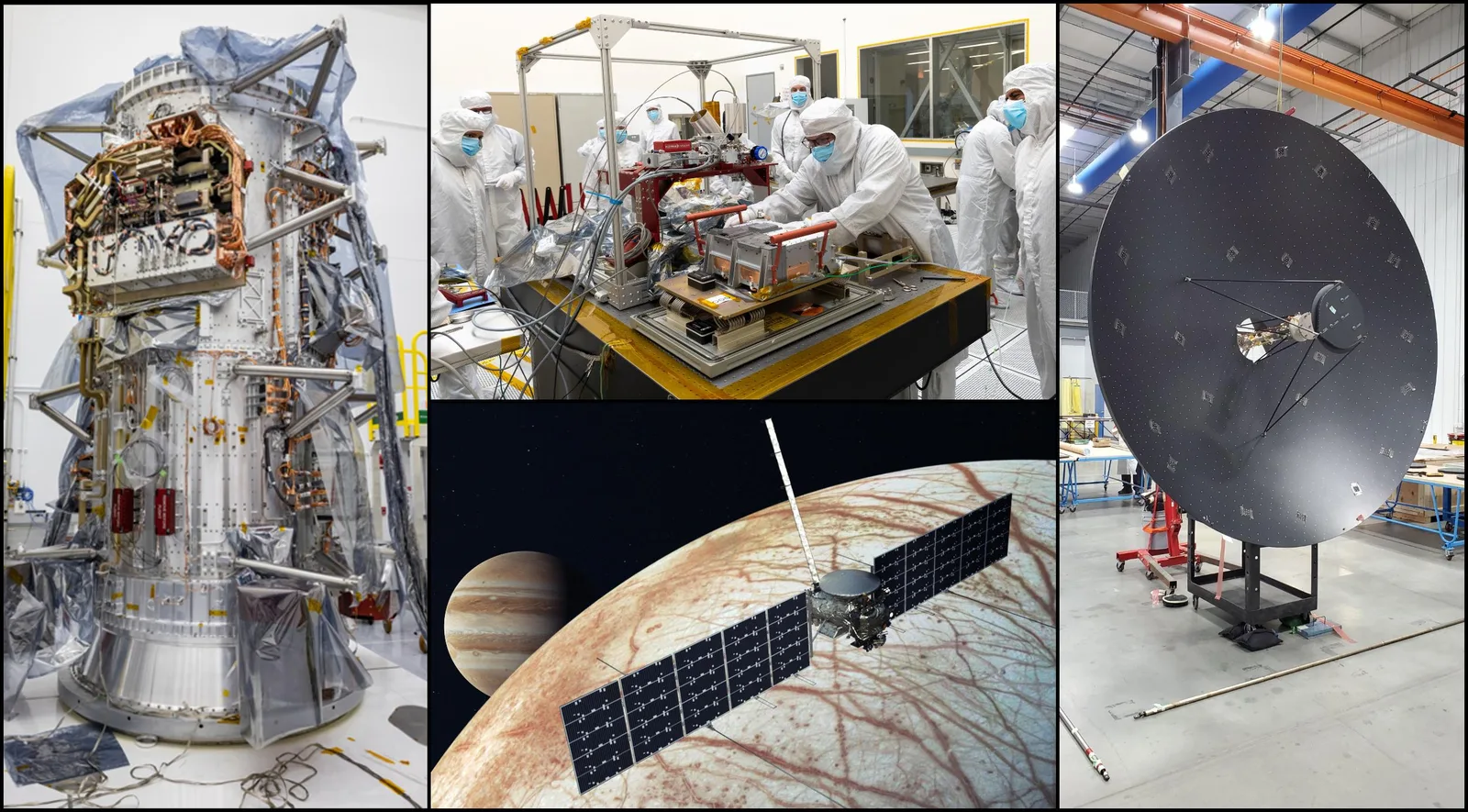
The Spacecraft Built to Decide If an Alien Ocean Is Habitable
Europa Clipper, the largest spacecraft NASA has ever sent to another world, is racing toward a Jupiter moon that may hide twice the water of all Earth's seas. It will not look for life. It will judge whether life could survive there.
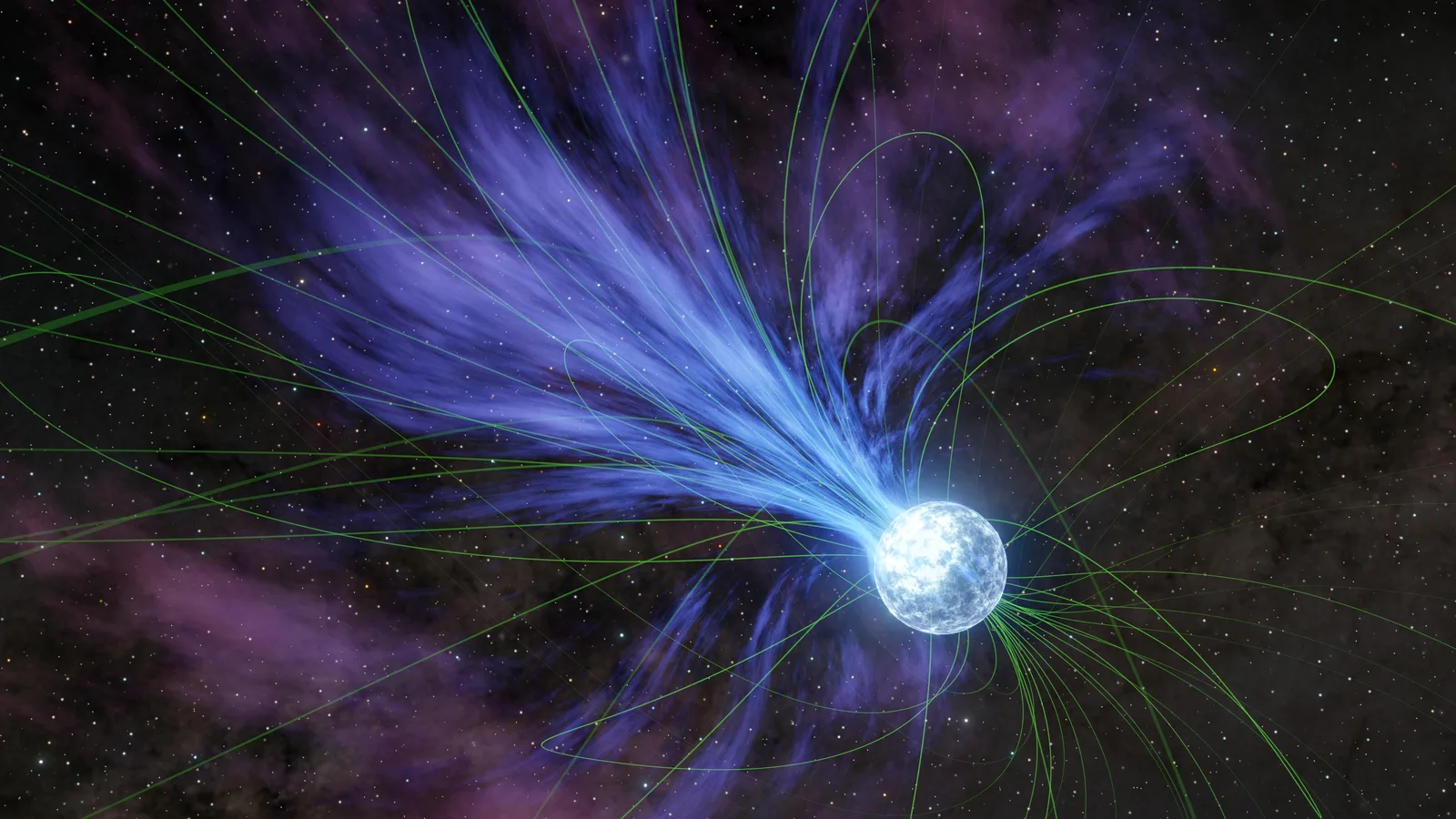
The Dead Star That Emits a Mix of Radiation No One Has Seen
A stellar corpse in the Scutum arm pulses in radio waves and X-rays every 44 minutes. It does not behave like a magnetar, a pulsar, or a white dwarf. Astronomers are not sure what it is.
Why There Is Something Instead of Nothing
The Big Bang should have made matter and antimatter in perfectly equal amounts, and they should have annihilated each other completely, leaving a universe of pure light. Instead, about one particle in a billion survived to build everything. Physics still cannot fully explain why.
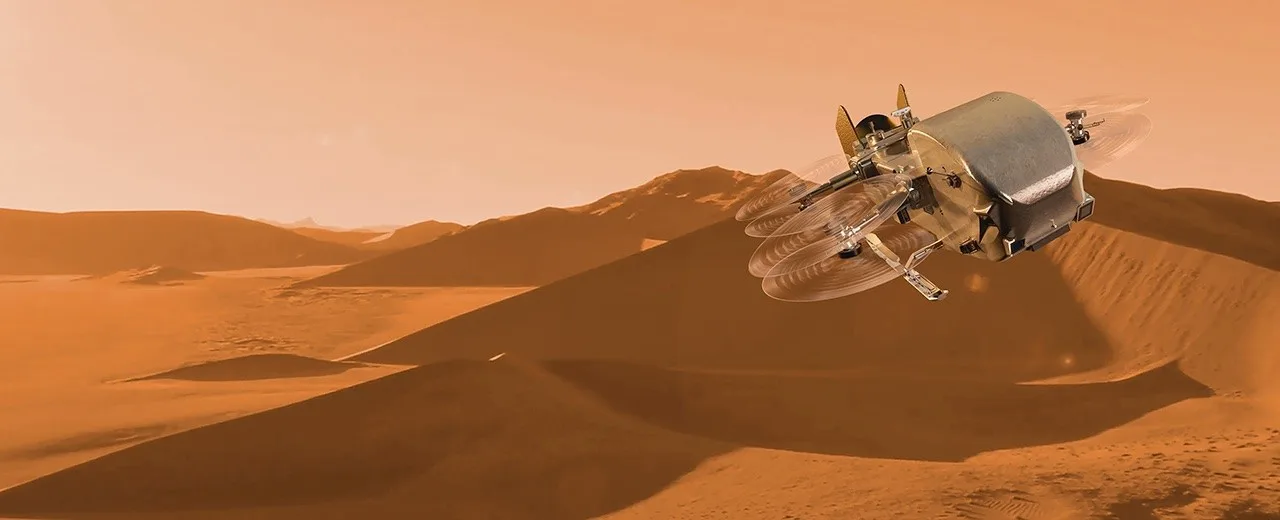
NASA Is Sending a Nuclear Drone to Fly Across Another Moon
Dragonfly, a car-sized rotorcraft powered by plutonium, will spend years flying between the dunes and craters of Saturn's moon Titan, the only other world with rivers, rain, and a thick sky of its own.
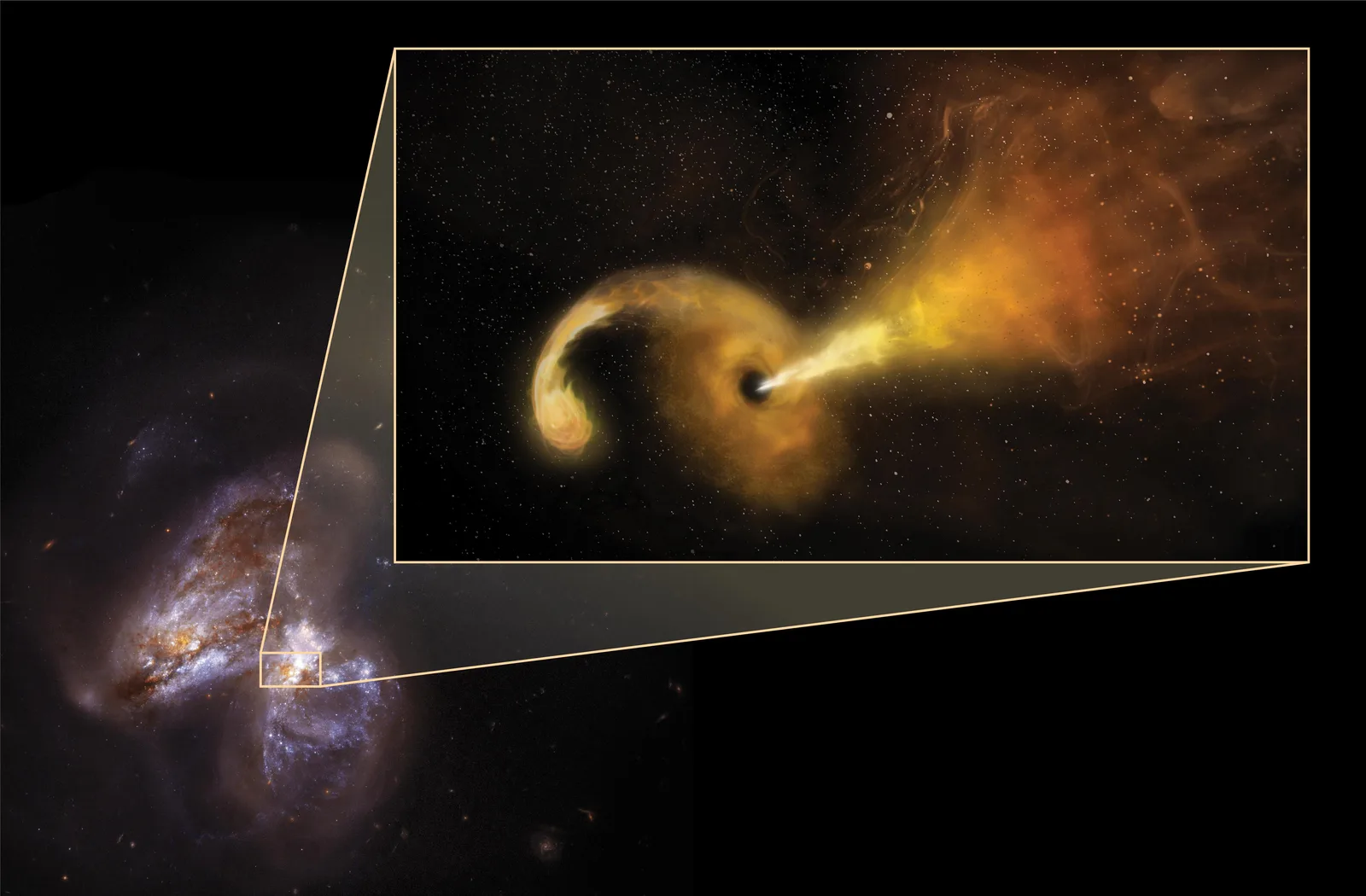
The Supernova a Machine Saw Before Anyone Else
A star 730 million light-years away brightened for four years, exploded, then exploded again. No human flagged it. An algorithm built to find the strange did, and the picture it pieced together was a dying star wrestling a black hole.
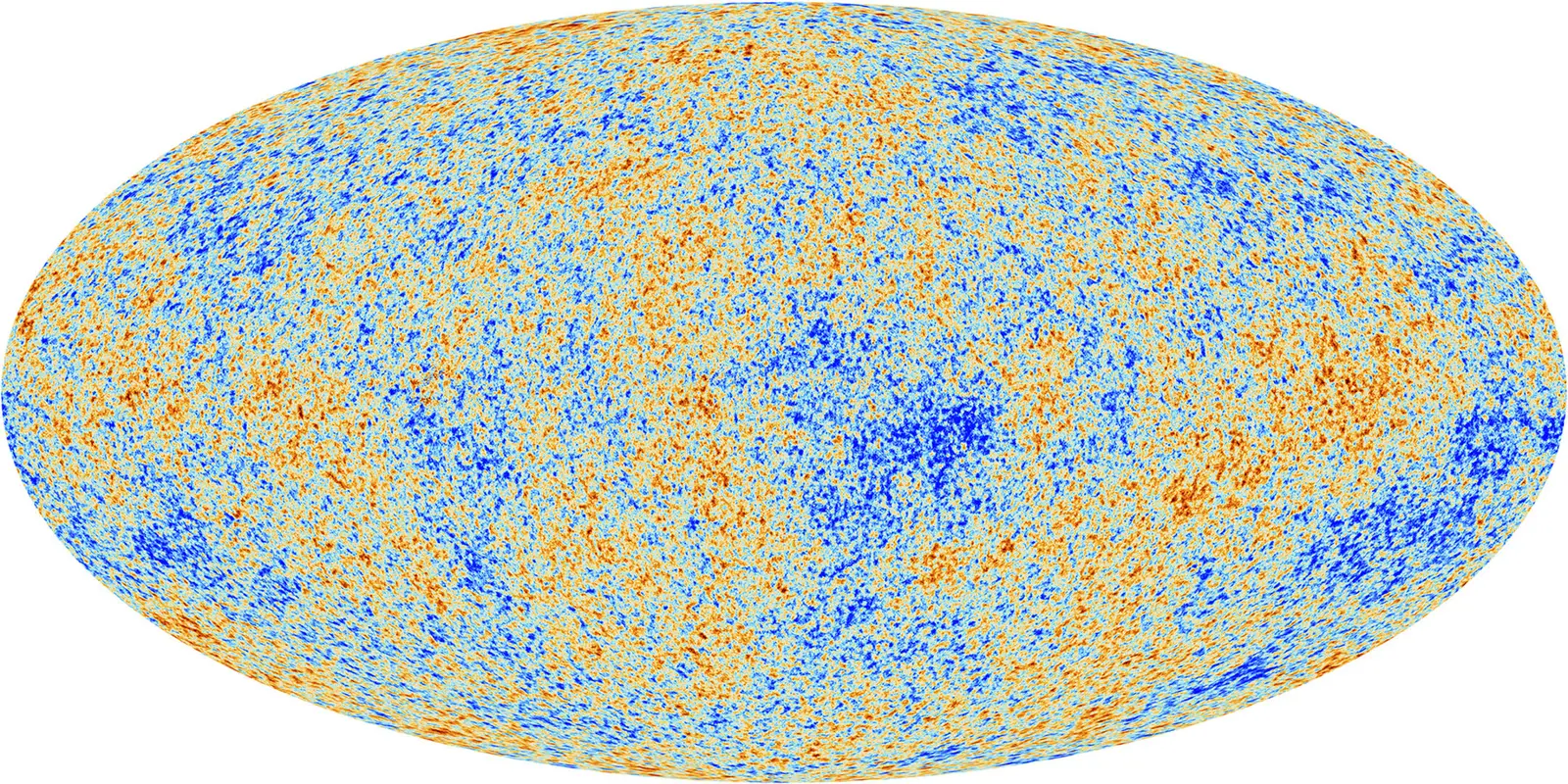
The Fraction of a Second That Made Everything
Cosmic inflation says the universe expanded faster than light in its first instant, smoothing space and seeding every galaxy from quantum noise. The proof would be a faint twist in ancient light, and it has not yet been found.

The Explosion That May Have Detonated Twice
In August 2025, a faint gravitational tremor and a fading point of light arrived together from 1.3 billion light-years away. Astronomers had theorized this combination for years. They had never seen it. They are calling the candidate a superkilonova.
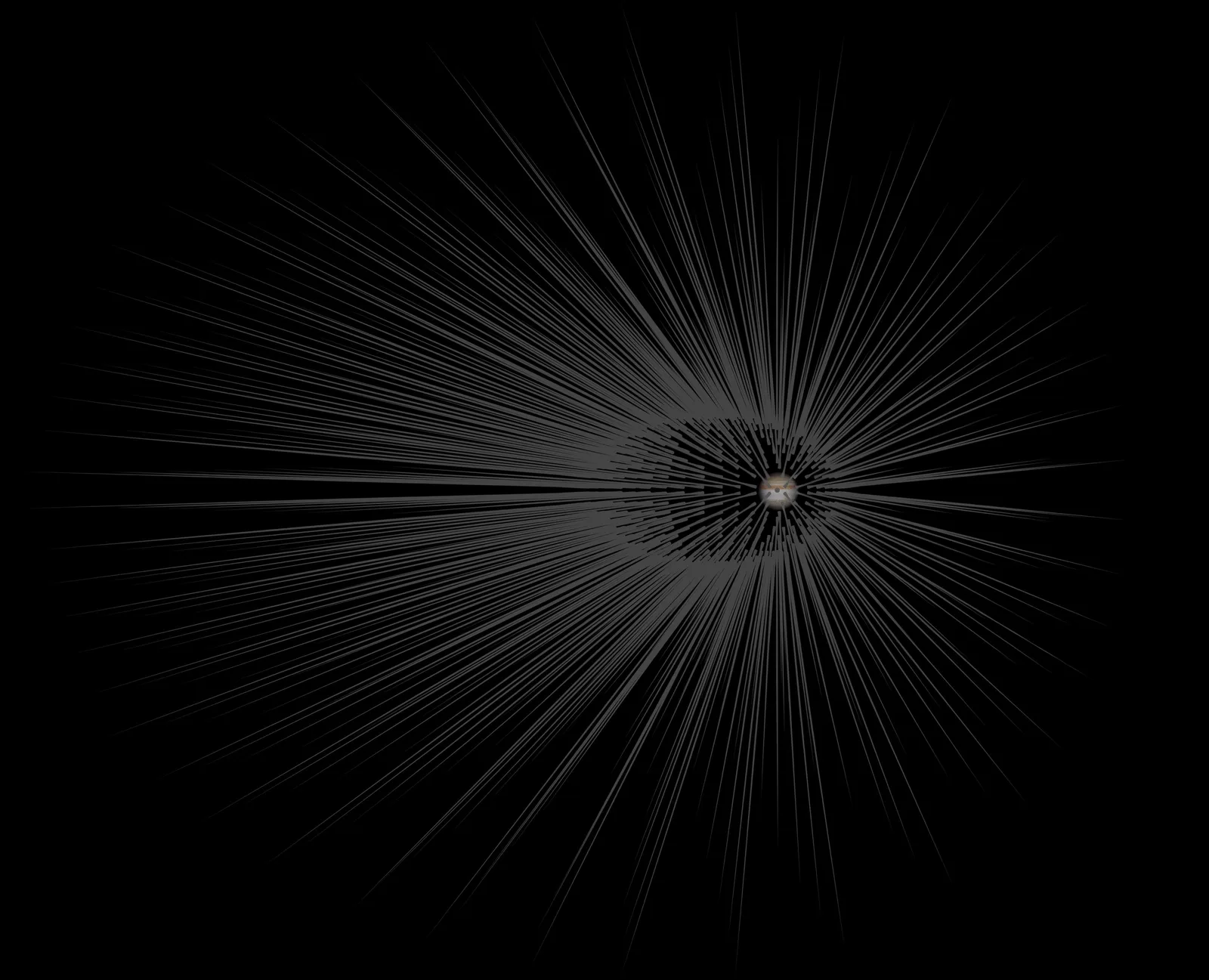
The Two Ghosts of the Cosmos May Be Touching
Dark matter and neutrinos are the universe's most elusive residents, each almost incapable of feeling anything. A growing body of cosmological evidence asks whether they feel each other.
We Live Inside the Wreckage of Exploded Stars
A thousand light-years across, the Local Bubble is a cavity blown into the galaxy by a string of ancient supernovae. Our solar system is drifting through the middle of it, and the explosions left fingerprints on the ocean floor.
The Planet That Webb Actually Photographed
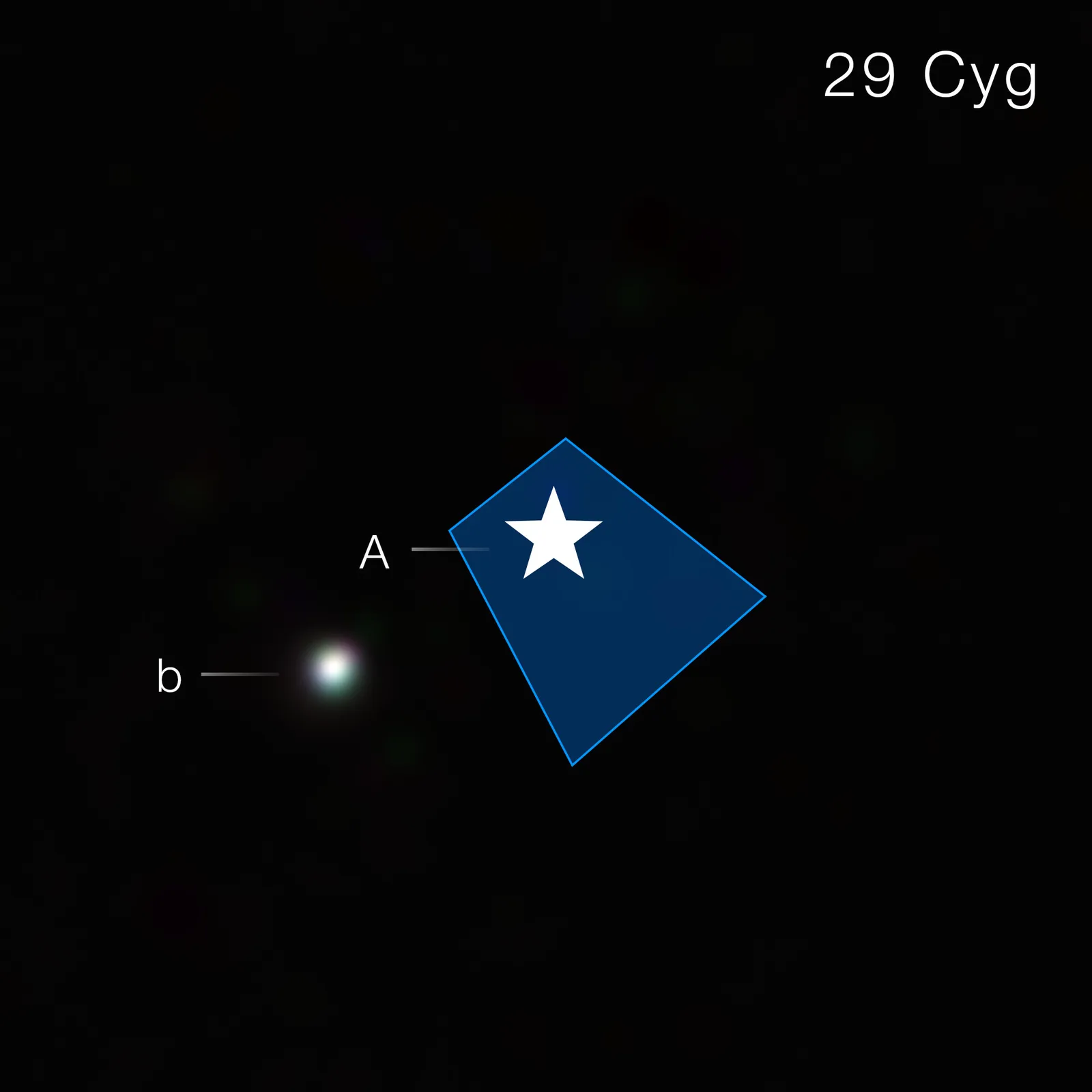
Around a bright star in Cygnus, the James Webb Space Telescope blocked the glare of the star itself and captured the faint thermal glow of a world fifteen times the mass of Jupiter. 29 Cygni b is a rare thing: not an inferred planet, but a photographed one.
What the Sun Will Become When It Dies
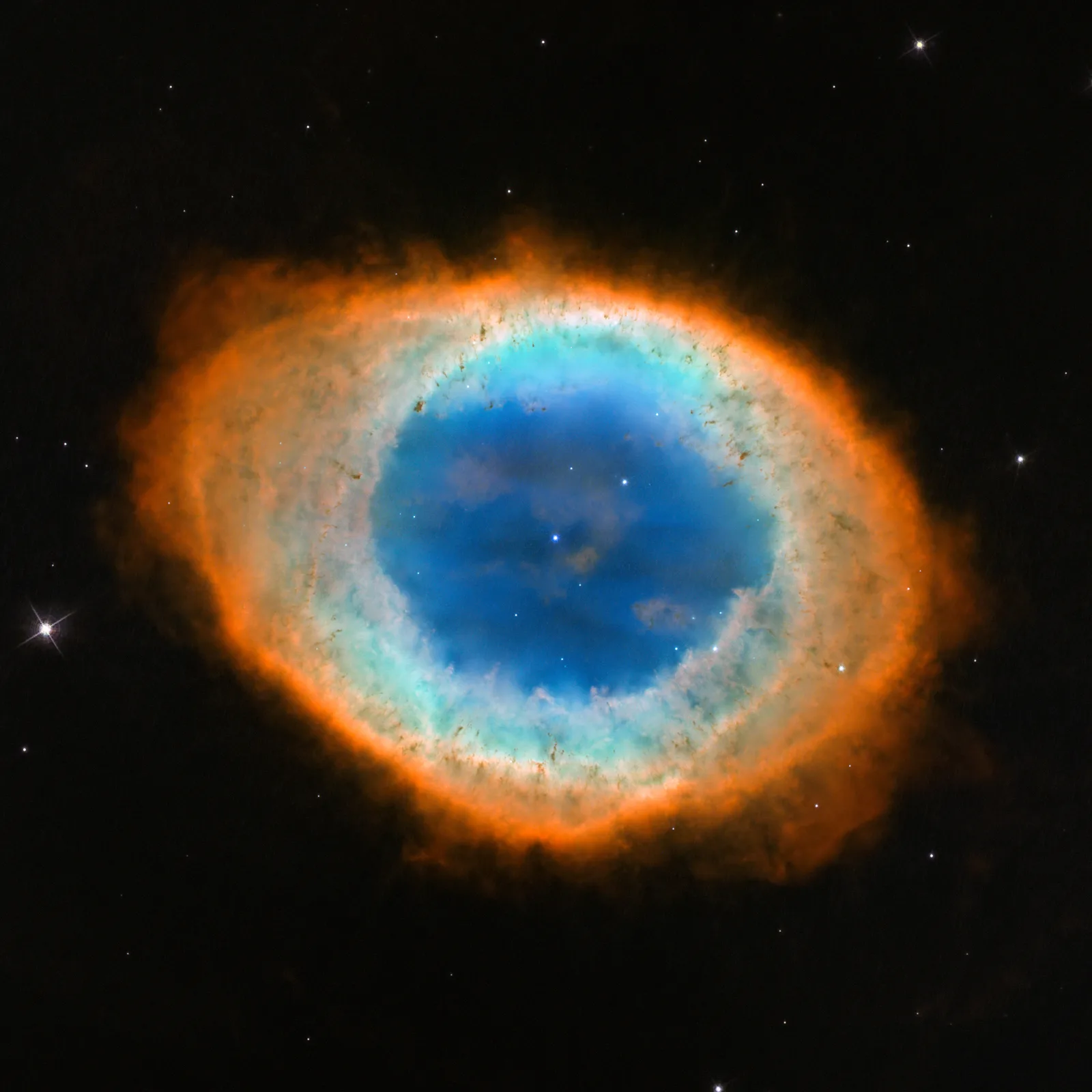
In about five billion years the Sun will swell, shed its outer layers, and leave behind an Earth-sized ember of carbon and oxygen. New Gaia data shows those embers slowly crystallize into the largest diamonds in the cosmos.
The Great Nothing: A Hole in the Universe 330 Million Light-Years Wide
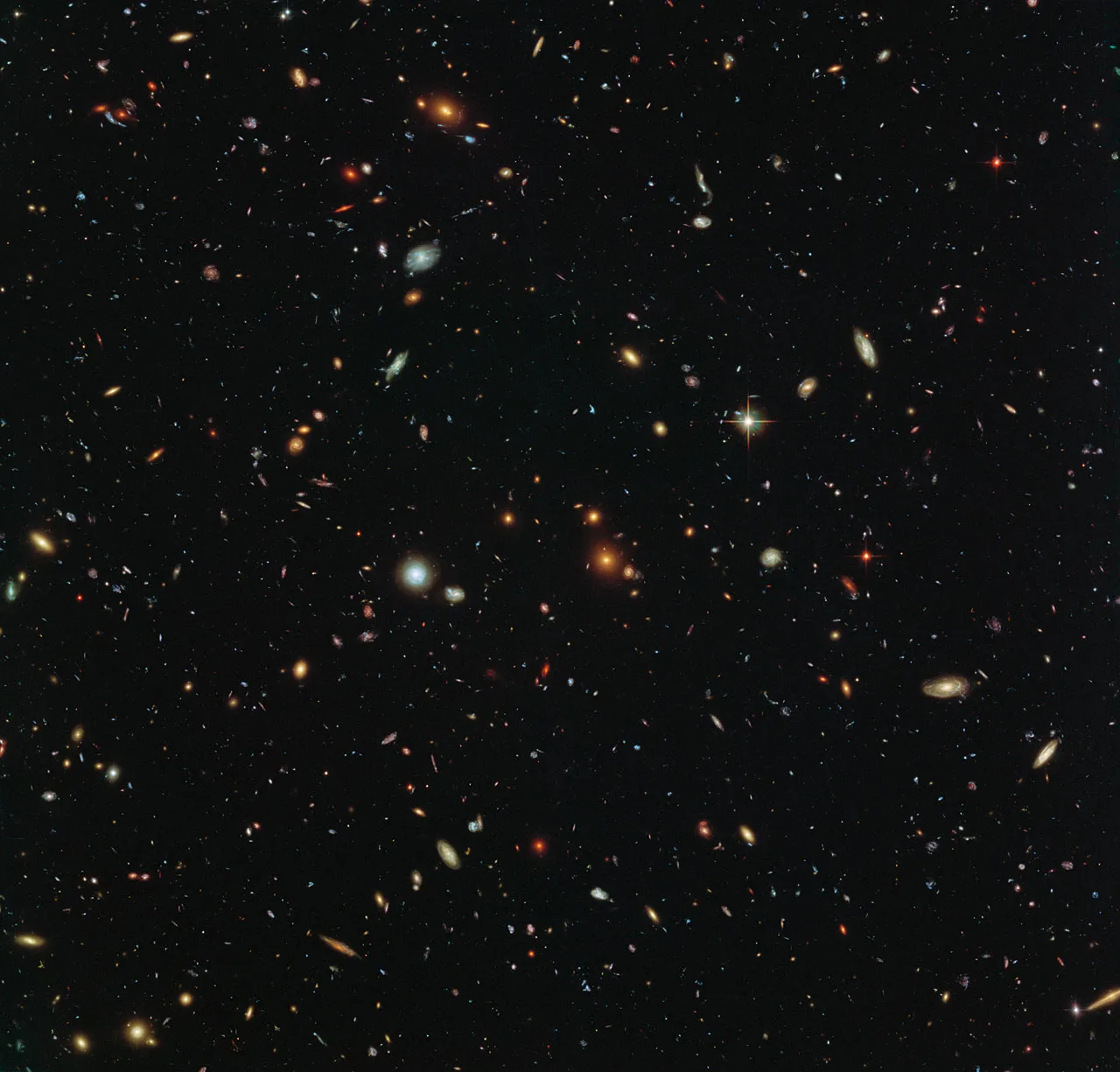
In 1981, a redshift survey turned up an emptiness so vast that if the Milky Way sat at its center, we might not have learned other galaxies existed until the twentieth century was nearly over.
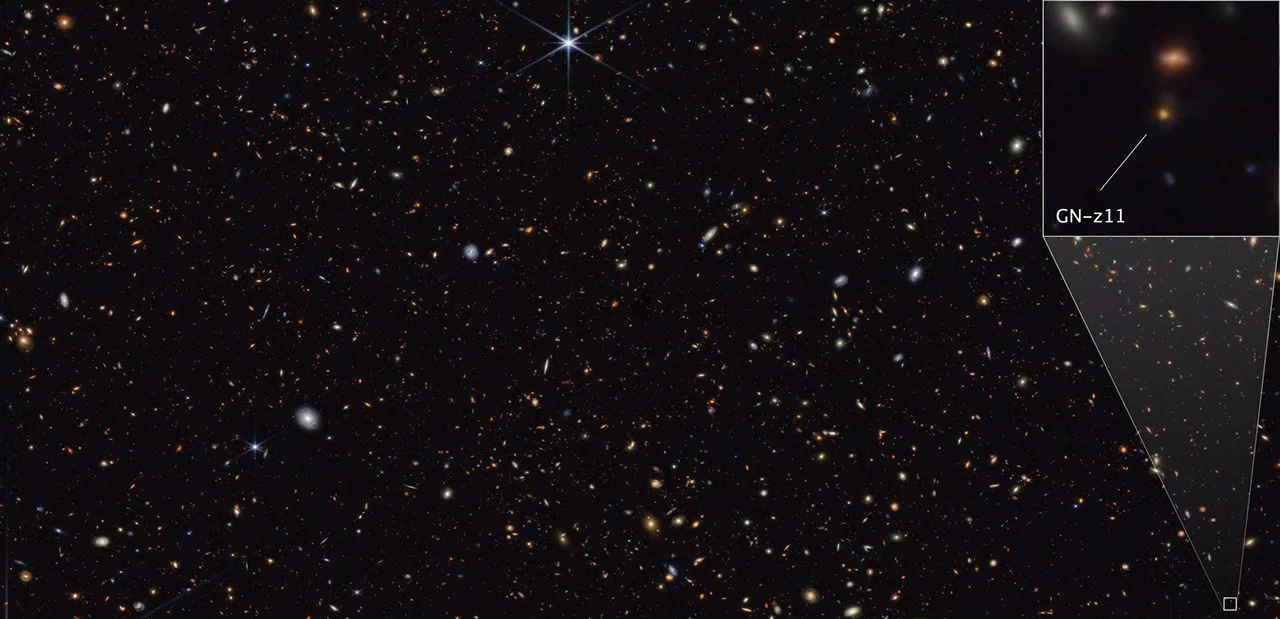
The Hunt for a Star Made of Nothing but the Big Bang
The first stars formed from pure hydrogen and helium, with no heavier element to cool the gas, so theory says they grew enormous, burned hot, and died young. None has ever been confirmed. The James Webb Space Telescope is closing in on the ghost.
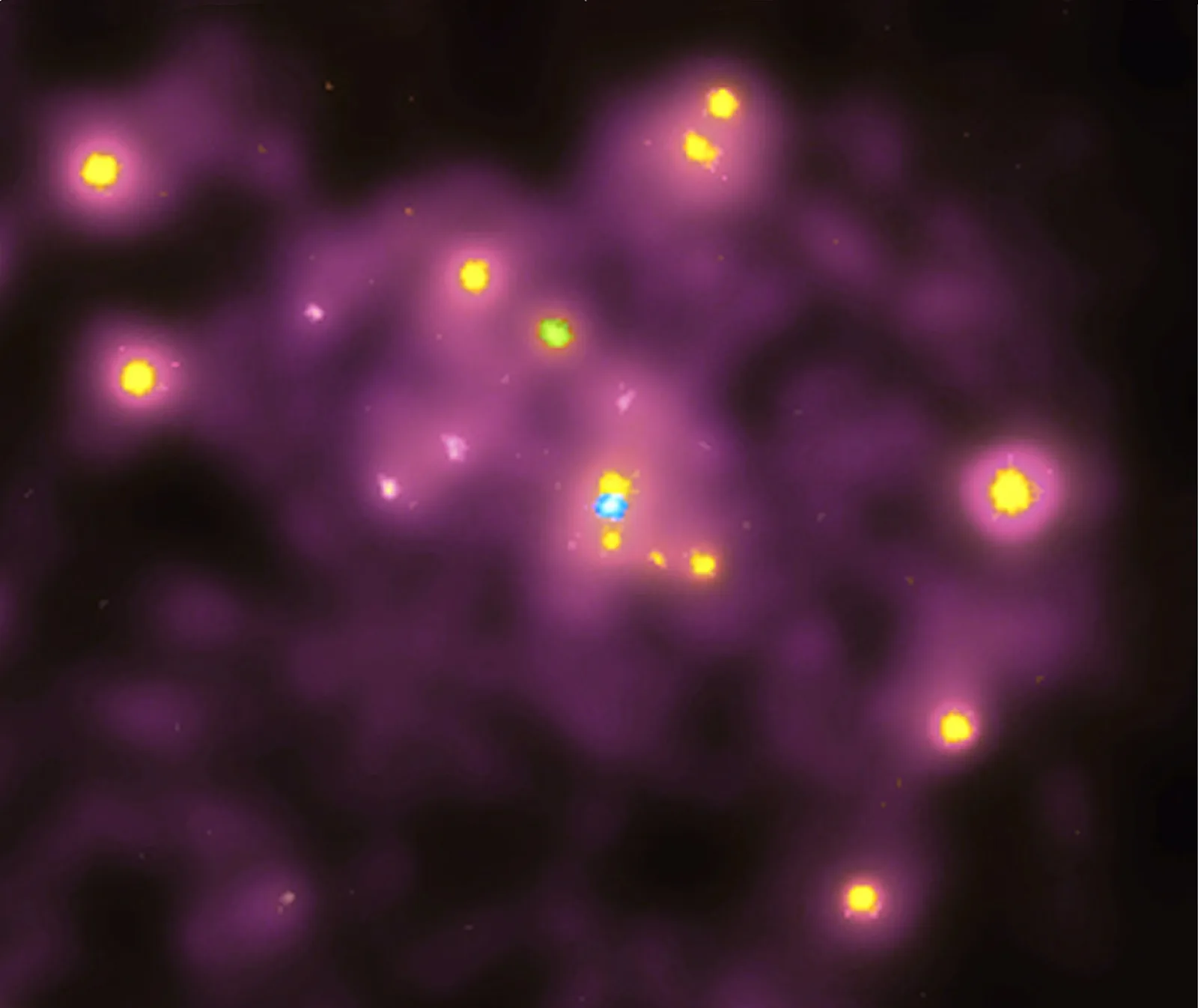
The Collision That Might Never Happen
For decades, astronomers told a confident story: in about five billion years, the Milky Way and Andromeda would crash together. New Gaia and Hubble data have turned that near-certainty into something closer to a coin flip.
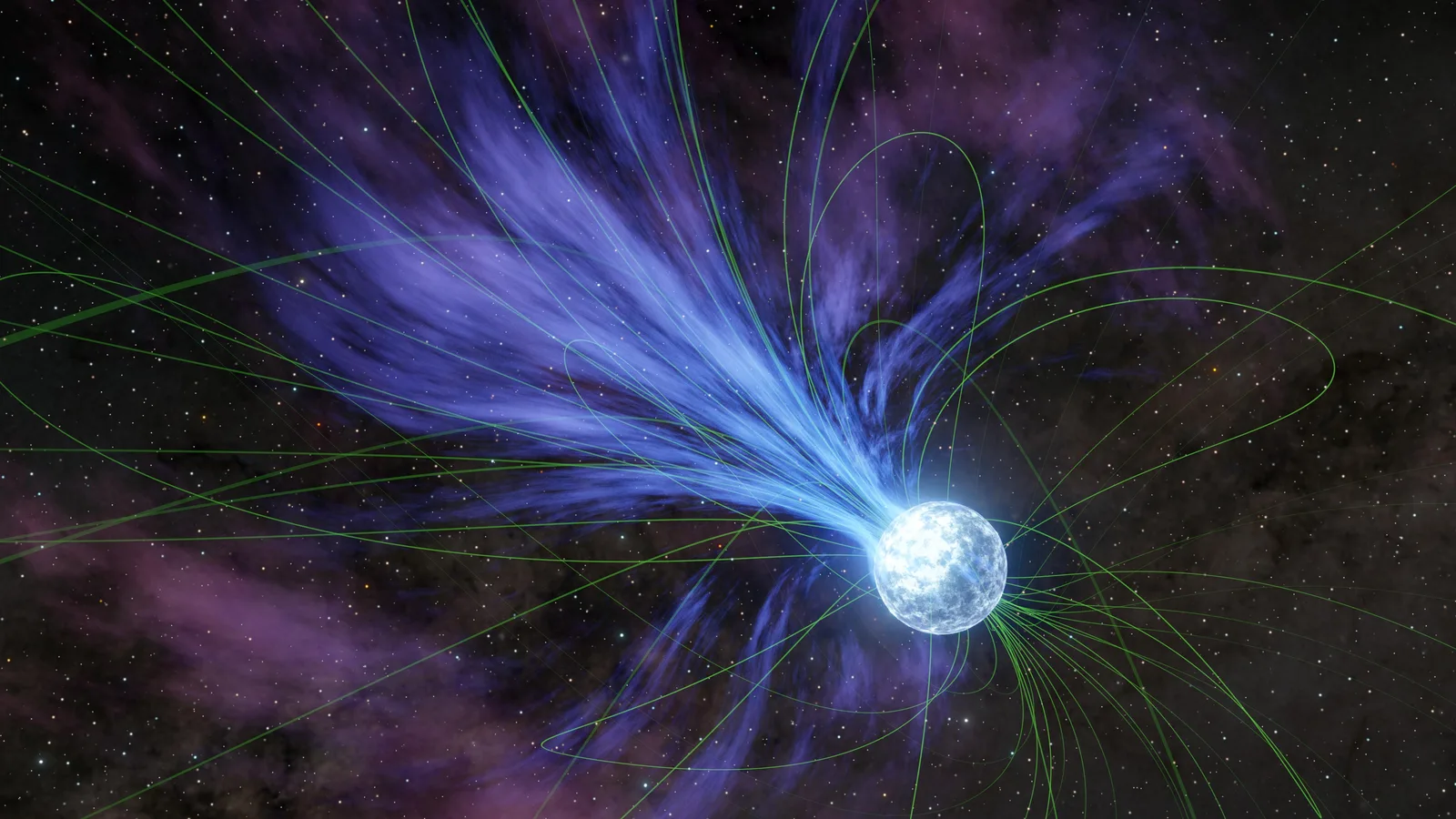
The Supernova That Chirped Like a Black Hole Merger
A billion light-years away, one of the brightest explosions in the universe pulsed with a rhythm that kept speeding up. That accelerating beat, astronomers say, is the heartbeat of a newborn magnetar.
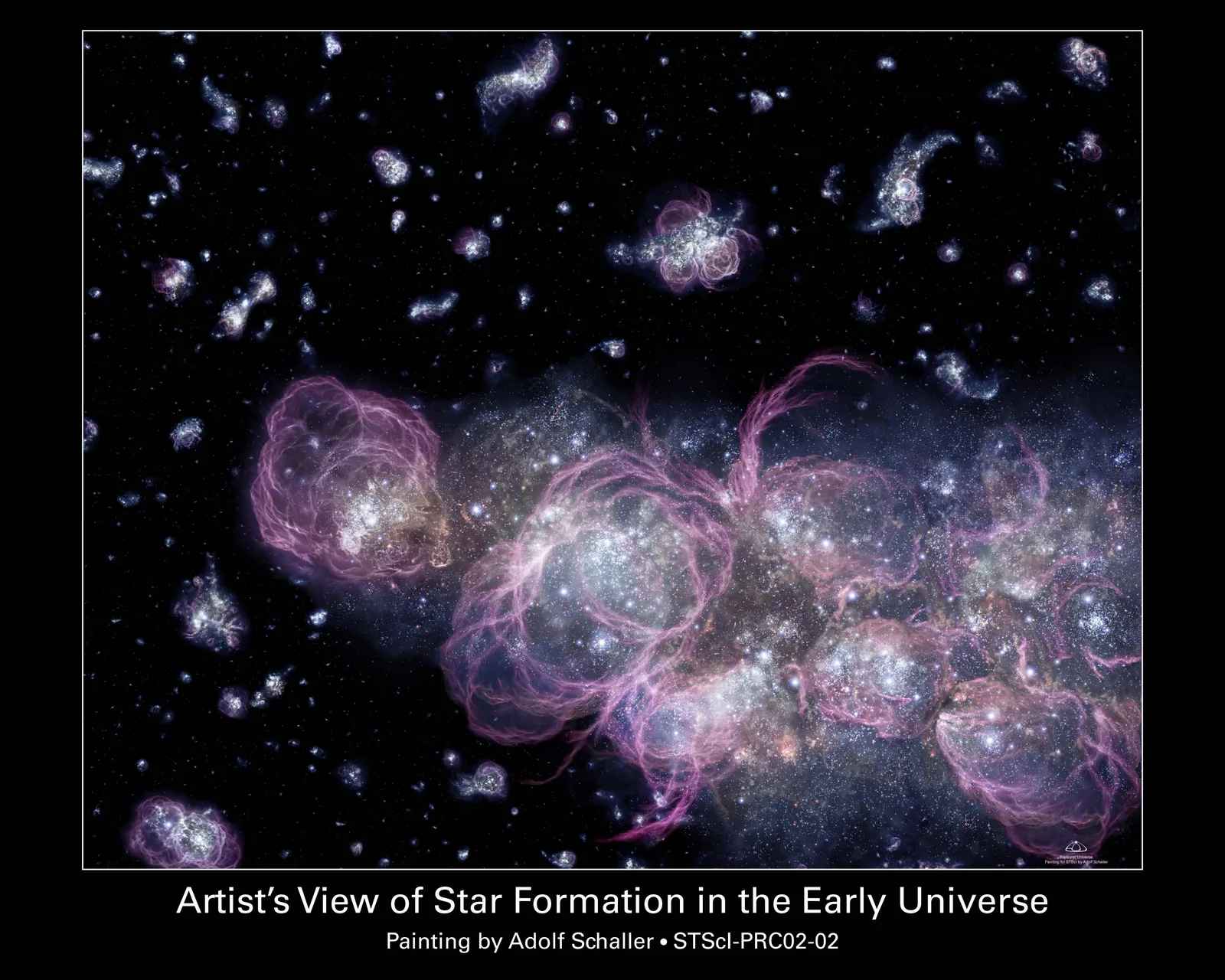
The Universe May Be Sitting on a False Floor
The measured masses of the Higgs boson and the top quark place our universe a hair's breadth from a different state of physics. The vacuum we live in may not be the lowest one available. Here is what that does and does not mean.
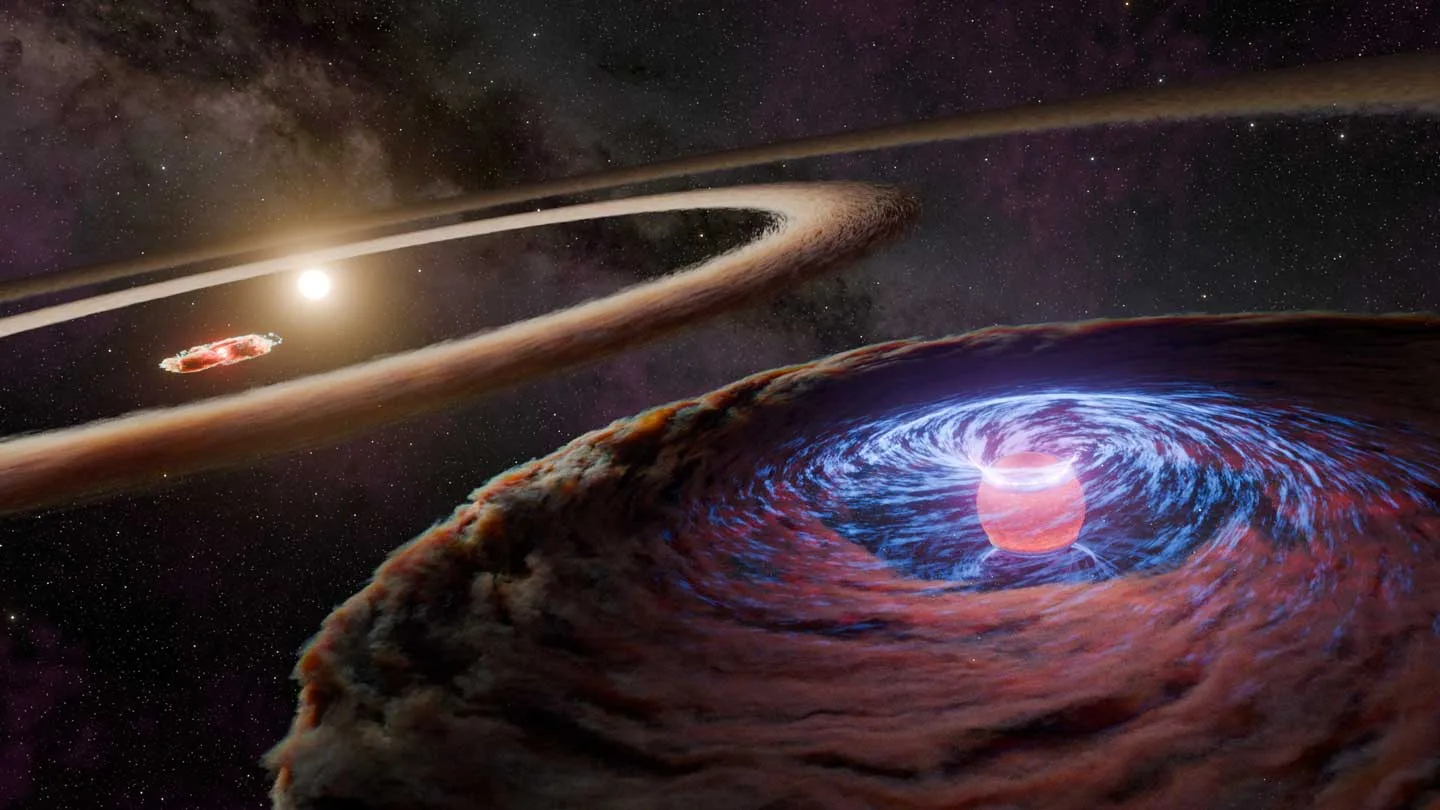
Two Planets Caught in the Act of Being Born
Around a young Sun-like star called WISPIT 2, astronomers have directly imaged a gas giant glowing inside a dark gap in a multi-ringed disk, and then a second forming world closer in. It is the cleanest case yet of watching a planetary system assemble itself.
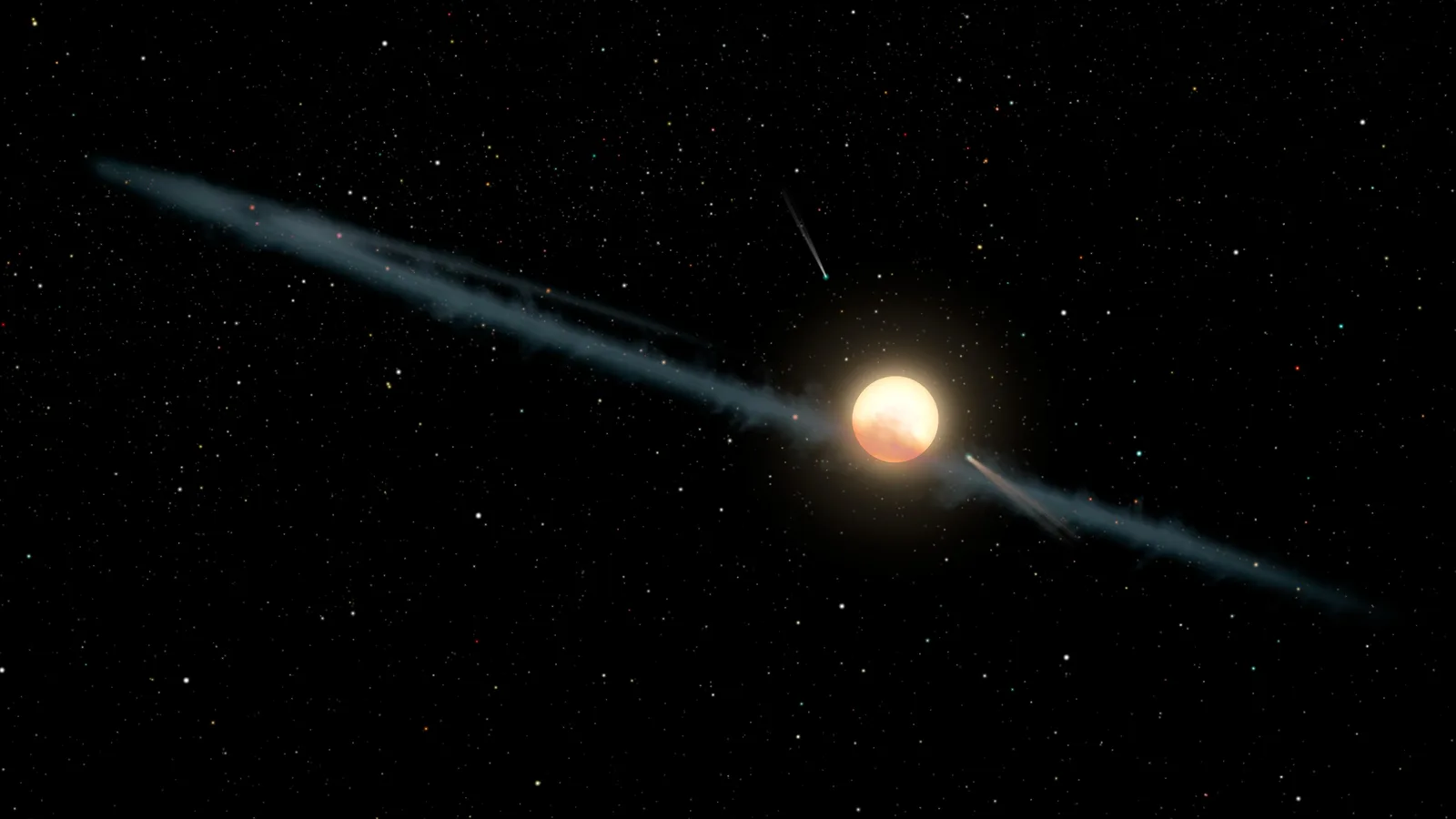
The Star That Flickers Like Nothing Else in the Sky
For four years, a telescope watched one ordinary-looking star lose up to a fifth of its light in jagged, unpredictable plunges. The leading suspect is dust, not aliens, and the case is still not fully closed.
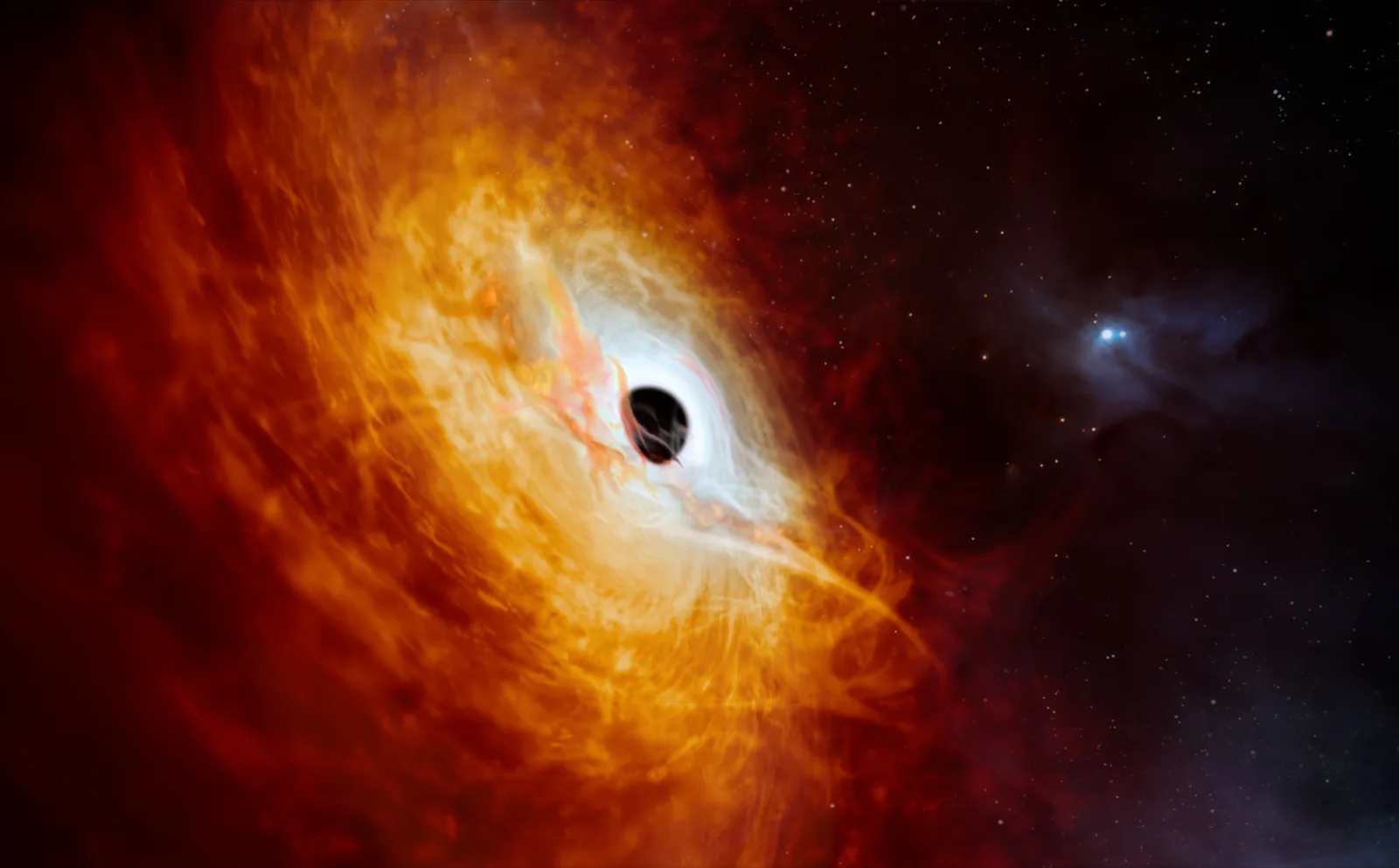
The Brightest Object in the Universe Was Hiding as a Star
J0529-4351 outshines five hundred trillion Suns, yet for forty years our telescopes filed it away as an ordinary point of light. The truth is a black hole seventeen billion times the mass of the Sun, swallowing a star a day.
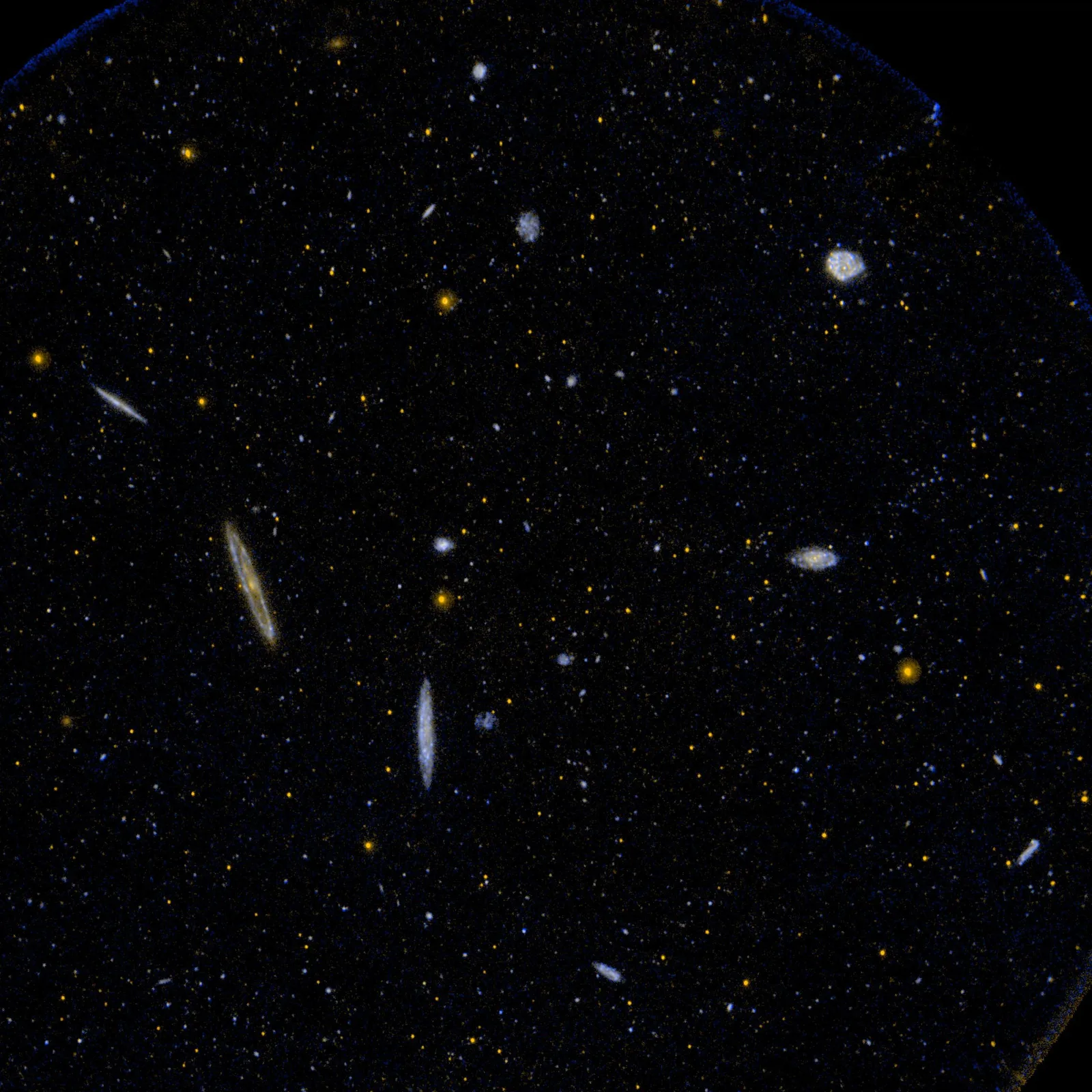
The Thing Pulling Us Across the Universe
The Milky Way is falling toward a gravitational anomaly we cannot easily see, hidden behind the dust of our own galaxy. Three decades of measuring how galaxies move have turned that pull into a map.
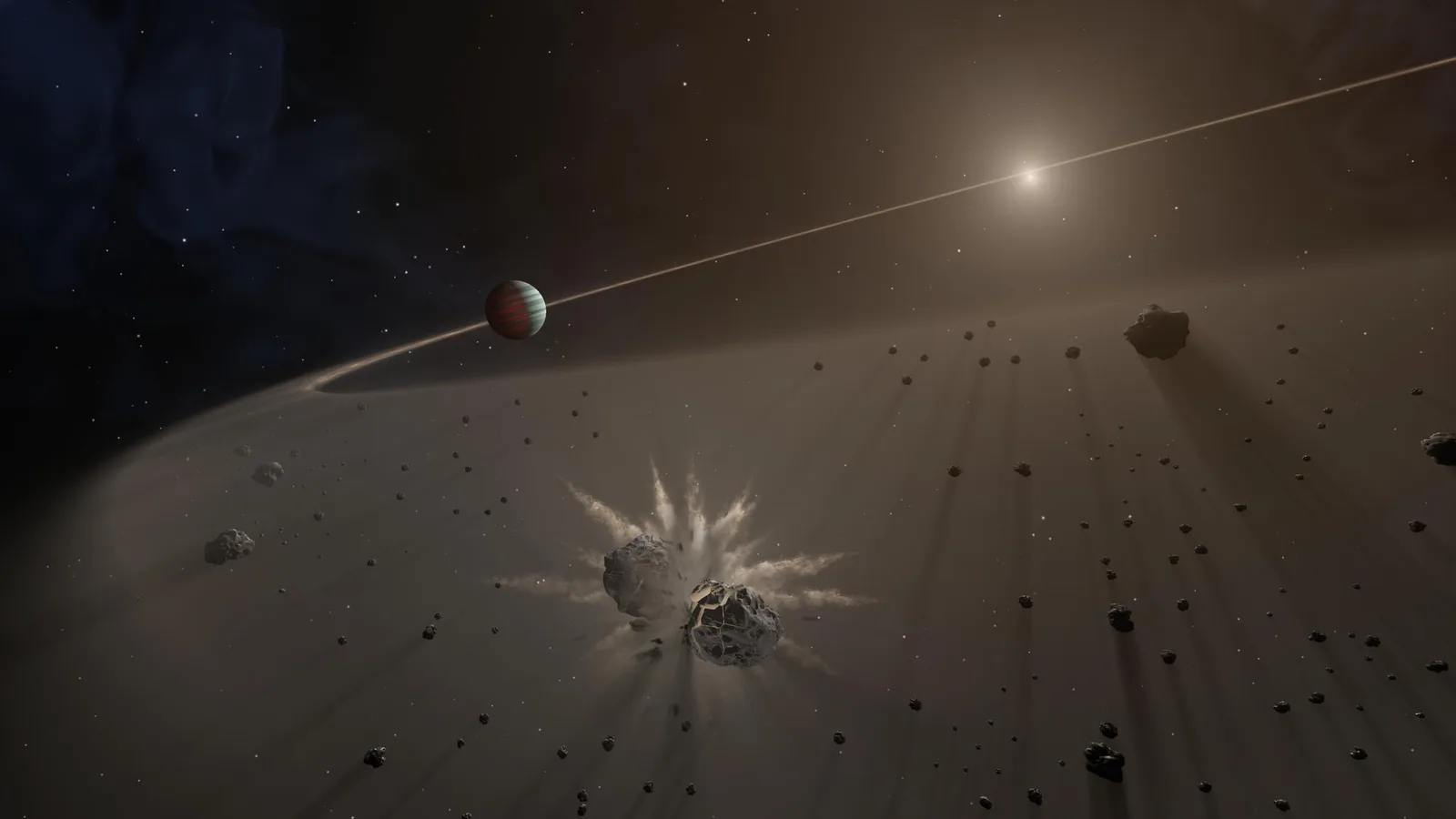
The Planets That Drift Through the Dark
Untethered to any star, rogue worlds may outnumber the suns of the Milky Way. Here is how astronomers find the invisible, and why one of these frozen wanderers might still hide an ocean.
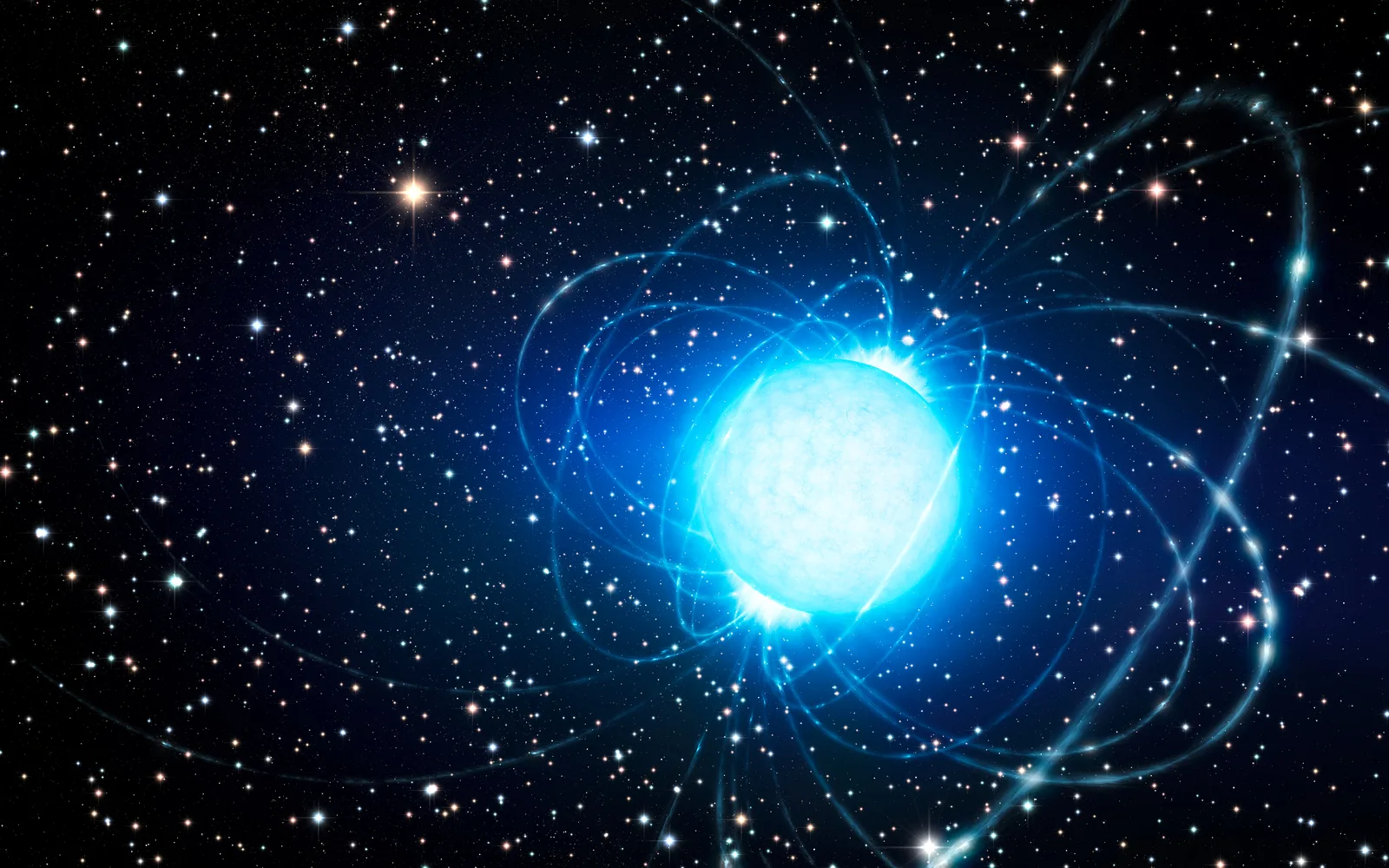
The Millisecond Flash That Crosses the Universe
For sixteen years, fast radio bursts arrived from nowhere and explained nothing. Then one of them came from inside our own galaxy, and the prime suspect finally had a face.
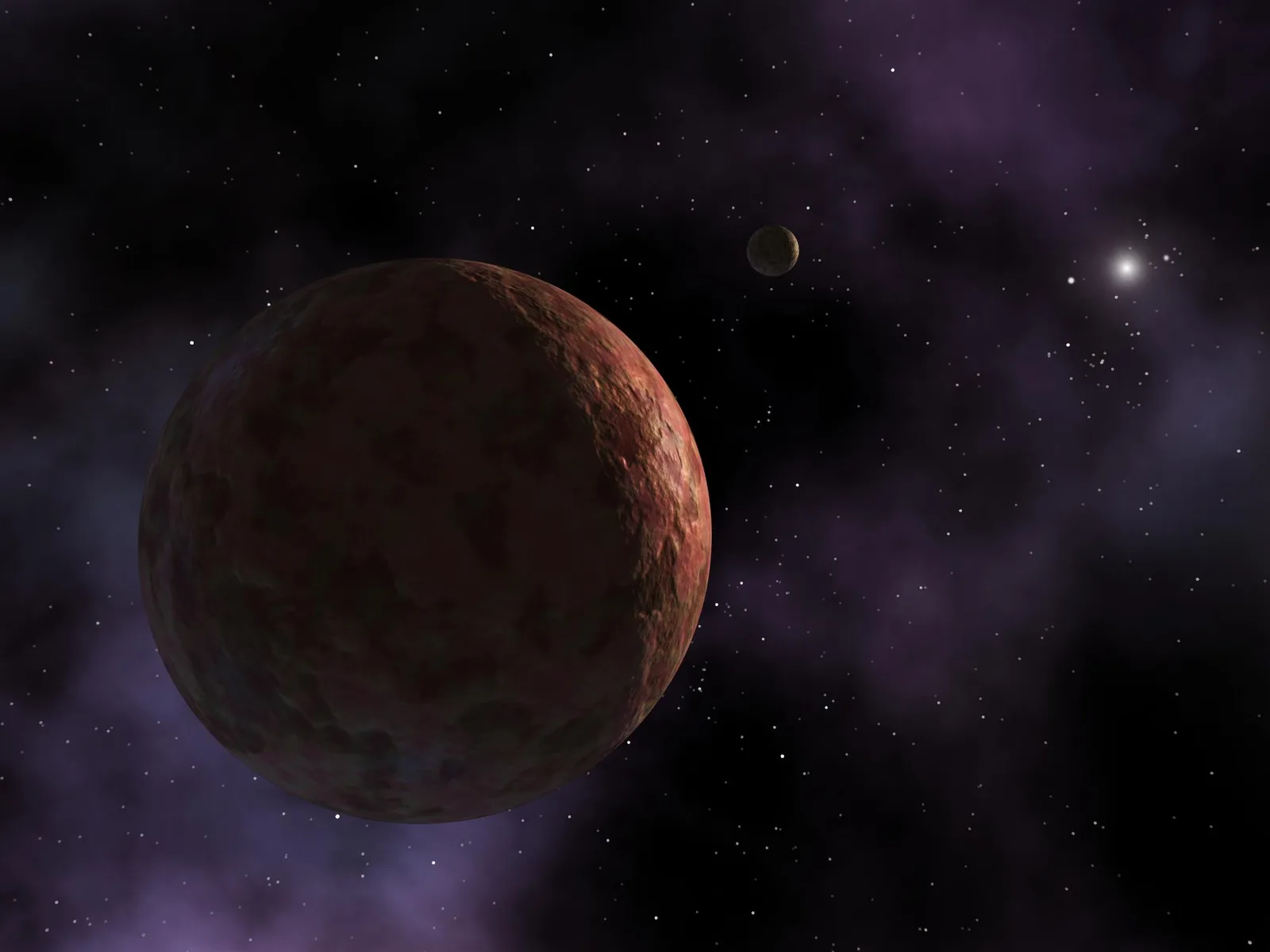
The Planet We Have Never Seen
A handful of frozen worlds in the far outer solar system trace orbits that point the same way, as if pulled by something massive and unseen. For a decade, astronomers have argued over whether that something is a ninth planet. The telescope that may finally settle it is now open.
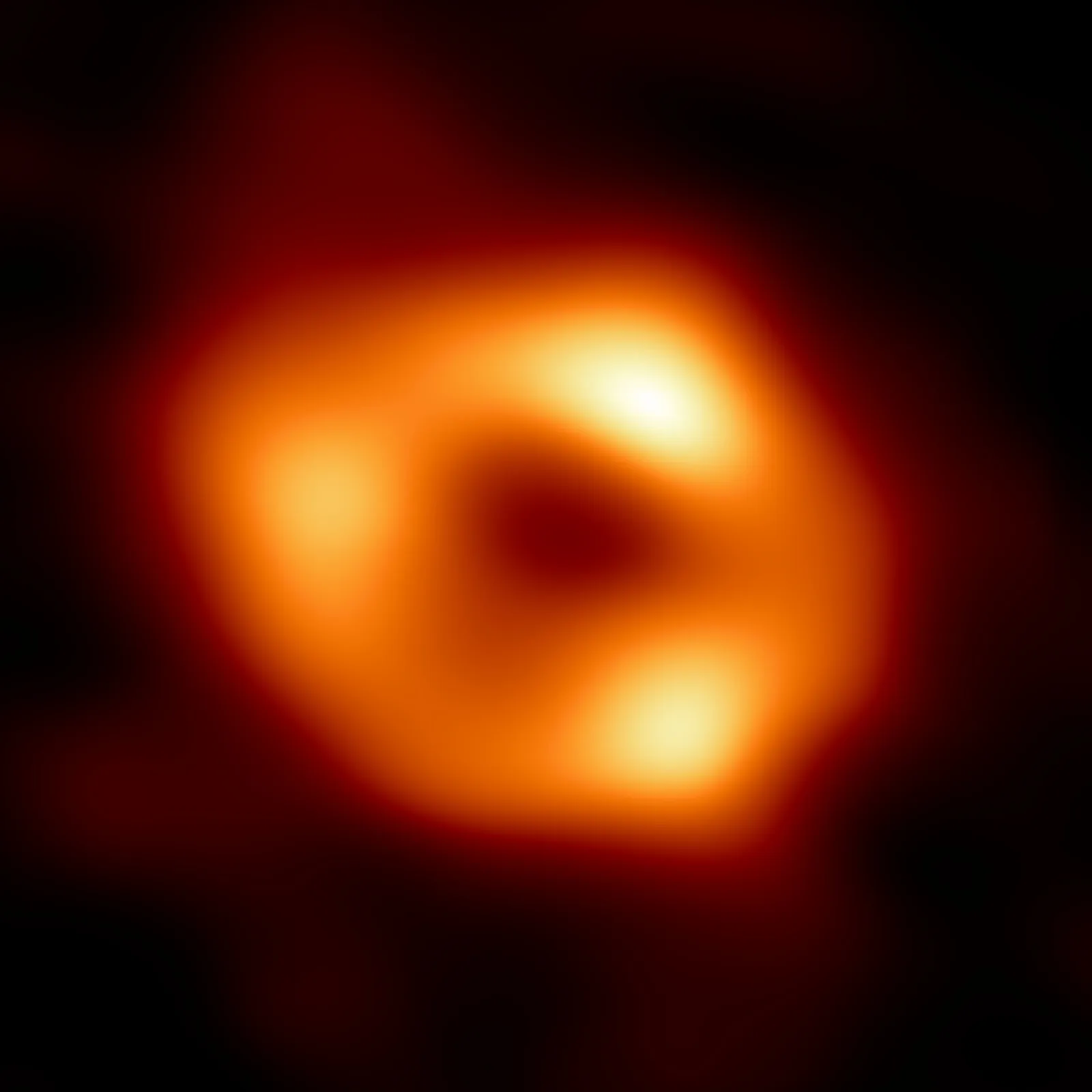
The Black Hole at the Center of the Milky Way
Sagittarius A* is a supermassive black hole 4.3 million times the mass of the Sun, sitting 27,000 light-years from Earth. For three decades it was an inference drawn from the orbits of stars. In 2022, a planet-sized telescope finally photographed it.
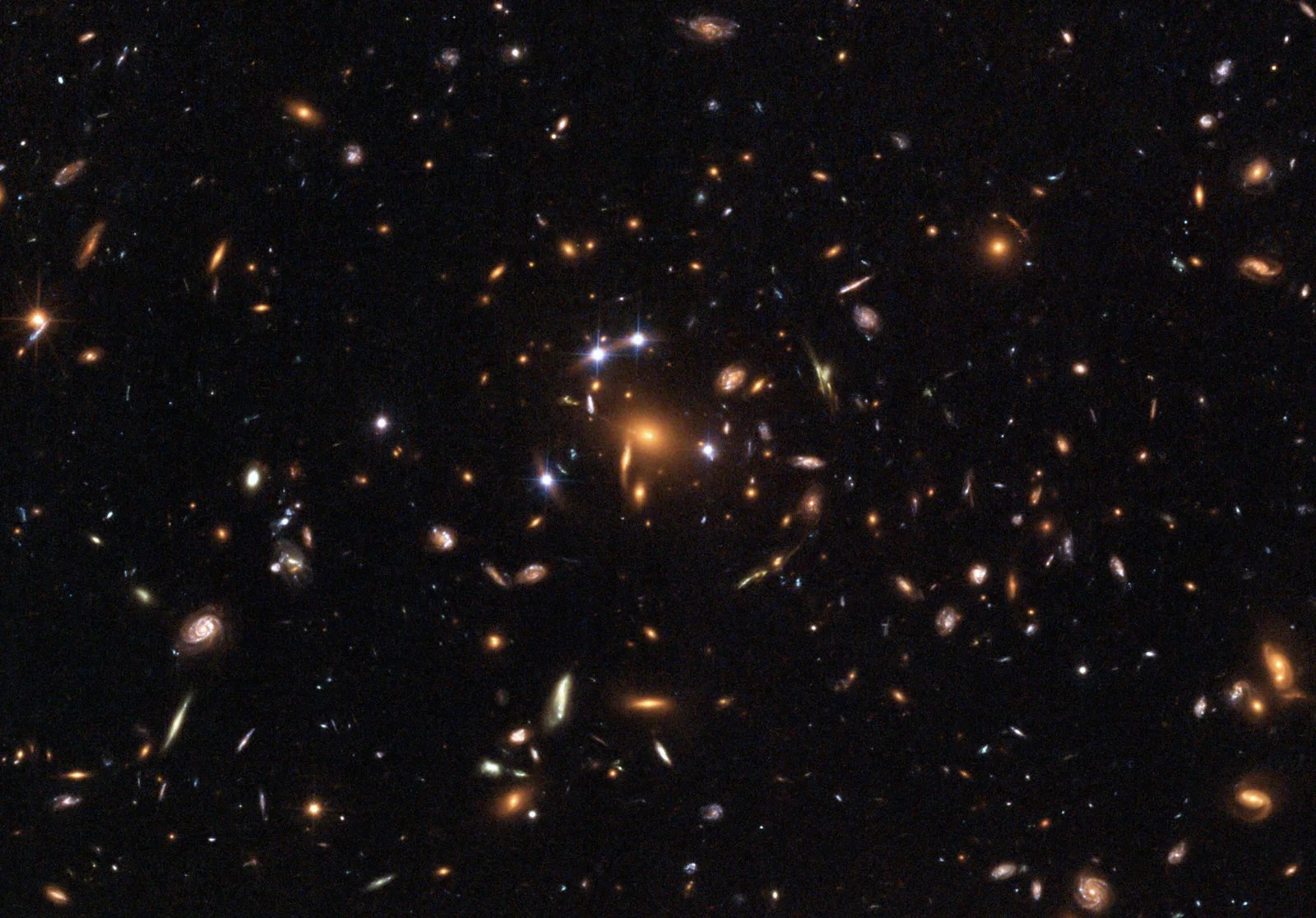
The Collision That Left Its Own Gravity Behind
When two galaxy clusters smashed through each other, the visible matter slowed and the gravity kept going. The gap between them became the closest thing astronomy has to a direct sighting of dark matter.
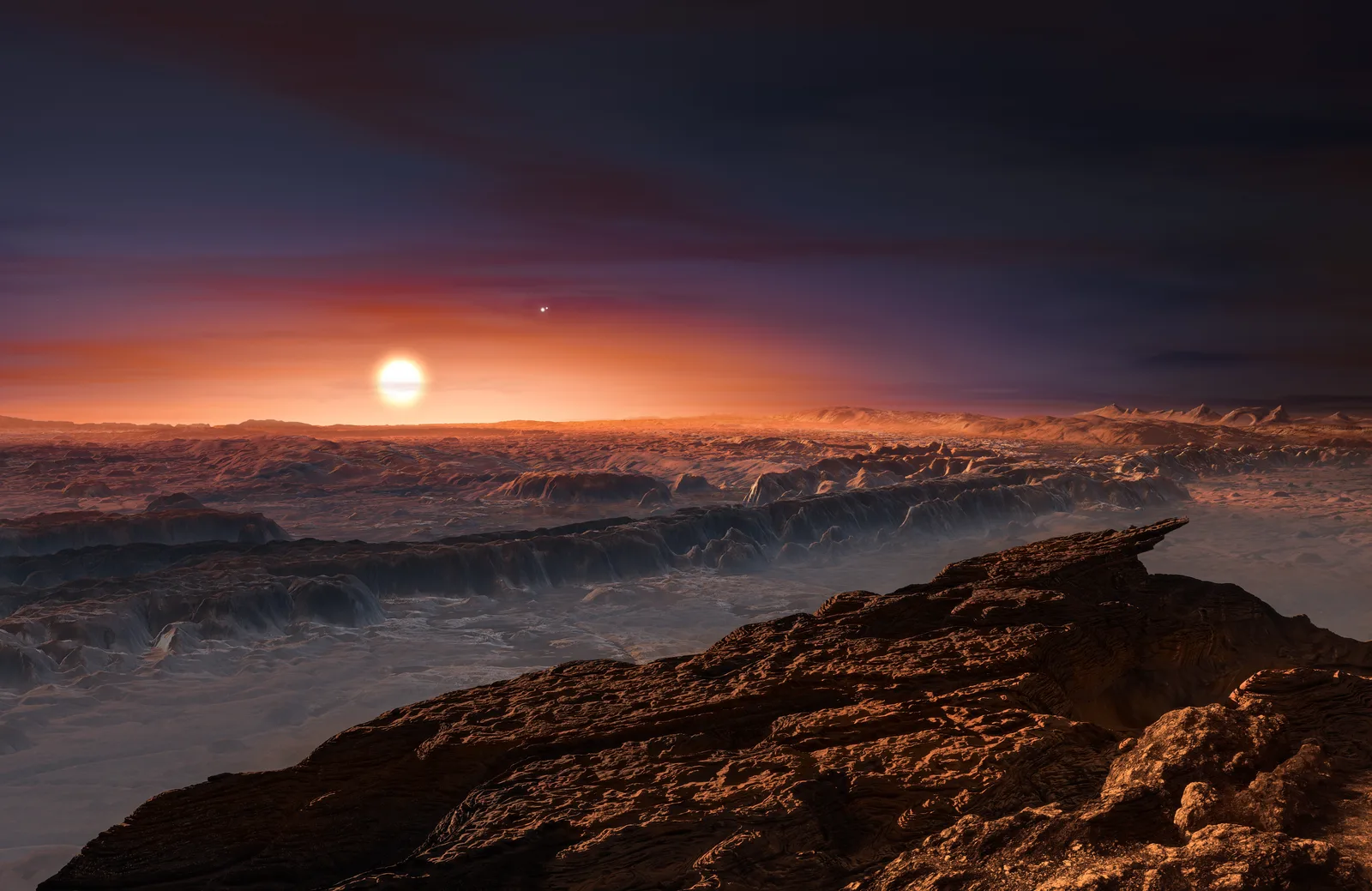
The Habitable World Next Door That Its Star May Have Sterilized
Proxima Centauri b orbits the closest star to the Sun, inside the zone where liquid water could exist. The problem is the star itself, a red dwarf that flares hard enough to strip a planet bare.
The 72 Seconds That Still Haunt Radio Astronomy
On a summer night in 1977, an Ohio radio telescope recorded a narrowband burst near the frequency of hydrogen itself. An astronomer circled the printout and wrote one word. Almost fifty years later, no one has heard it again.

The Star That Vanished Without an Explosion
Some massive stars do not end in a supernova. They flicker, fade, and quietly fall into the black hole they have just become. In Andromeda, astronomers finally watched it happen.
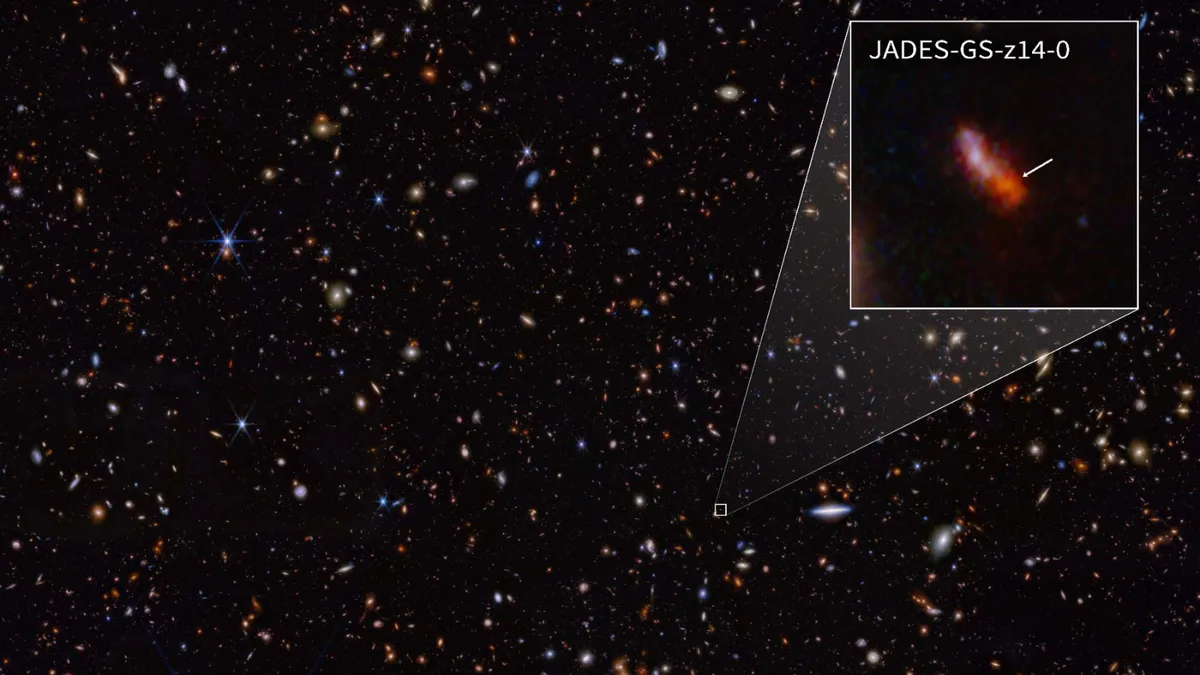
The Galaxy That Shouldn't Exist So Soon
At a redshift of 14.44, MoM-z14 is the farthest galaxy ever confirmed: a bright, nitrogen-rich beacon that switched on just 280 million years after the Big Bang. It looks nothing like the faint, primitive smudge the models predicted.
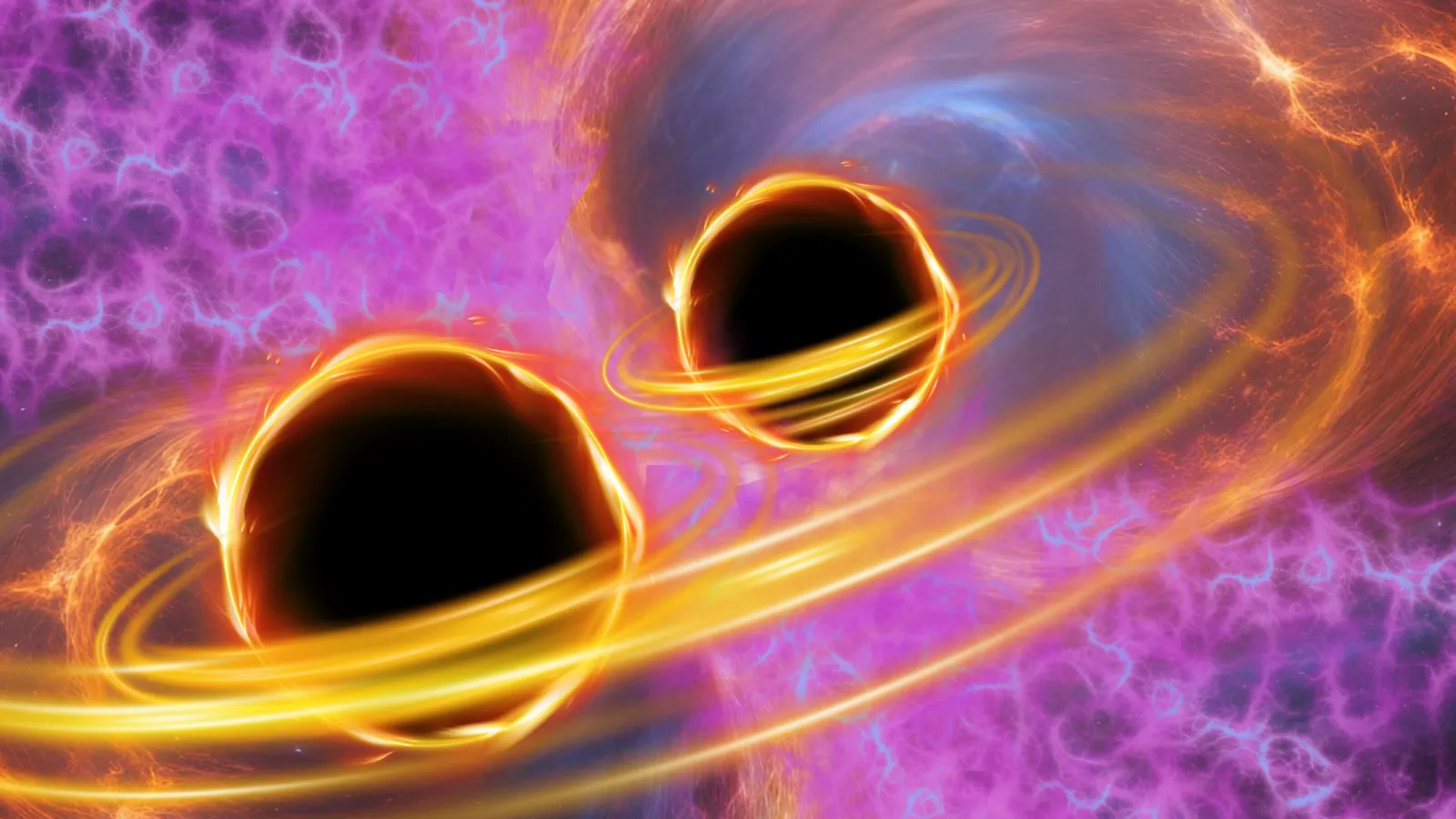
The Quiet Suspect Behind the Universe's First Giant Black Holes
Supermassive black holes appeared too early and grew too fast for standard physics to comfortably explain. A 2026 study proposes an unlikely culprit: dark matter slowly falling apart in the dark.
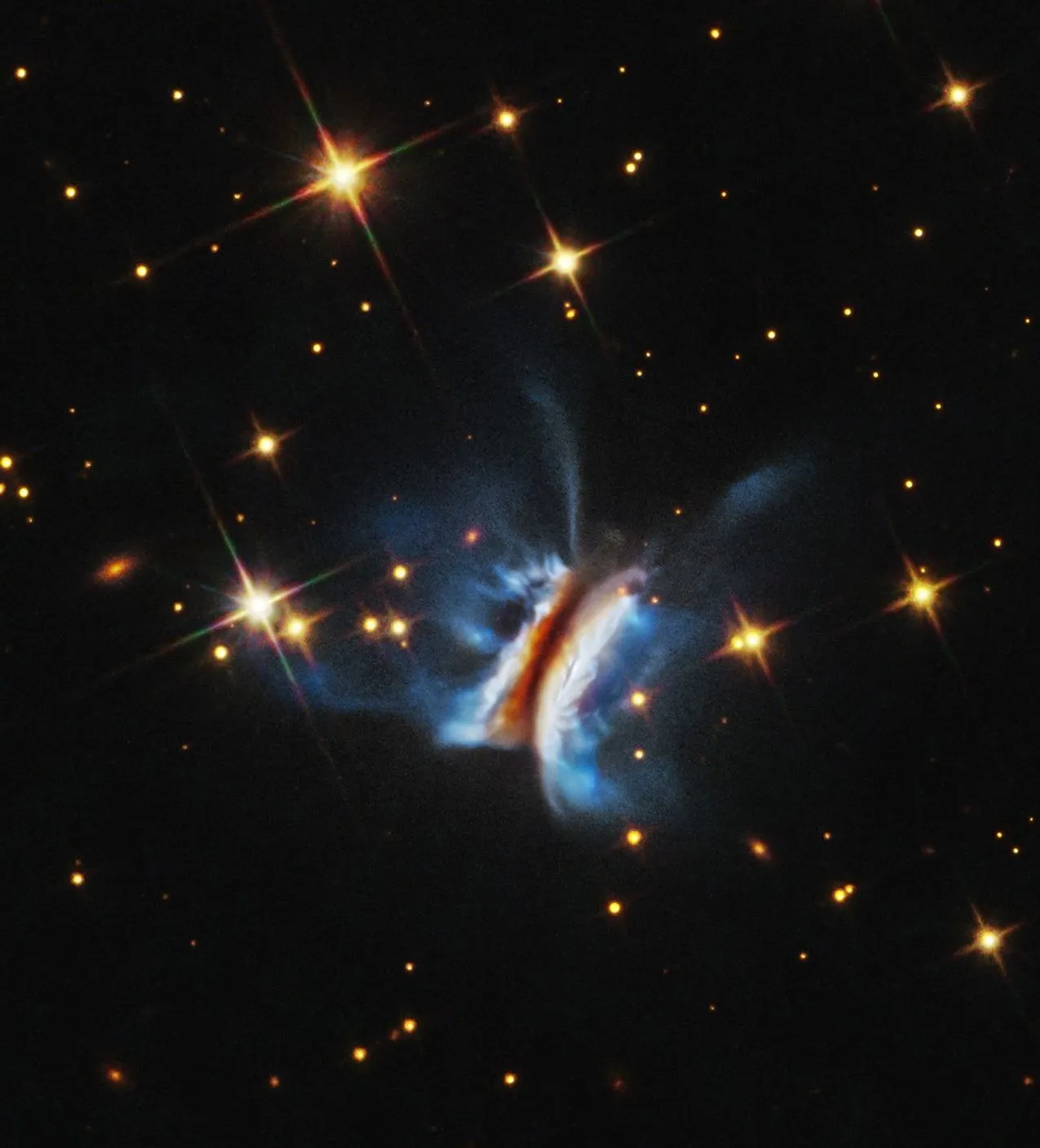
Hubble's Look Inside the Largest Planet Nursery Ever Found
A young star 1,000 light-years away is wrapped in a disk so vast it could swallow forty solar systems. When Hubble looked closely, it found something the textbooks did not predict: chaos.
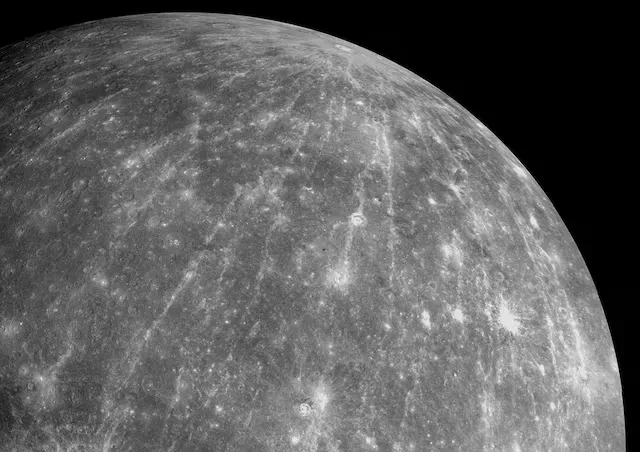
The First Exoplanet Whose Surface We Have Actually Seen
For the first time, the James Webb Space Telescope has read the bare rock of a world 48.5 light-years away. LHS 3844 b is a dark, hot, airless slab of basalt, and what it tells us about life is written in what is missing.
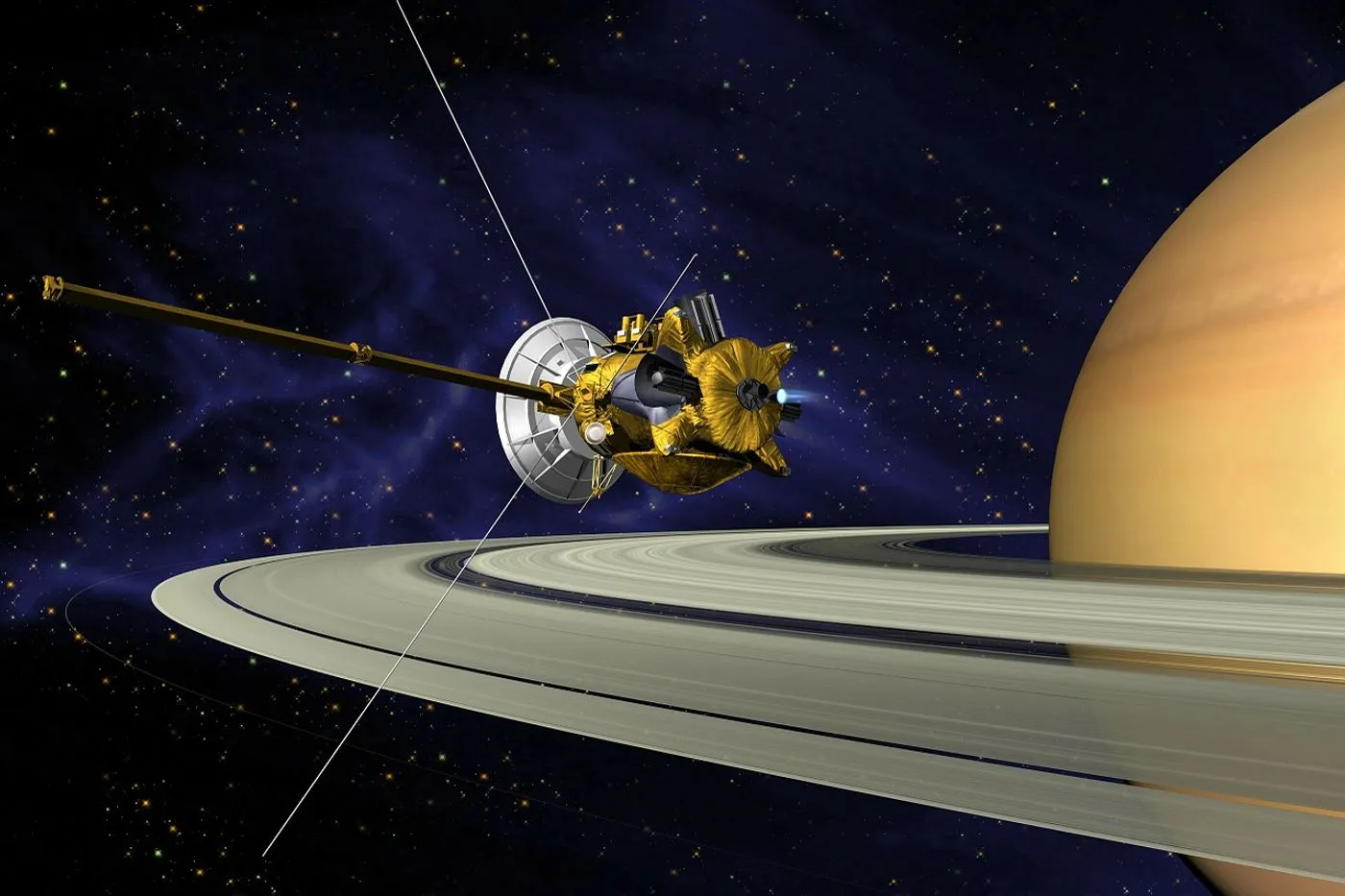
Saturn Kept Changing Its Day, and the Planet Was Never the Culprit
For four decades, every spacecraft that visited Saturn seemed to clock a different length of day, an impossibility for a spinning world. The answer did not come from watching the planet turn. It came from listening to its rings, and finally, from mapping the glow of its aurora with the James Webb Space Telescope.
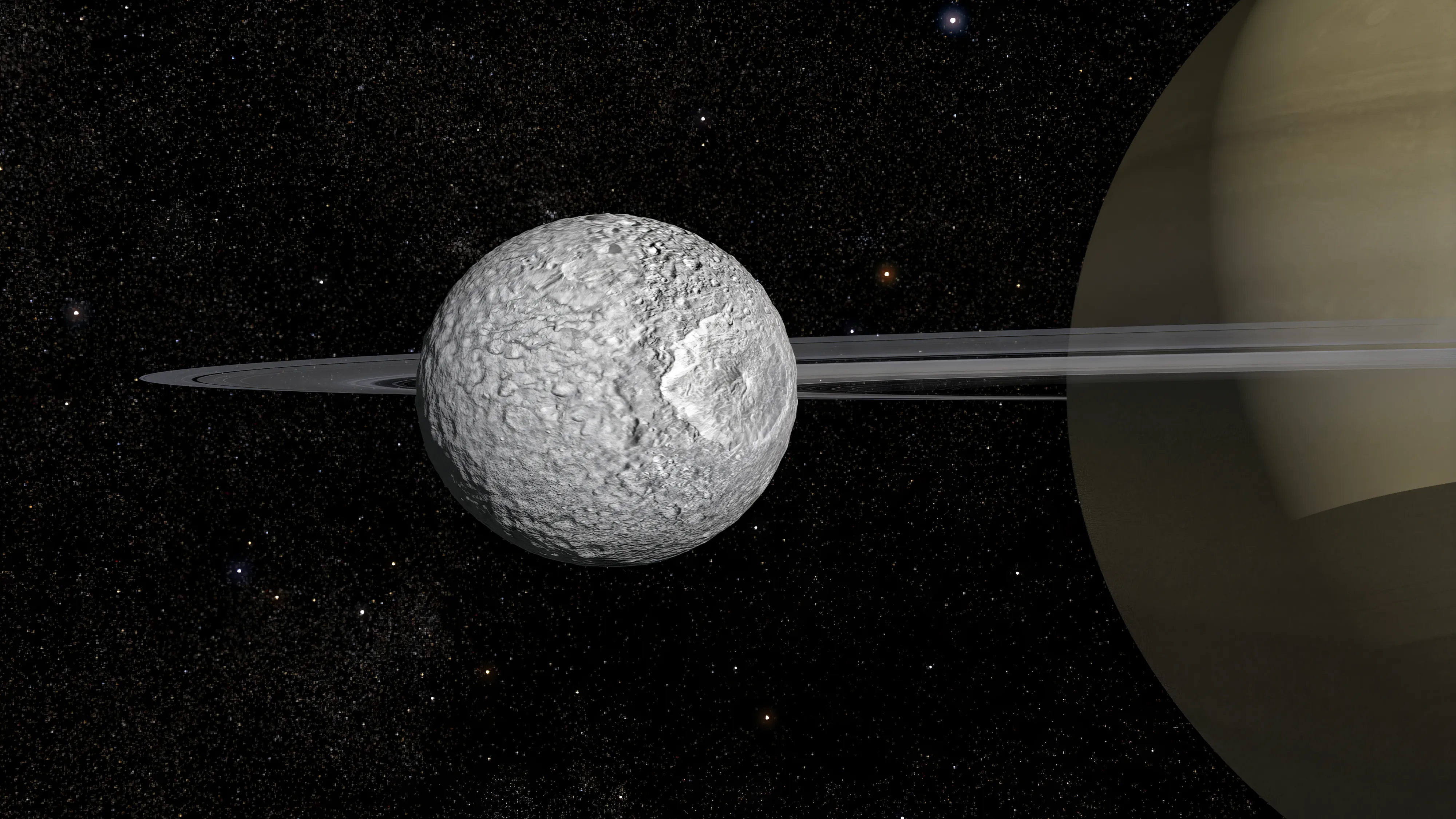
The Death Star Moon Was Hiding an Ocean. Nobody Saw It Coming.
Mimas is 400 kilometers across, dominated by a crater so large the impact nearly broke it apart, and looks exactly like a frozen dead world should. In February 2024, a careful analysis of thirteen years of Cassini data showed it has a global subsurface ocean, and that ocean is no more than 25 million years old.
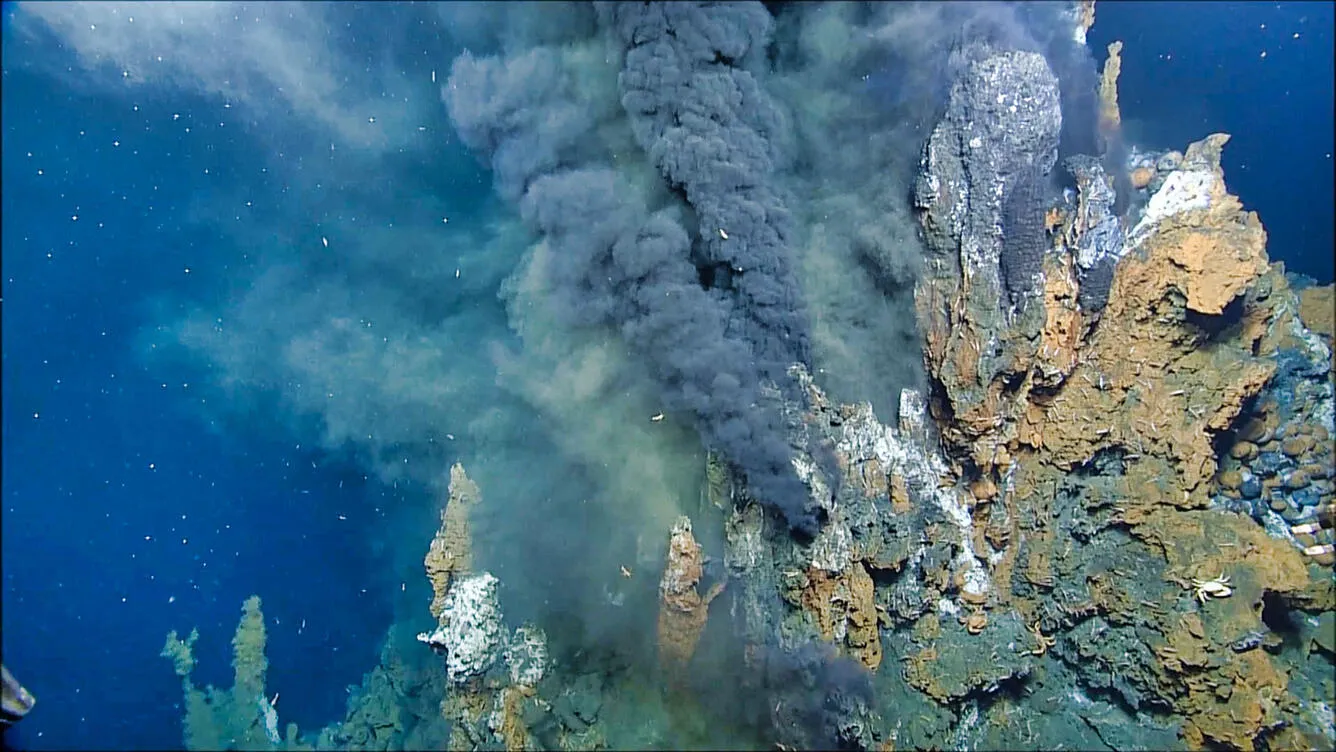
Every Living Thing on Earth Descended From One Cell. We Now Know Roughly Where It Lived.
Three billion years ago, perhaps four, a single cell at the bottom of an ocean was the ancestor of every plant, animal, fungus, and microbe ever to exist. A 2024 paper has dated it more precisely than any analysis before.
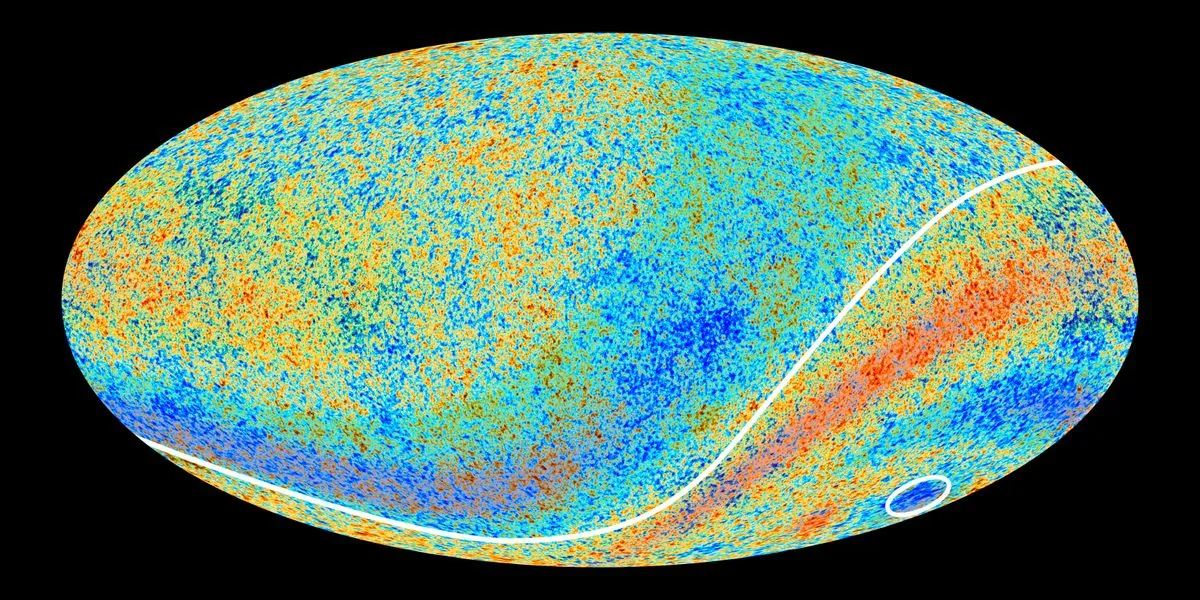
The Universe Is Expanding at Two Different Speeds, and Cosmology Cannot Reconcile Them
Two independent methods measure how fast the universe is expanding. They agree on the technique but disagree on the answer by ten percent. The discrepancy has been growing for a decade. It now exceeds the threshold for a crisis.
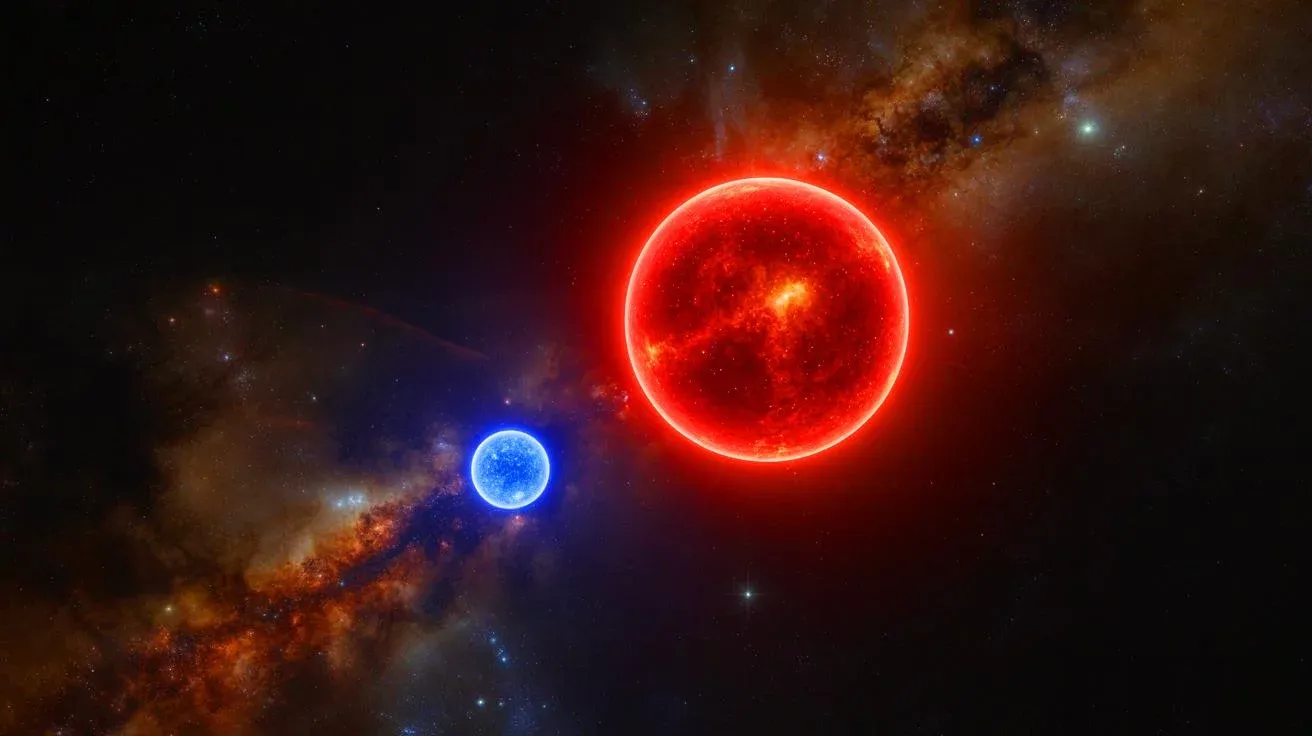
The Closest Star About to Explode Has a Hidden Companion
Betelgeuse is 650 light-years away, one thousand times the diameter of the Sun, and visibly twinkling above your head every clear winter night. For decades it has confused astronomers with cycles no one could explain. In 2024, two teams finally found why, and it is a small star, hidden in the glare.
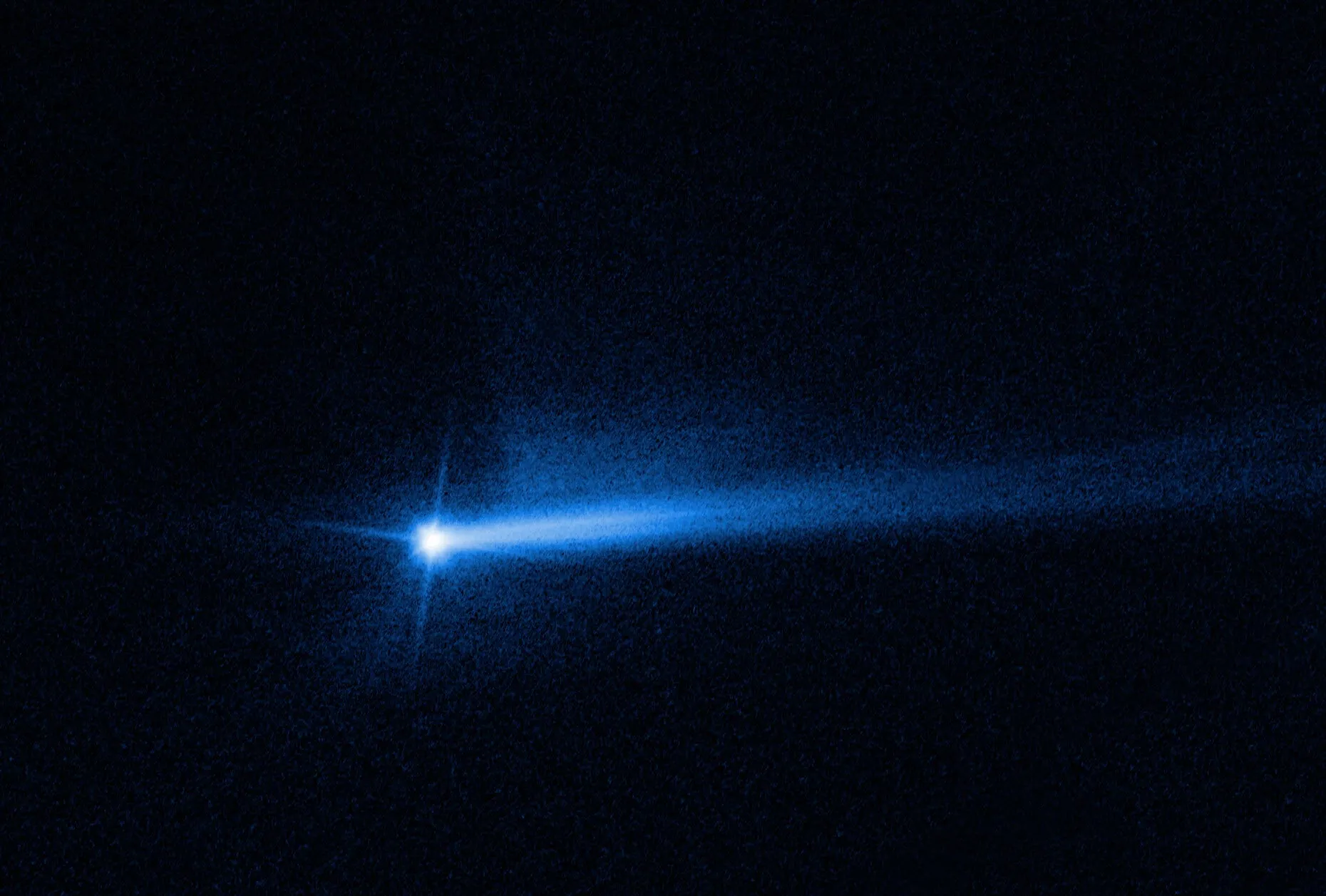
The Day a Refrigerator-Sized Spacecraft Punched an Asteroid Into a New Orbit
On September 26, 2022, a 610-kilogram spacecraft slammed into a 160-meter asteroid at 22,000 kilometers per hour. The goal was to nudge its orbit by 73 seconds. The actual result exceeded the benchmark by a factor of twenty-five.
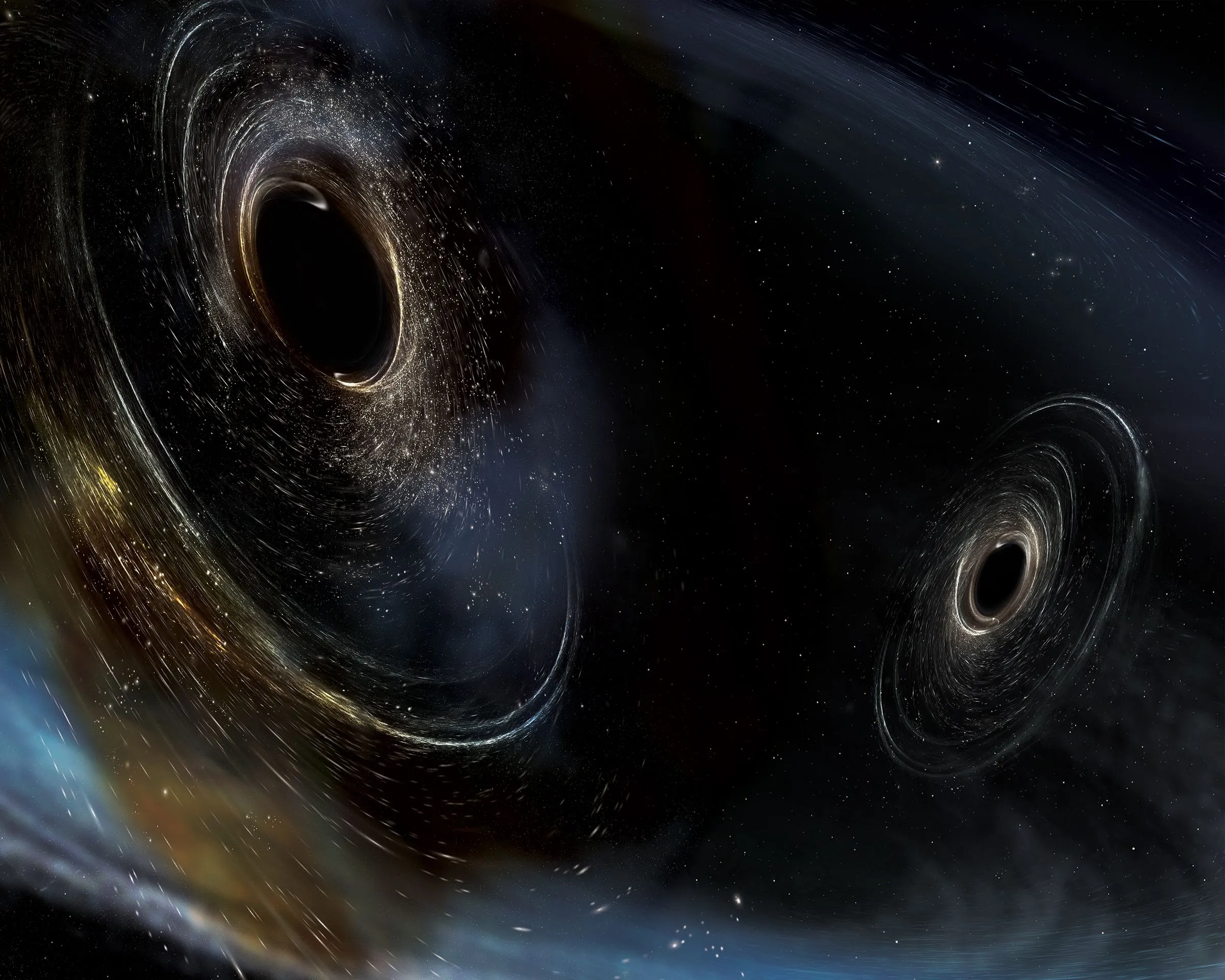
The Day Two Black Holes Released More Energy Than Every Star in the Observable Universe Combined
On September 14, 2015, LIGO recorded the final 0.2 seconds of a collision that had been a billion years in the making. The peak luminosity exceeded the combined light output of every star in every galaxy in the observable cosmos by a factor of fifty.
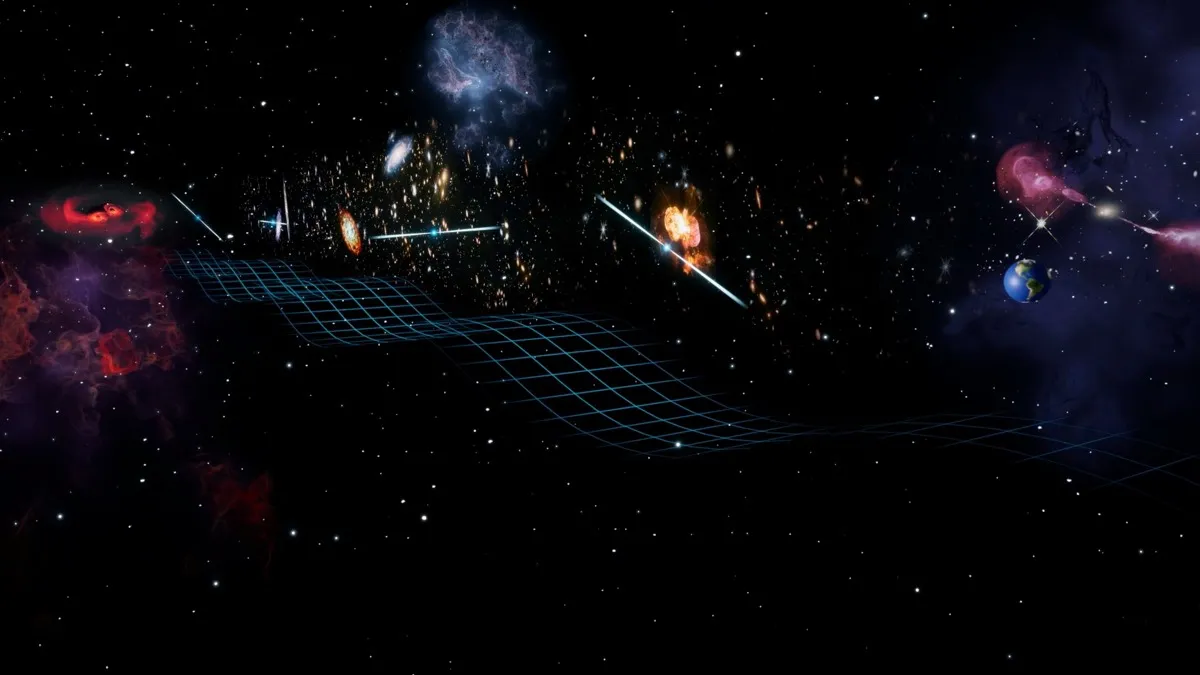
Sixty-Eight Dead Stars Just Detected the Background Hum of the Universe
Earth is bobbing up and down in a sea of gravitational waves that stretches from one end of the cosmos to the other. We have no instrument on Earth big enough to detect them. So NANOGrav built one out of pulsars.
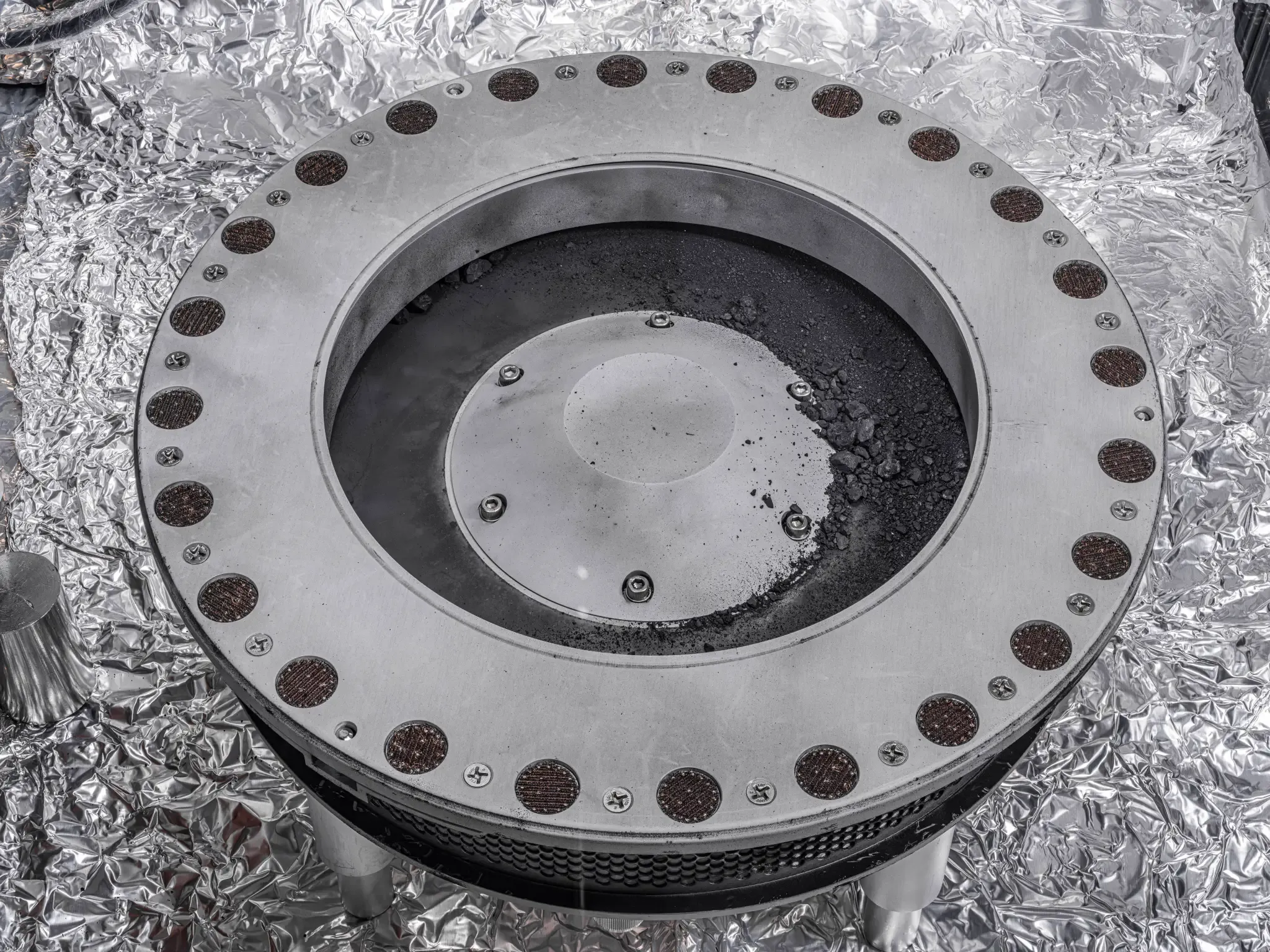
The Asteroid Sample That Brought Back Almost Every Ingredient for Life
Fifteen of the twenty amino acids life uses. All five DNA and RNA bases. Ribose. Glucose. And a polymer never seen anywhere else in space. NASA opened a 121-gram sample from a 500-meter asteroid and found pieces of the chemistry that built every living thing on Earth.
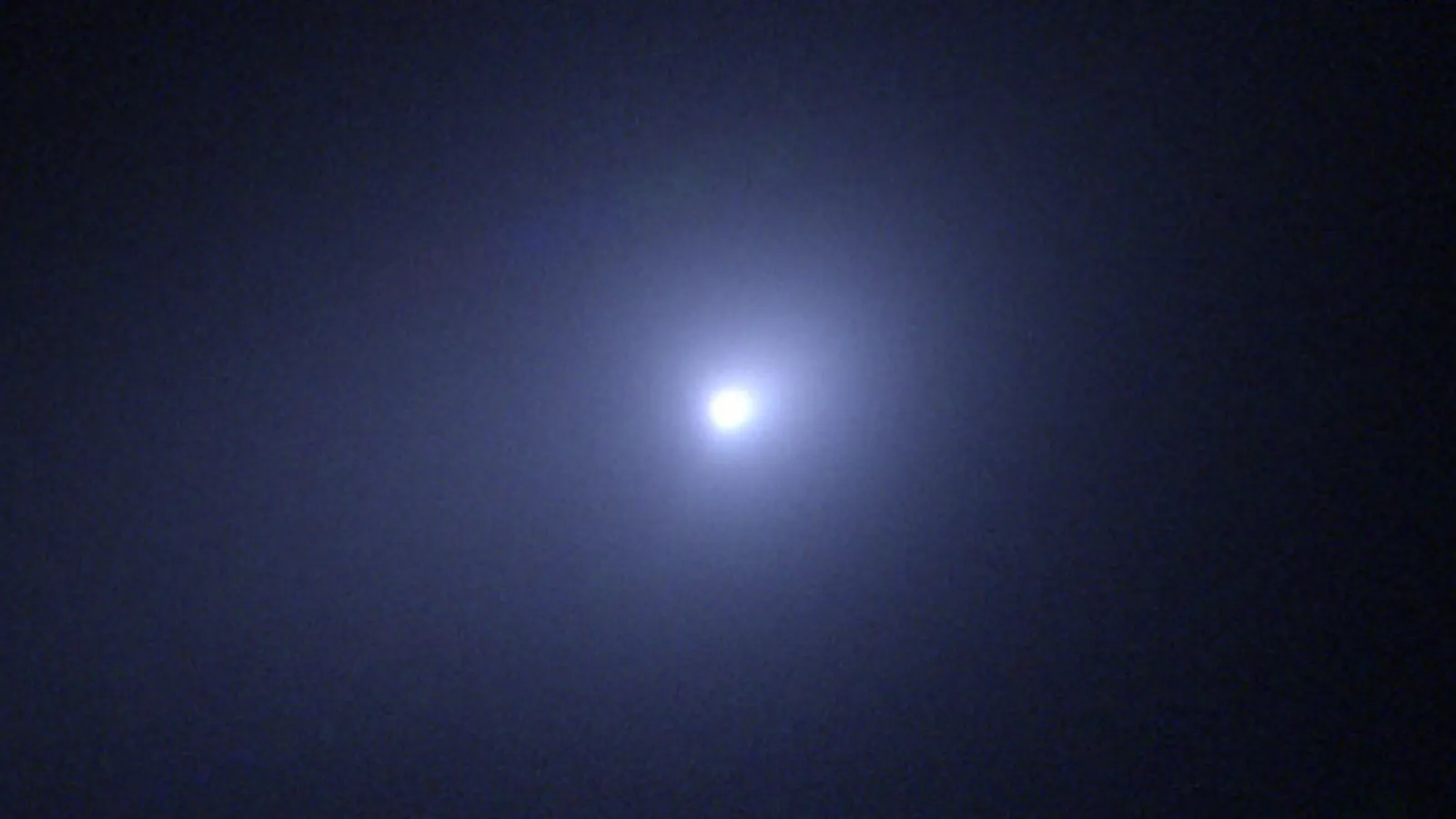
The Third Object From Another Star System Survived Its Closest Pass to Our Sun
It was discovered in July 2025. In October it vanished behind the Sun. When it came out the other side, it had survived perihelion, and it was nothing like the comets that formed with our solar system.
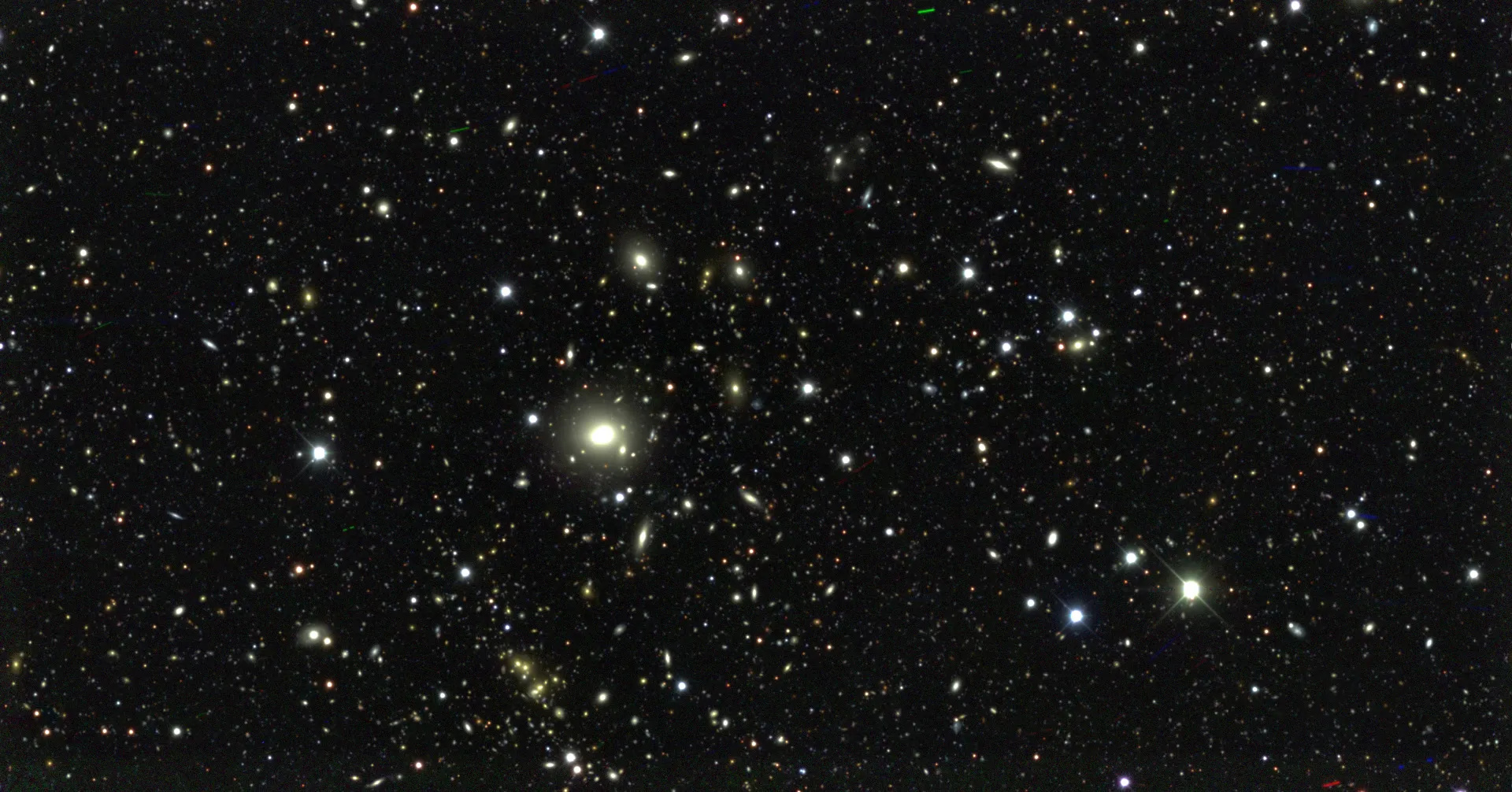
The Force Holding the Universe Apart May Already Be Dying
For thirty years, dark energy has been the most powerful force in cosmology, a steady push driving every galaxy apart forever. In April 2025, a five-year survey of fifteen million galaxies returned a result the standard model cannot explain.
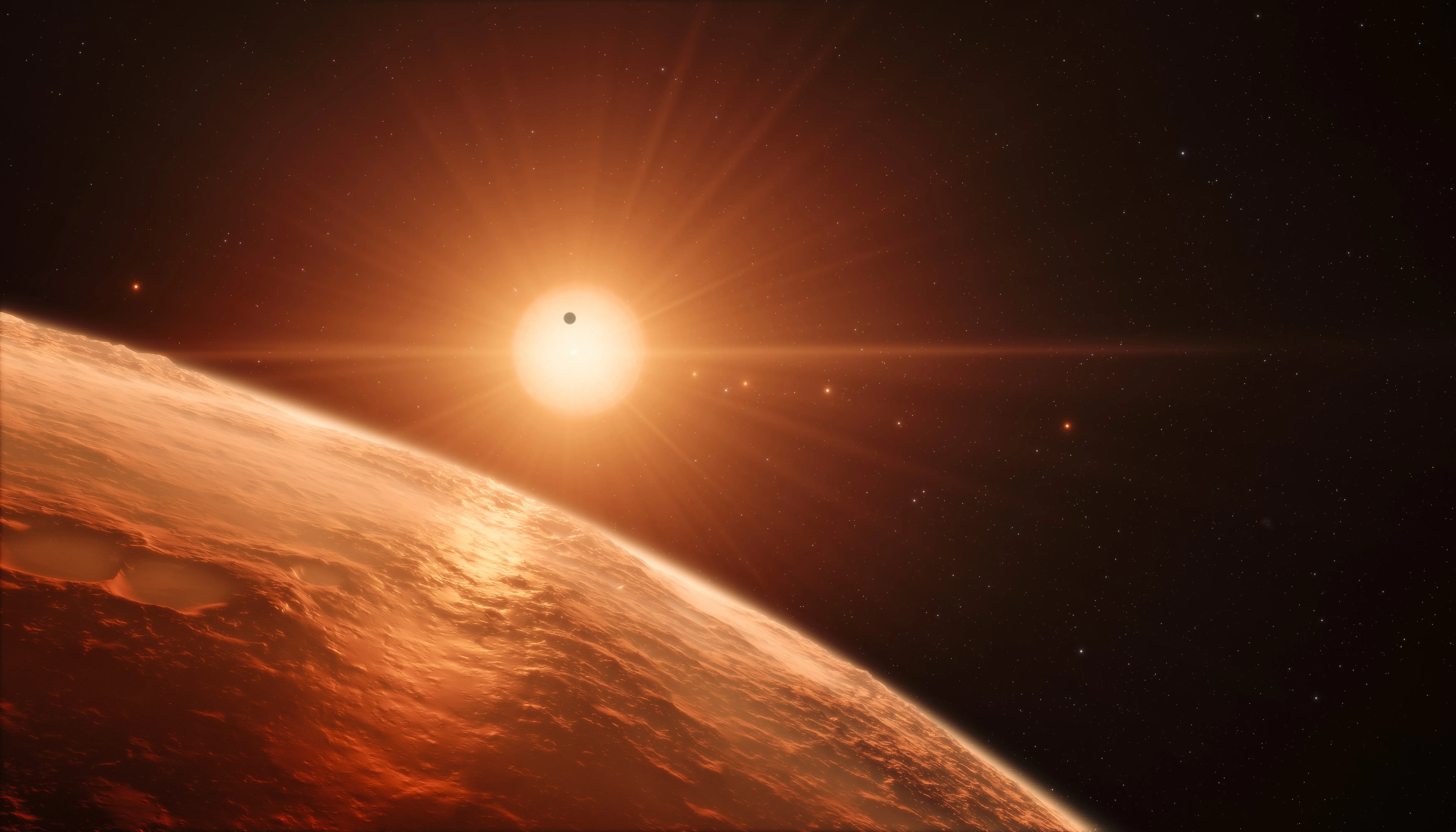
Seven Earth-Sized Worlds Around One Star, and What James Webb Just Found Out About Them
TRAPPIST-1 has seven Earth-sized planets at 40 light-years from Earth. Three sit in the habitable zone. JWST has spent two years probing their atmospheres. The picture is clarifying, and uncomfortable in places.
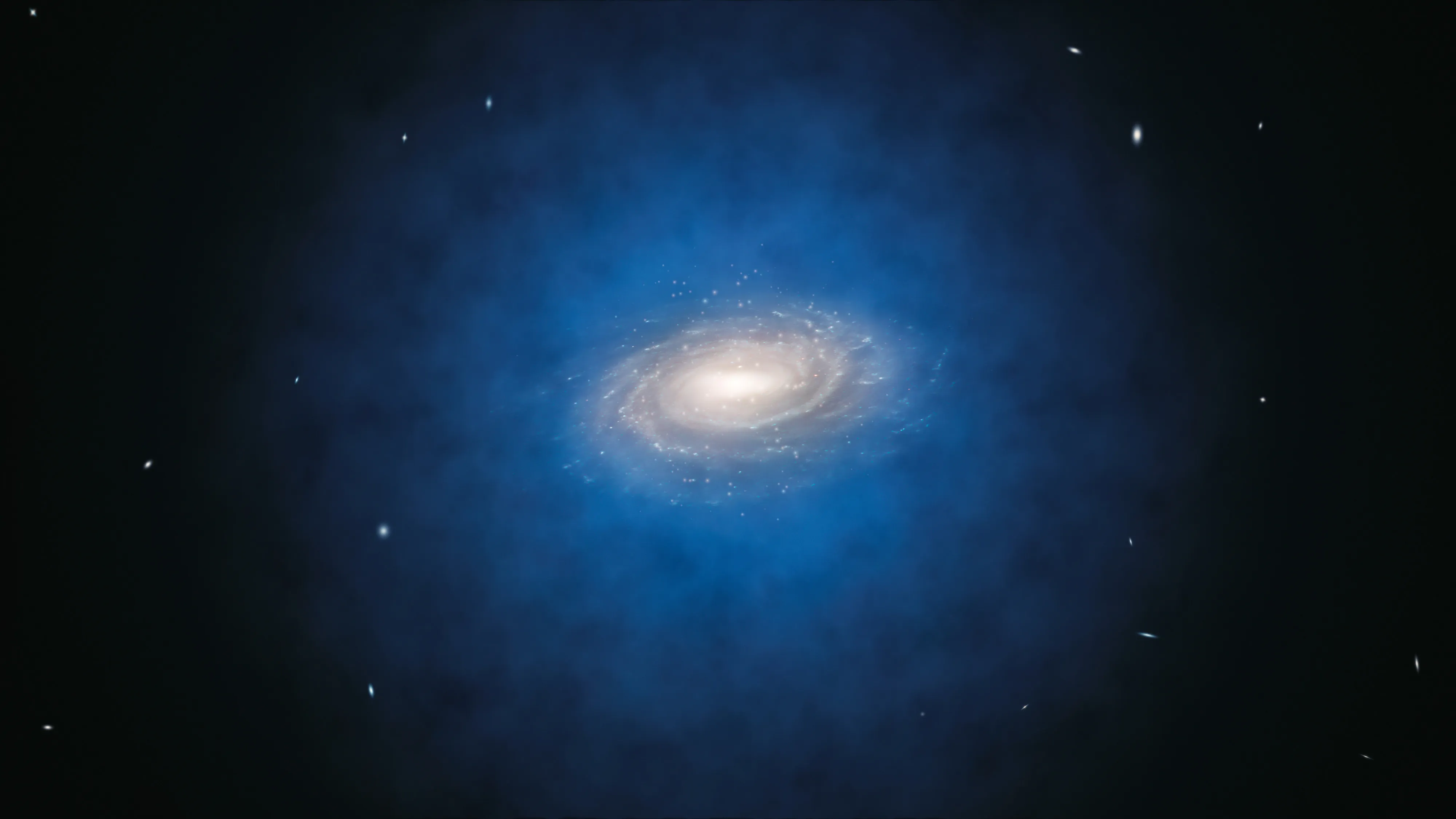
A Physicist Spent Two Years Cleaning Up Old Telescope Data. What Was Left Might Be the First Sight of Dark Matter.
92 years after Fritz Zwicky first identified dark matter, a 2025 paper by Tomonori Totani at the University of Tokyo claims to see its gamma-ray signature in 15 years of Fermi-LAT archival data. If the result holds up, the longest-standing problem in physics has finally cracked.
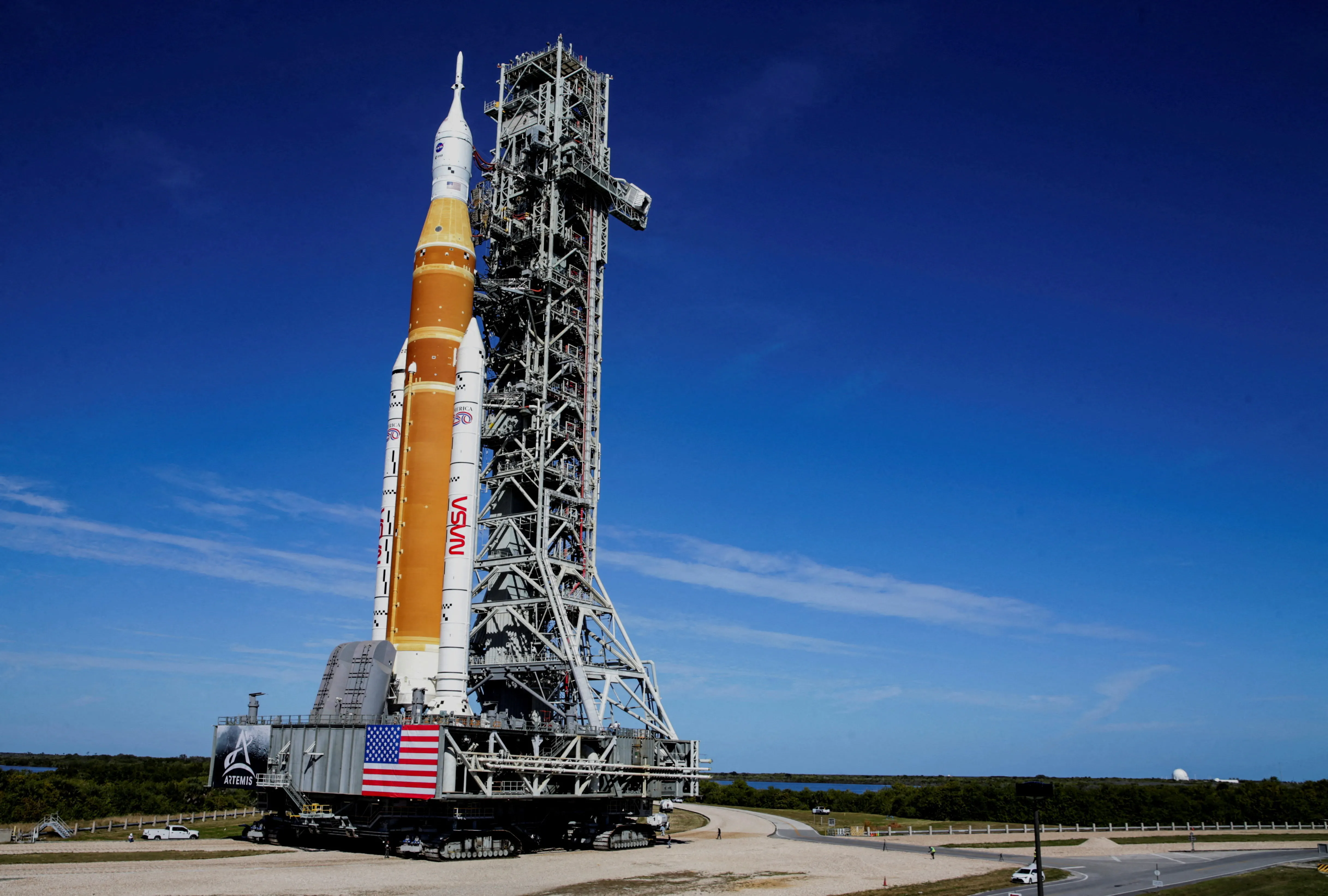
What Actually Happened to NASA's Return to the Moon
Artemis was announced in 2017 with a goal of landing on the Moon by 2024. In 2026 the first crewed mission has finally flown, and not to the surface. The original landing has been quietly redefined, a different upper stage has been chosen, and a geopolitical race with China is reshaping everything.
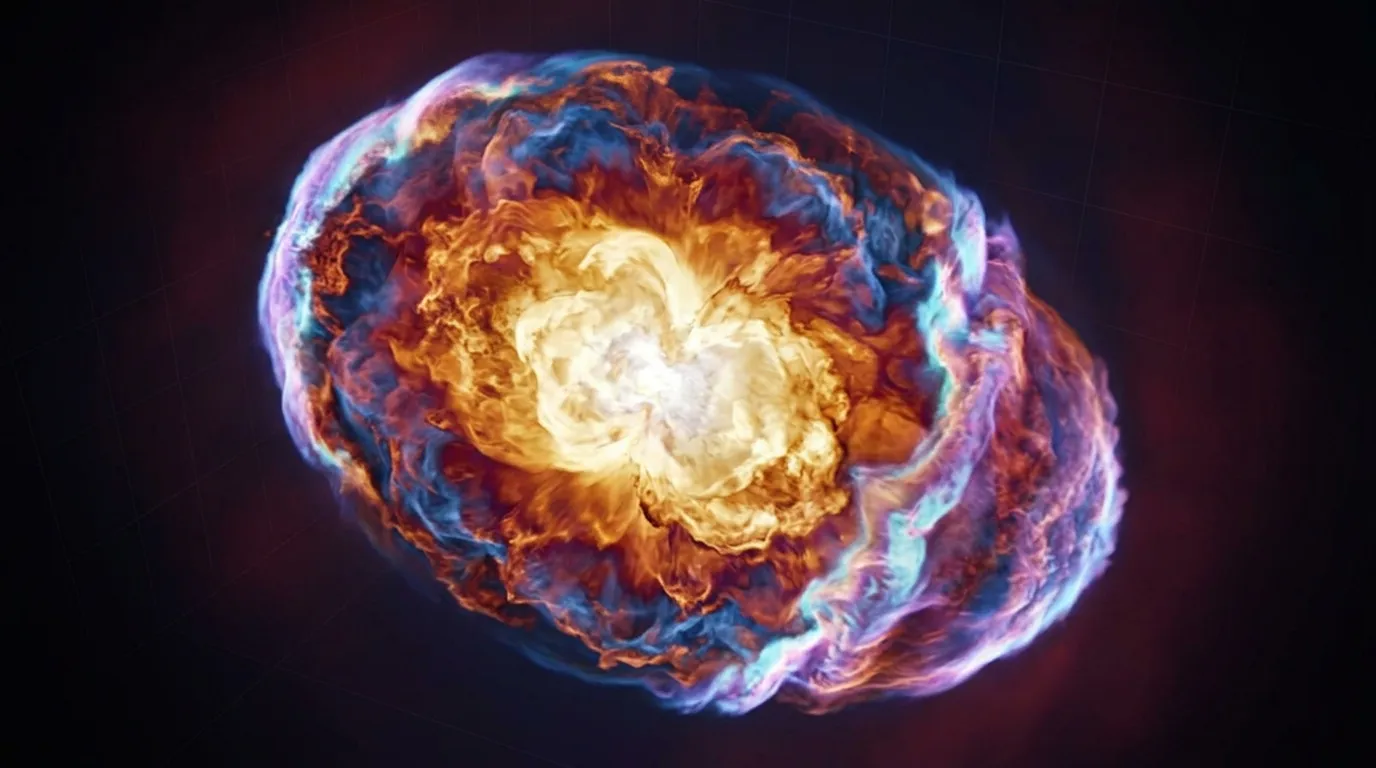
We Caught a Star Exploding, and Saw the Shape of the Blast for the First Time
On April 11, 2024, ATLAS detected a supernova within hours of explosion. A Beijing team raced to commandeer the VLT in Chile to measure its geometry, and what they found may rewrite 50 years of theory about how stars die.
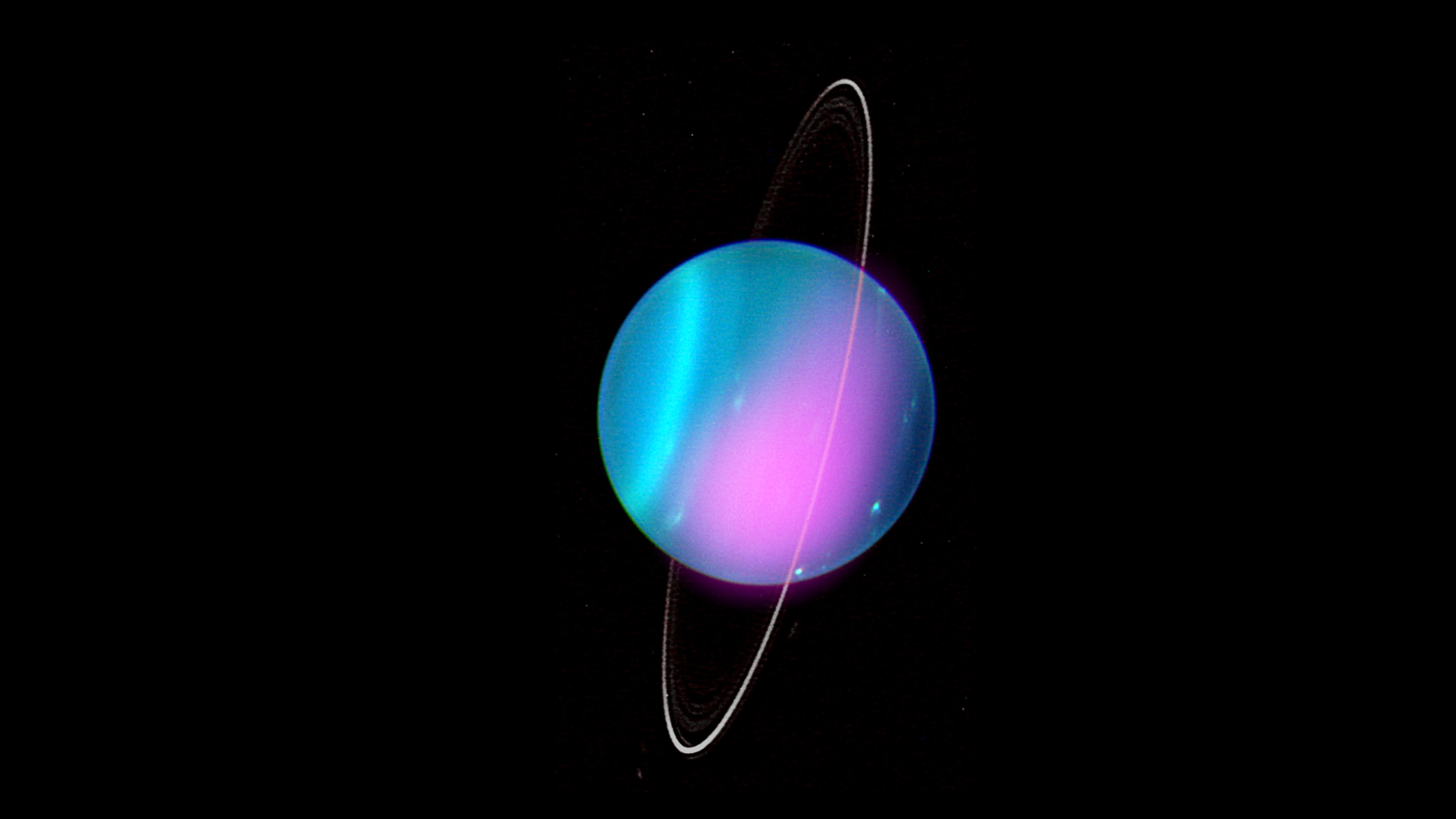
We Have Only Visited Uranus Once, and Almost Everything We Learned That Day Was Wrong
Voyager 2 flew past Uranus in 1986 during a freak solar event. A 2024 reanalysis shows that what we have believed about the planet for forty years was a snapshot of the wrong moment.
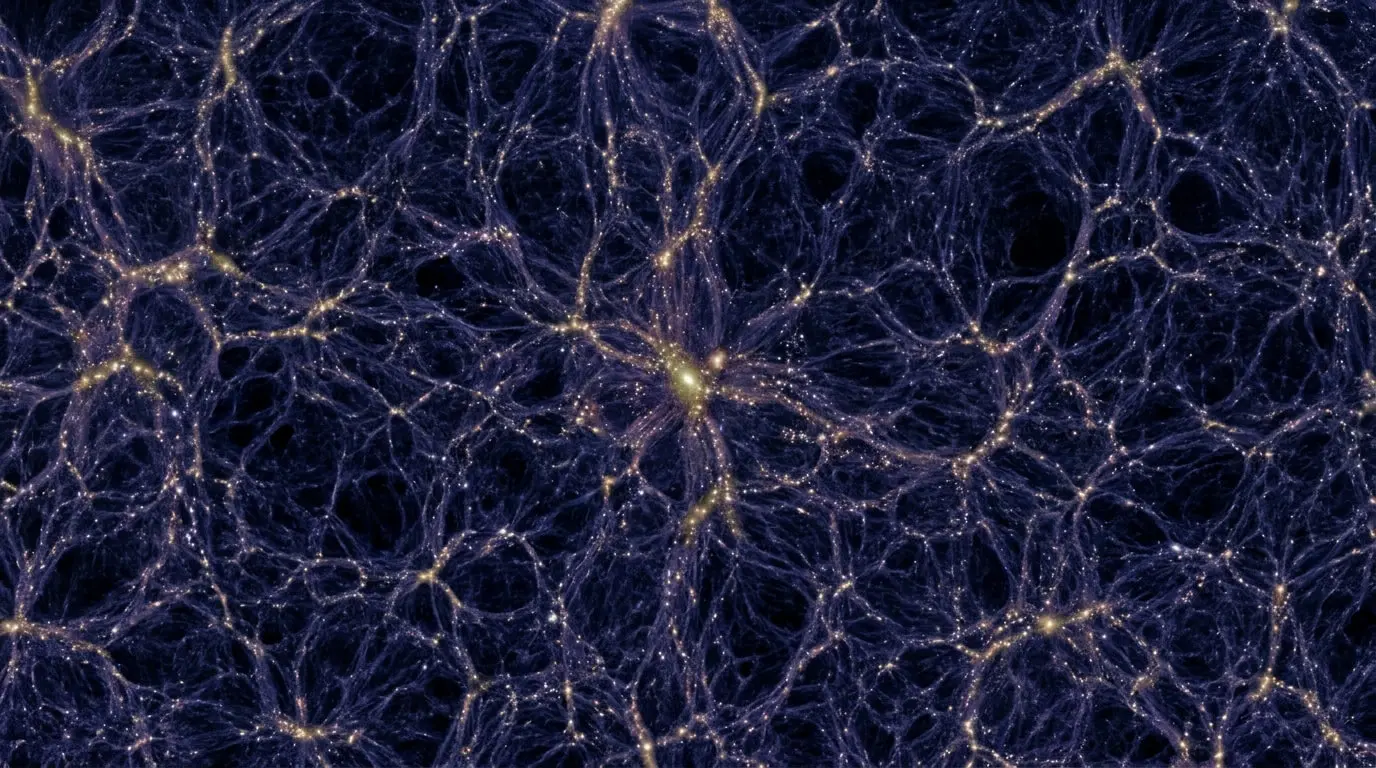
What Is the Universe Expanding Into?, and Why the Question Misunderstands Space
It is the most natural question to ask. Galaxies are flying apart. The space between them is growing. So where is it going? The answer turns out to be that the question itself is wrong.
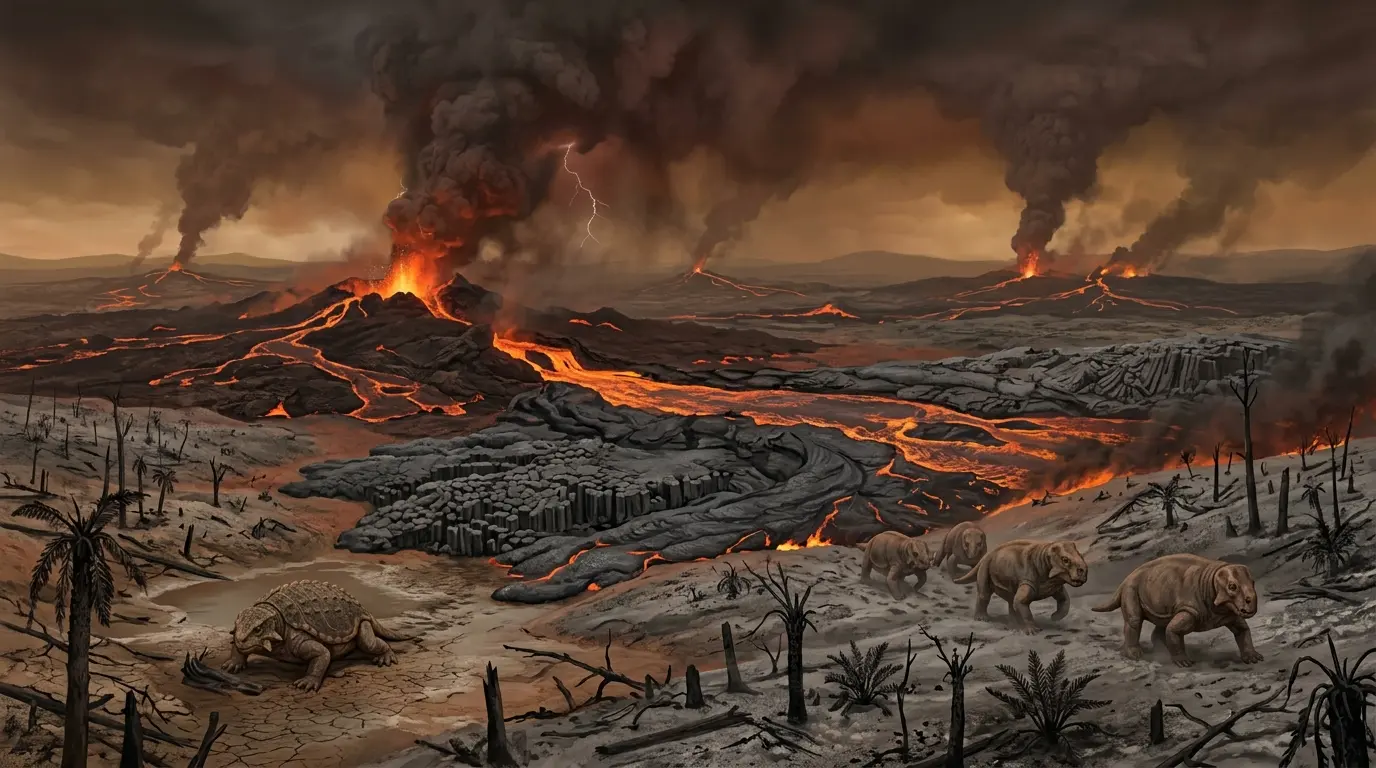
The Worst Day in Earth's History Lasted Two Million Years
252 million years ago, an event the paleontologists now call simply The Great Dying erased 96 percent of all marine species. The cause was something the planet itself did to itself, a slow-motion volcanic eruption in what is now Siberia.
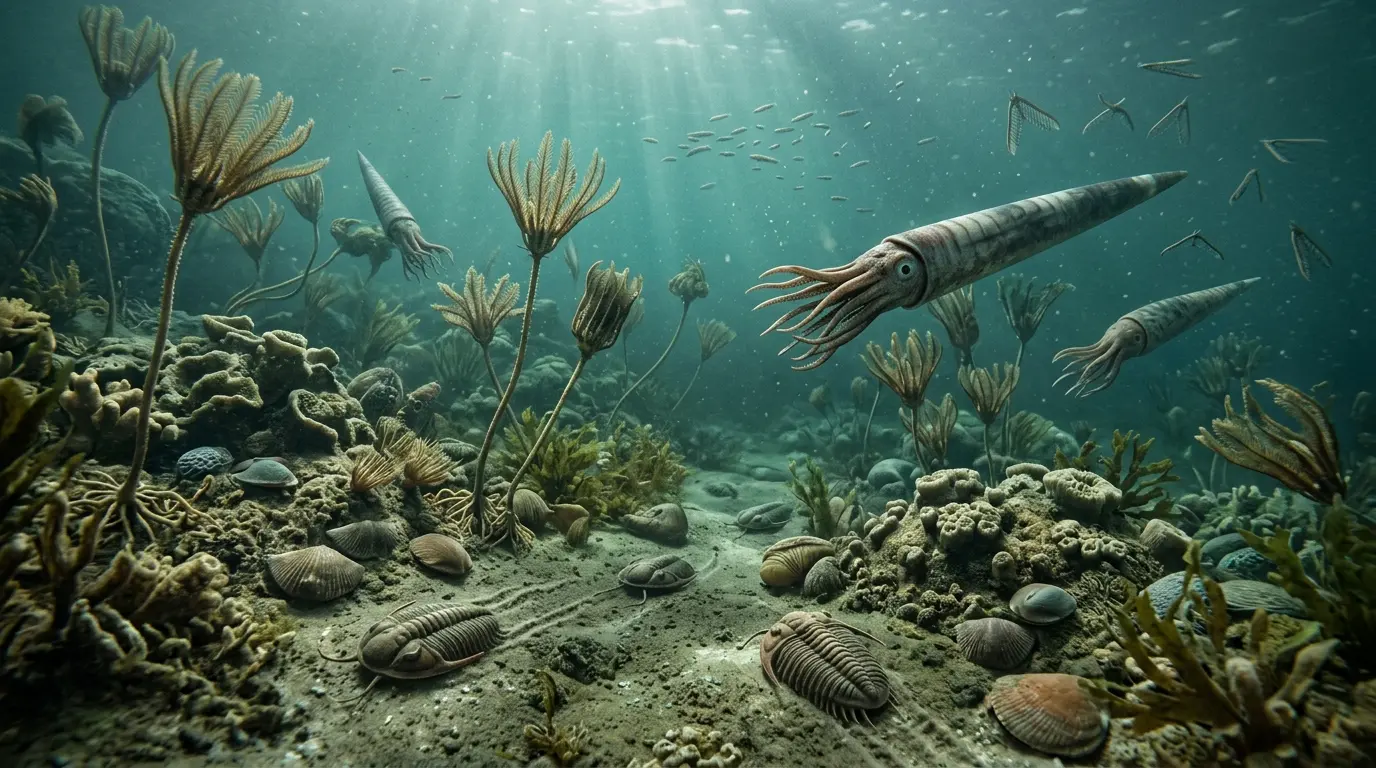
How Far Back in Earth's History Could a Human Community Actually Survive?
Take a hundred modern humans, give them stone-age tools, and drop them into a random point in Earth's 4.6 billion-year history. The honest floor is roughly 298 million years ago. Anything earlier, and the air itself would kill them.
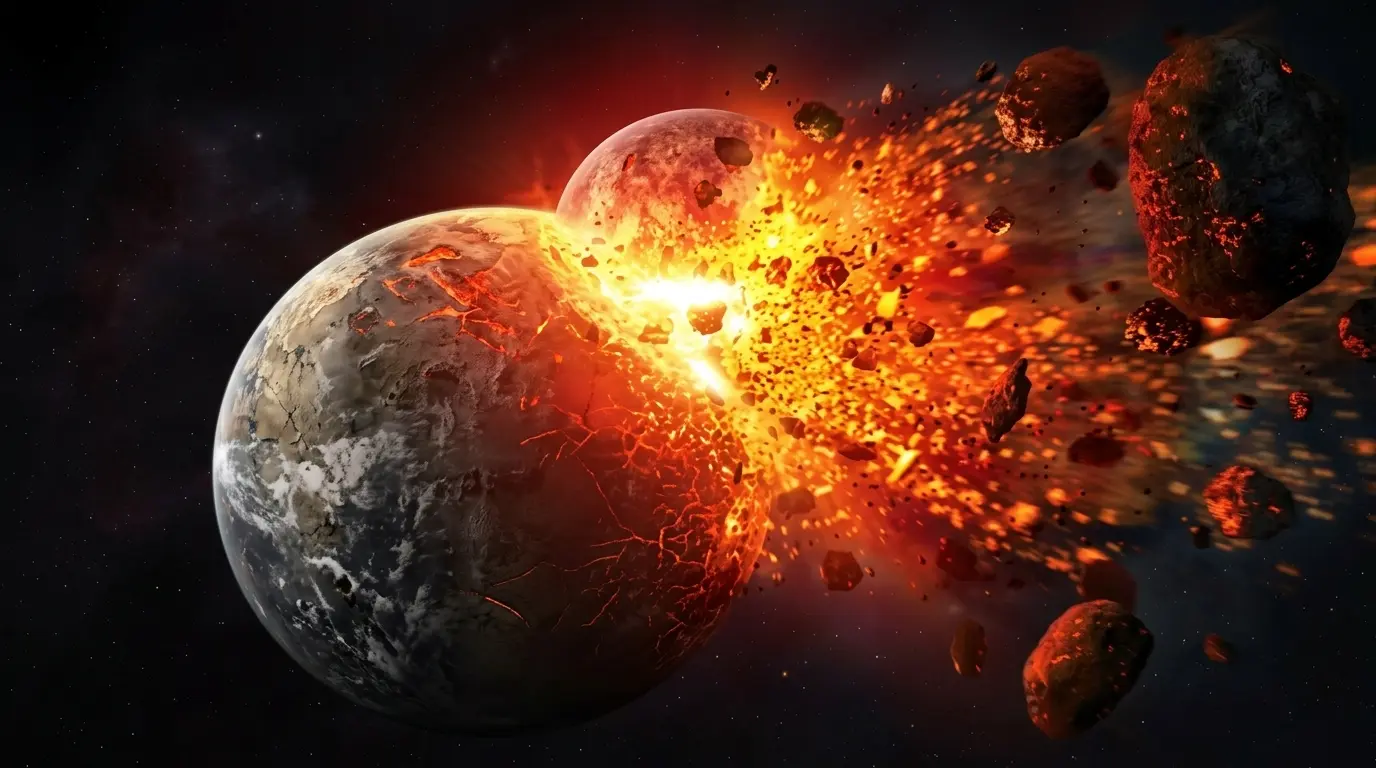
The Collision That Made the Moon, and the Habitable Planet Underneath It
About 4.5 billion years ago, an object roughly the size of Mars struck the proto-Earth. The collision was the most violent event in our planet's history. It also made the modern Earth habitable.
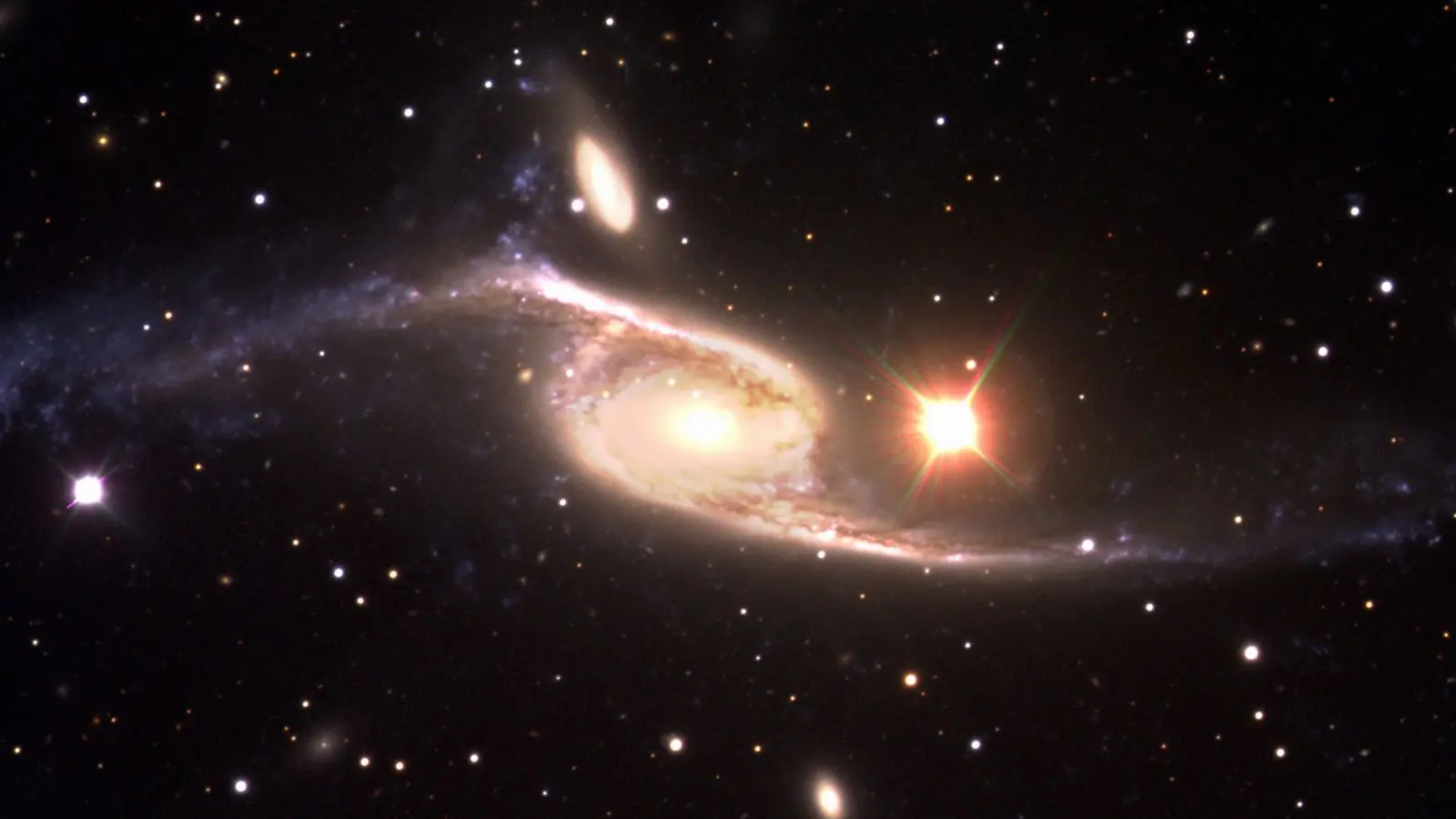
The Largest Spiral Galaxy We've Ever Found, and the Smaller Galaxy That's Quietly Tearing It Apart
NGC 6872 is roughly 522,000 light-years across, more than five times the diameter of the Milky Way. The reason it is that large is a smaller galaxy named IC 4970, which has been gravitationally pulling at its outer arms for roughly 130 million years.
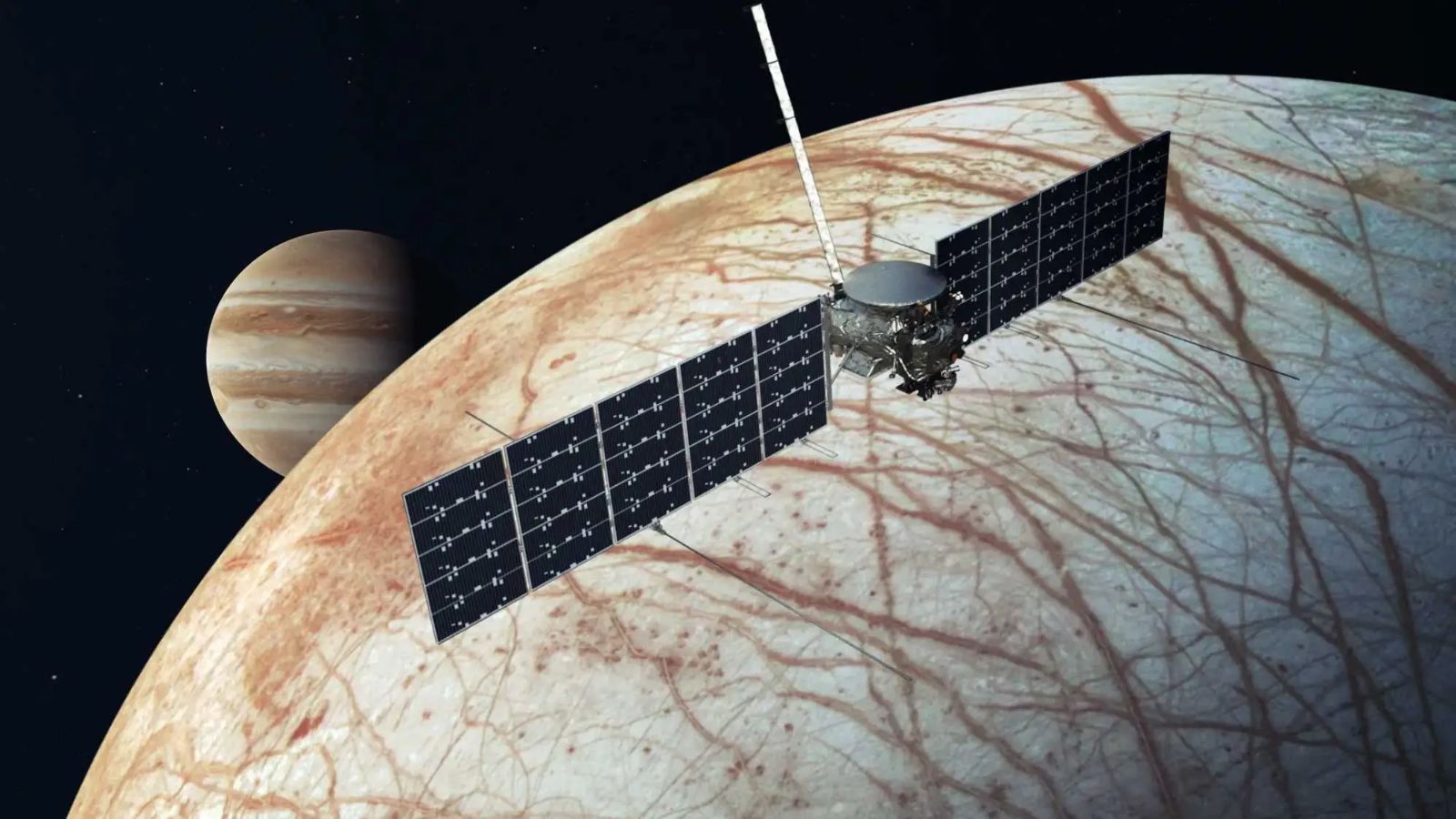
The Deepest Place on Earth Tells Us What to Look For on Europa
At 10,935 meters down, in pitch darkness and pressure that would crush a submarine, life persists. Tube worms grow two meters long around hydrothermal vents that exist on no map. The same kind of vent, the same chemistry, possibly the same biology, is the leading candidate for where life beyond Earth might exist. Europa Clipper is on its way.
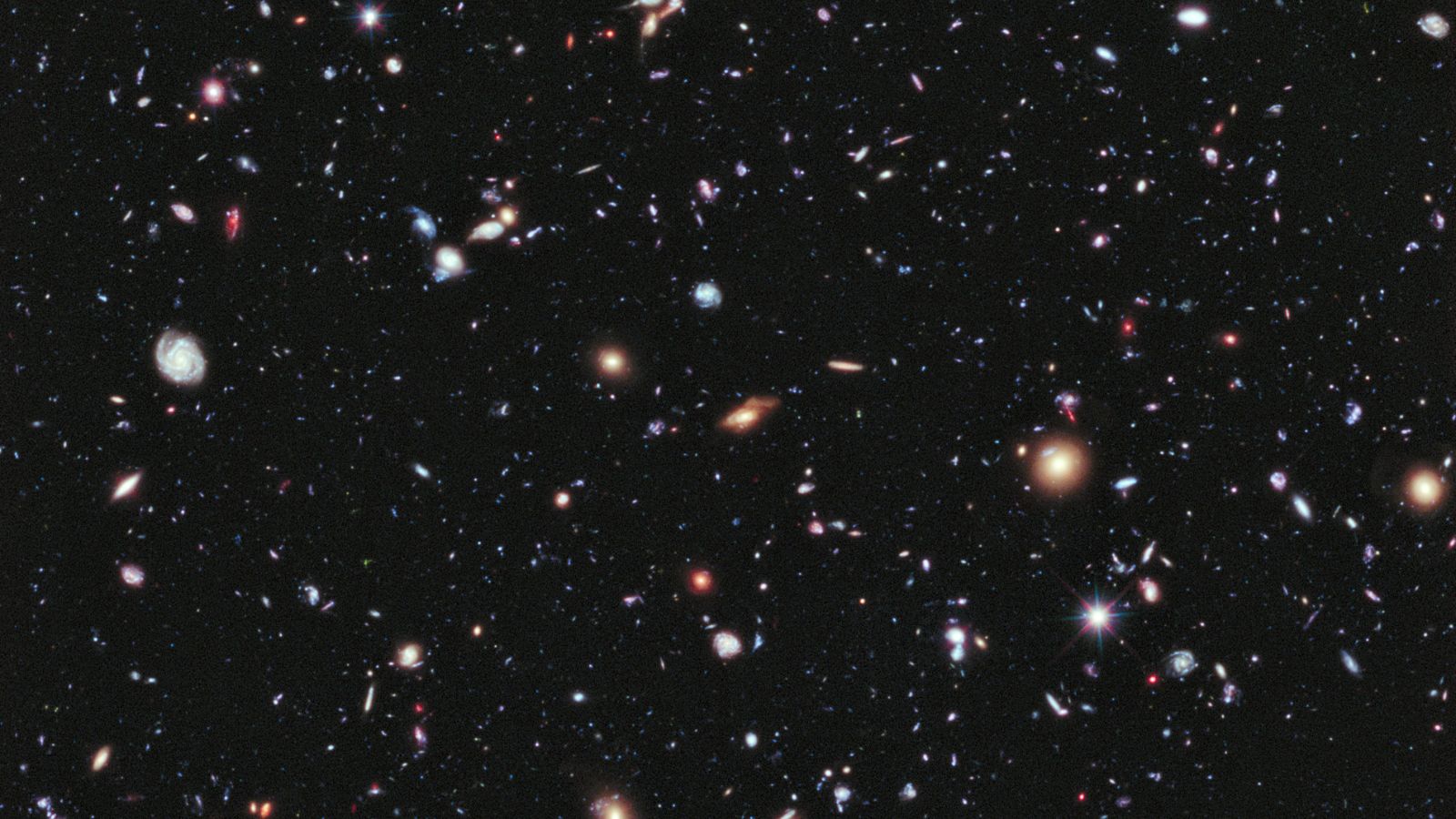
Where Is Everybody?, and Why the Most Famous Question in Astronomy Just Got Quietly Demolished by Math
Enrico Fermi reportedly asked the question over lunch at Los Alamos in 1950. For seventy-five years it has been one of the most cited puzzles in science. In 2018, three Oxford researchers showed with one careful recalculation that the entire premise of the paradox might be wrong, and the universe being silent might mean exactly nothing.
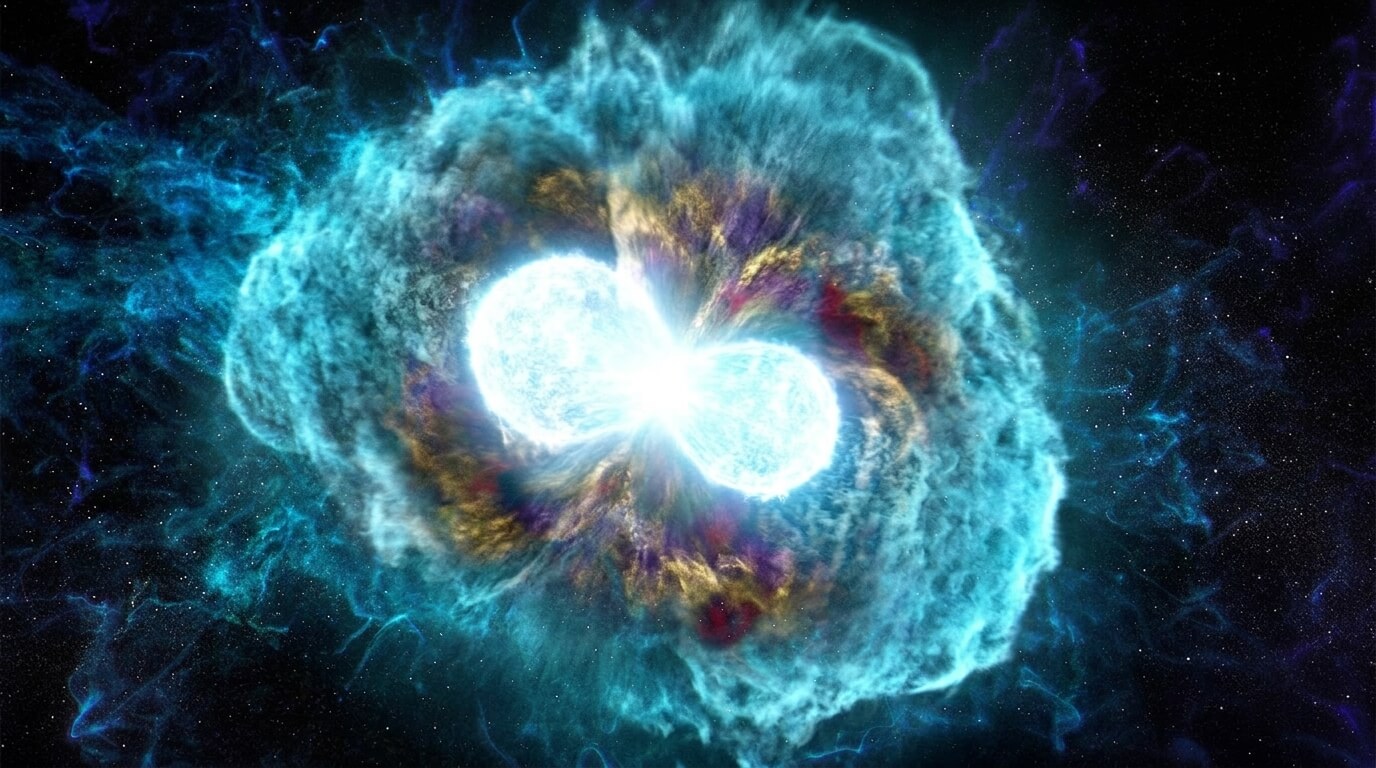
The Particle That Built the Universe Cannot Survive Ten Minutes Alone
A free neutron has a half-life of approximately ten minutes and eleven seconds. Inside an iron nucleus, the same particle is essentially immortal. The 10-minute half-life is the parameter that determined how much helium the Big Bang produced, if it had been five minutes shorter, our universe would be sterile.

The Greatest Idea in Modern Physics Came From a Mathematician the University Refused to Hire
In 1918, Emmy Noether proved that every conservation law in physics comes from a symmetry. Einstein could not get her tenure. The University of Göttingen senate ruled that admitting women would 'overthrow academic order.' Today her theorem underpins everything from particle physics to general relativity, and reveals an uncomfortable truth in cosmology: in our expanding universe, energy is not conserved.
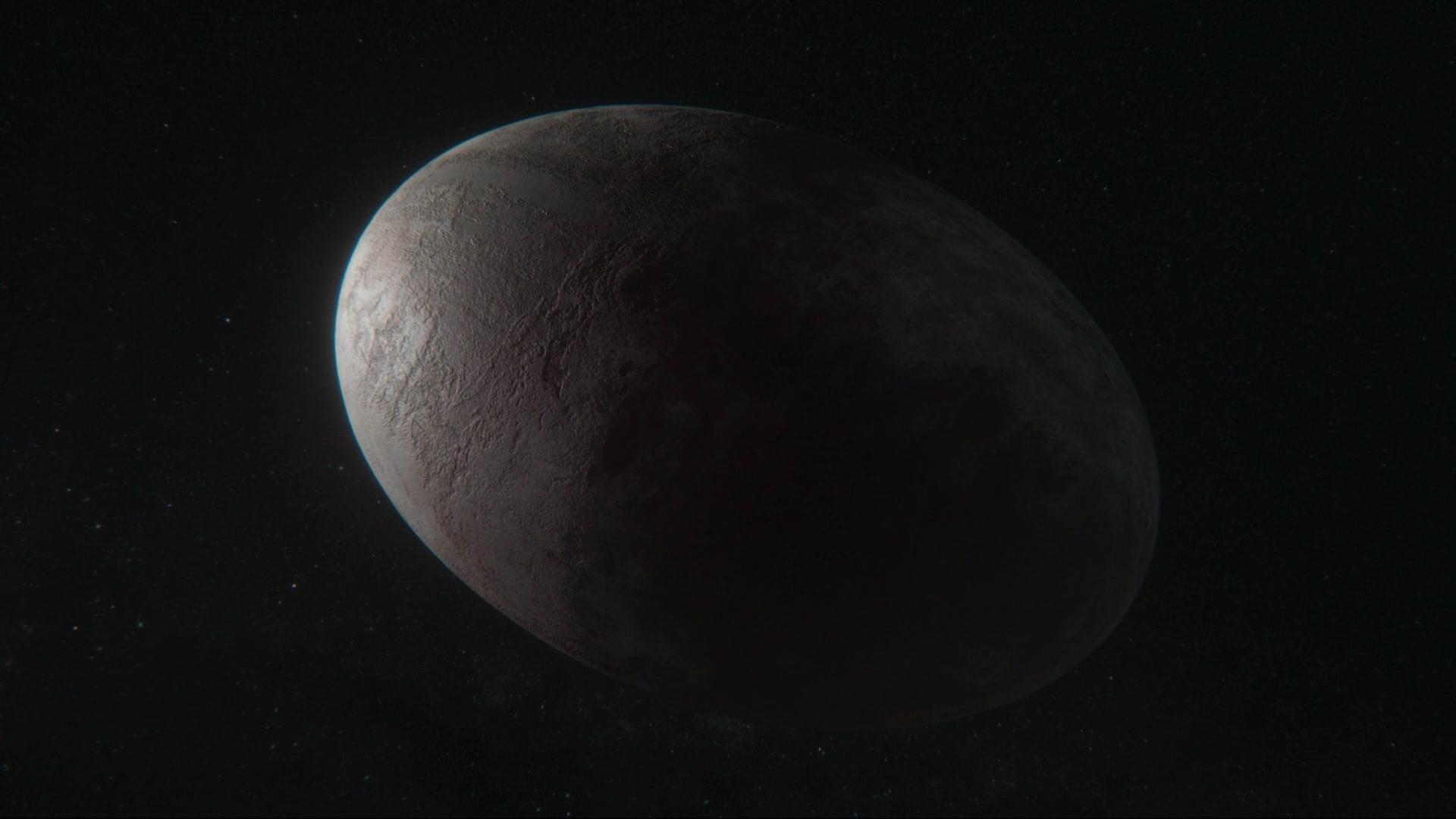
The Strangest Dwarf Planet in the Solar System Is Shaped Like an Egg, Has Two Moons, and Spins Every 3.9 Hours
Pluto is round. Eris is round. Haumea is shaped like an egg because it spins so fast that gravity cannot keep up. It is the only known object beyond Neptune to have rings, and the center of one of the bitterest priority disputes in modern astronomy.
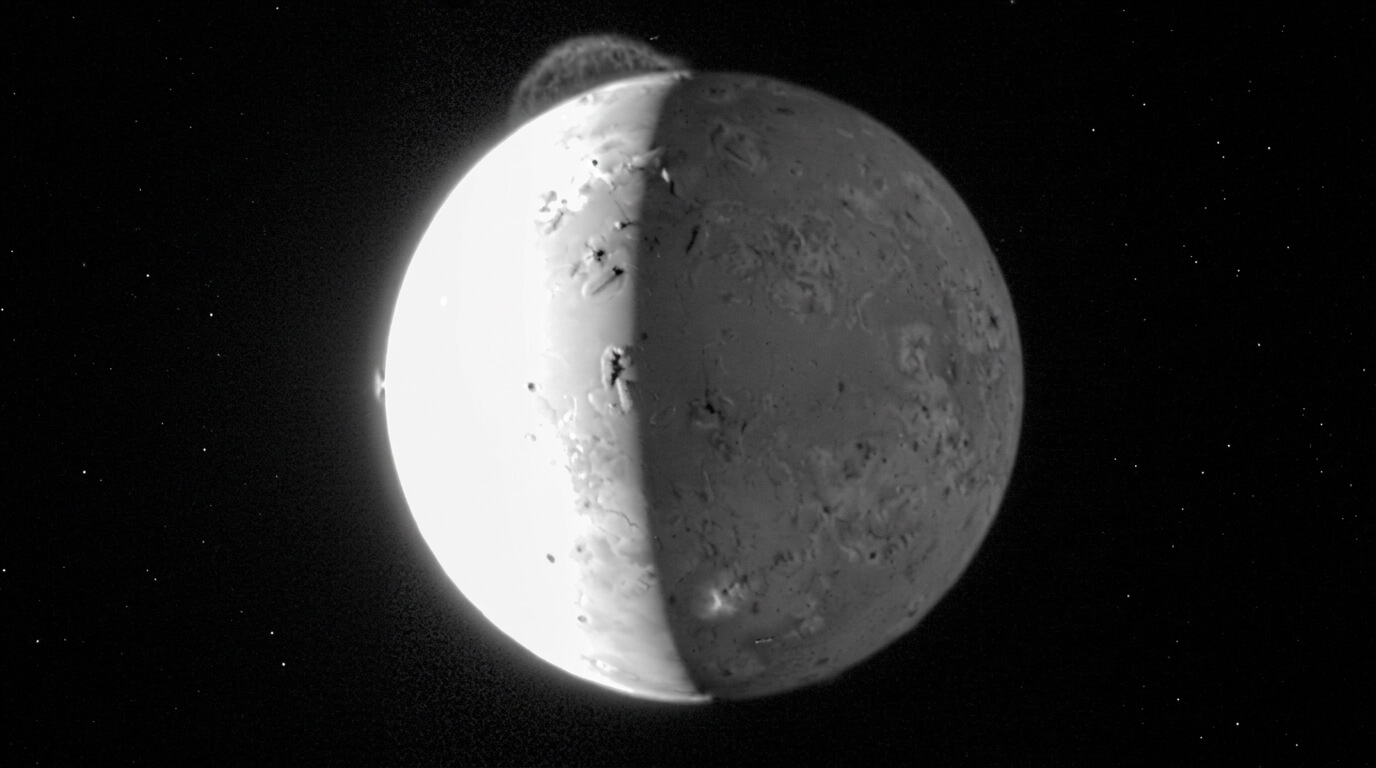
Io Is the Most Violent World in the Solar System, and Juno Just Got Closer Than Anyone in 23 Years
Jupiter's moon Io has 400 active volcanoes, lakes of molten lava, and mountains taller than Everest. The mechanism is not solar heat, it is gravity tearing rock apart in real time. Juno's December 2023 flyby came within 1,500 kilometers, the closest approach since Galileo.
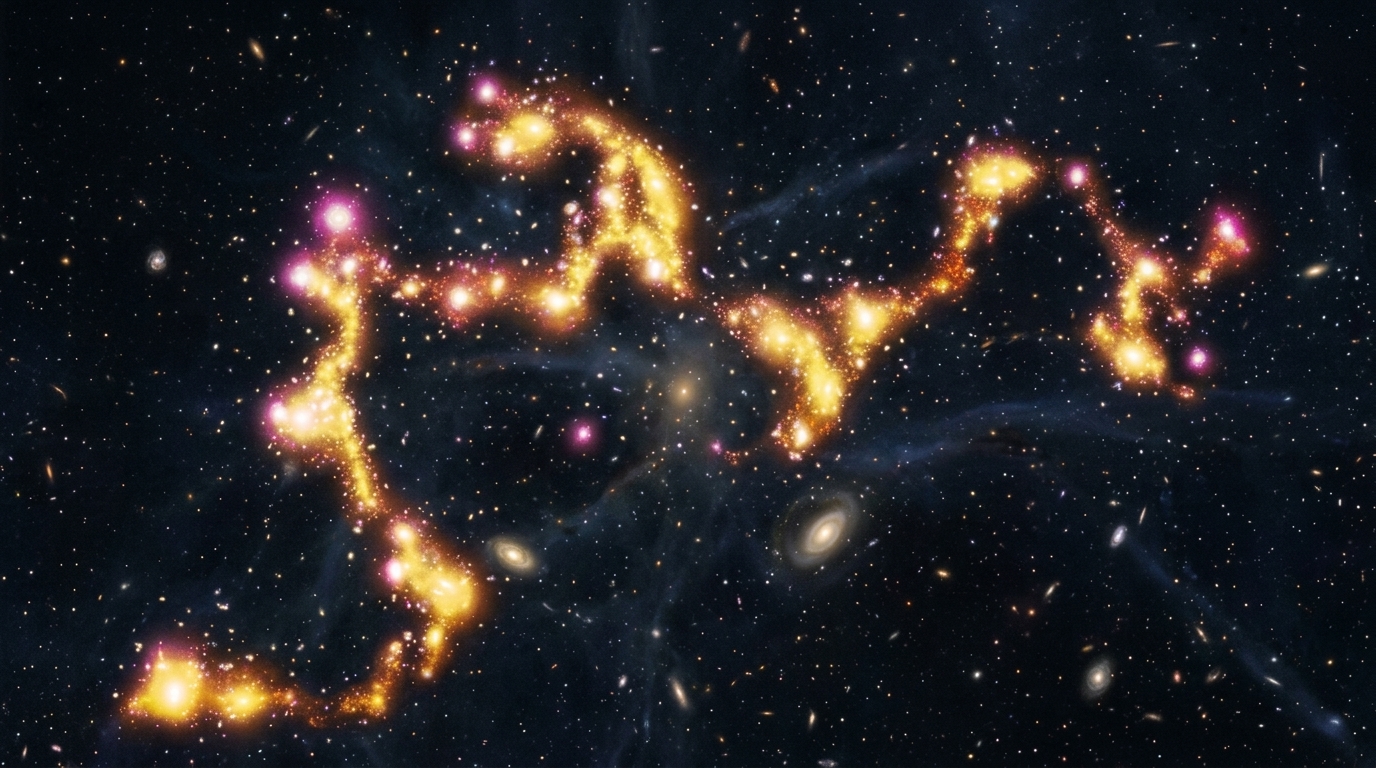
The Largest Things in the Universe Are Things That Shouldn't Exist
The Cosmological Principle says nothing should be larger than about 1.2 billion light-years. The Hercules-Corona Borealis Great Wall is ten billion. Three other structures break the same rule. Astronomers do not yet agree on what to do with them.
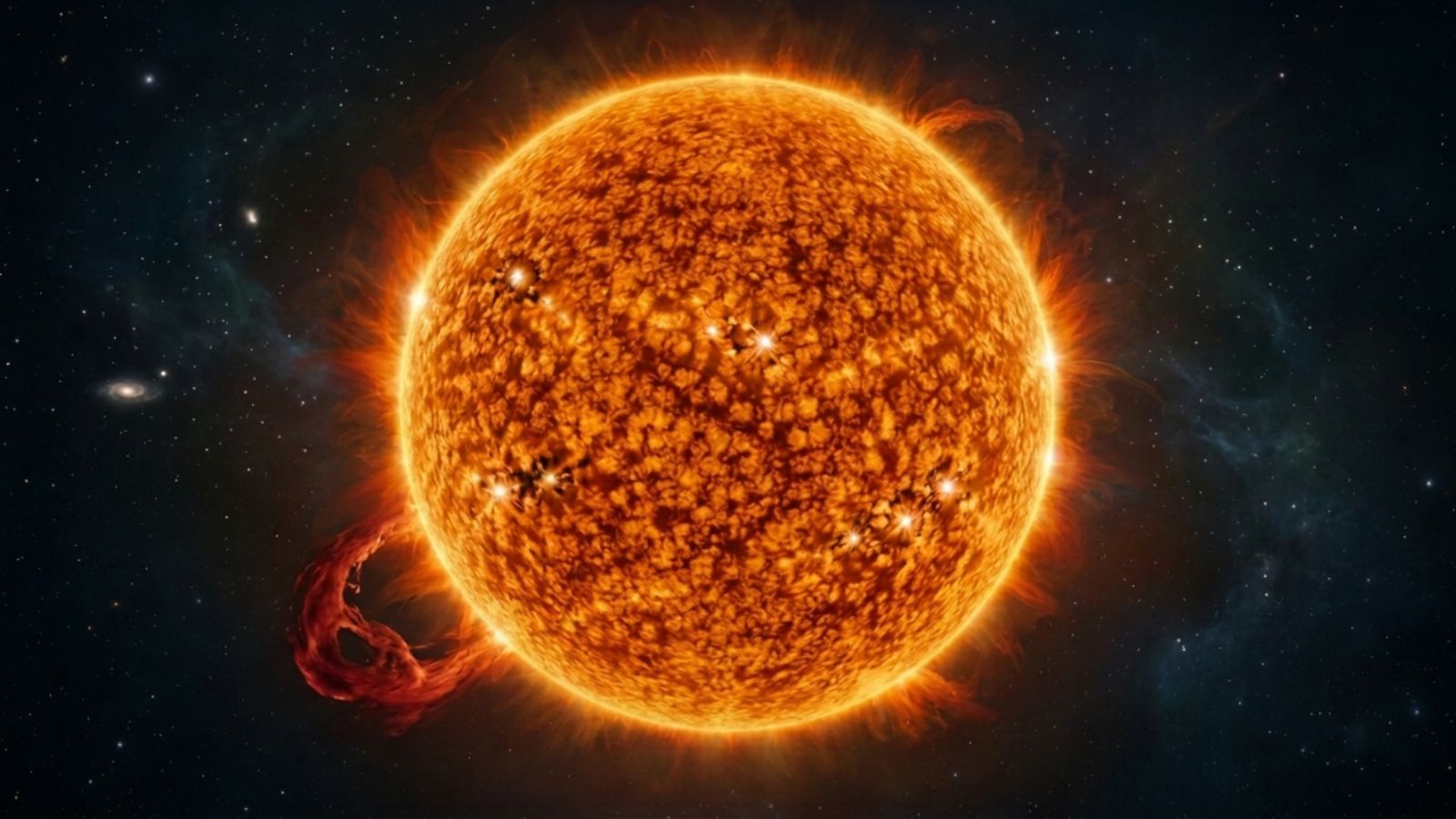
How Long Could Humanity Last?, A Cosmic Inventory of Things That Could End Us
Roughly 74,000 years ago, our species nearly went extinct. The list of things that could finish what Toba started is well-catalogued, the timescales are surprisingly precise, and one of the entries is a star that will pass 0.06 light-years from the Sun in roughly 1.3 million years.
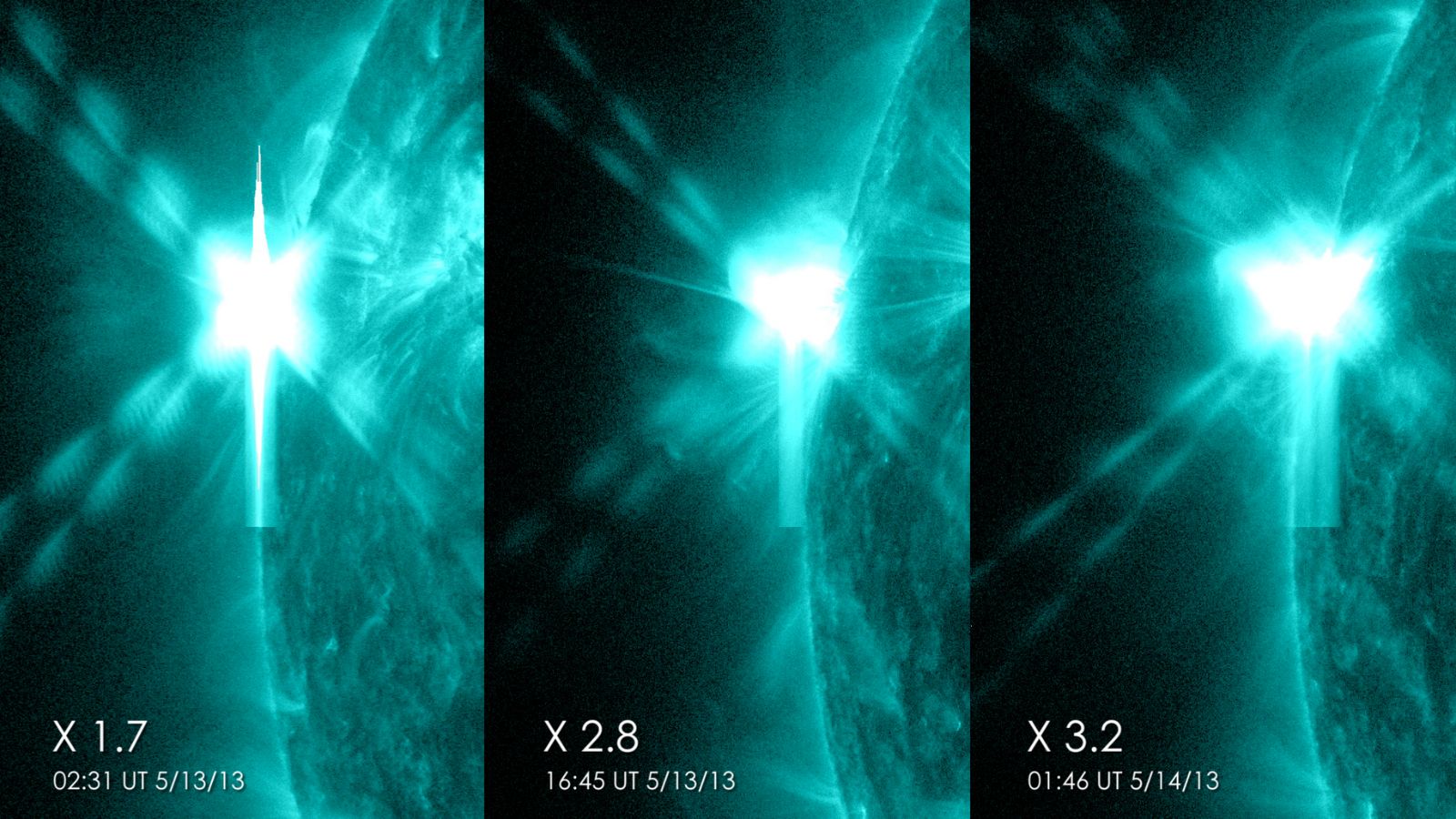
The Sun Just Hit Its Peak, and the 1859 Storm That Could Repeat Tomorrow
On September 1, 1859, telegraph operators around the world were knocked out of their chairs by sparks from their equipment. NASA estimates that an event of the same magnitude today would cost between one and two trillion dollars and take a decade to recover from. The Sun is now at the peak of Cycle 25.
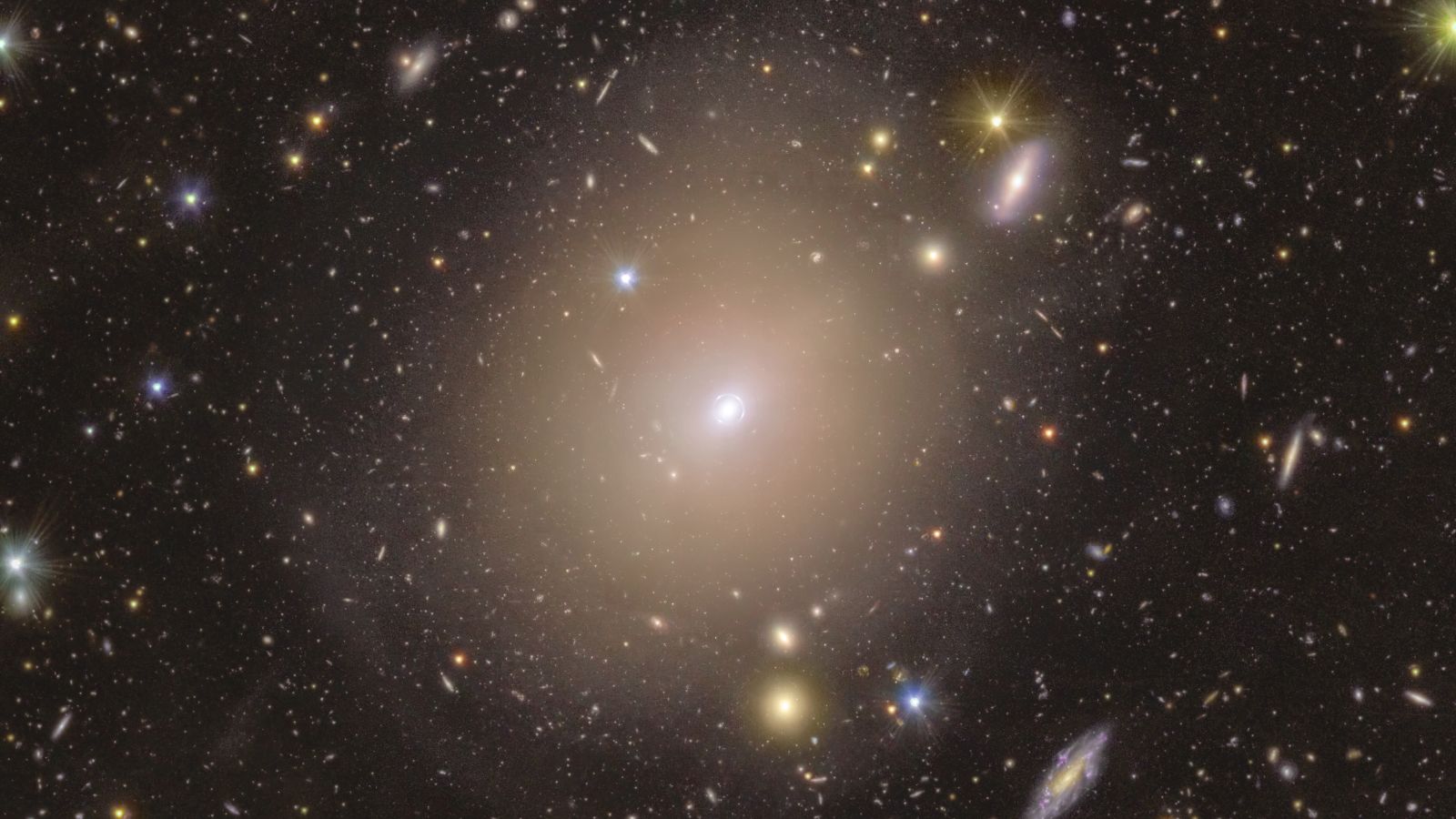
How AI Is Quietly Rewriting Astronomy, From Gravitational Waves to a New Einstein Ring
The Vera Rubin Observatory will produce 20 terabytes of imaging per night. Astronomy still functions as a science only because it has, very quietly, handed most of its eyes over to machines, and the machines have already started discovering things humans hadn't thought to look for.
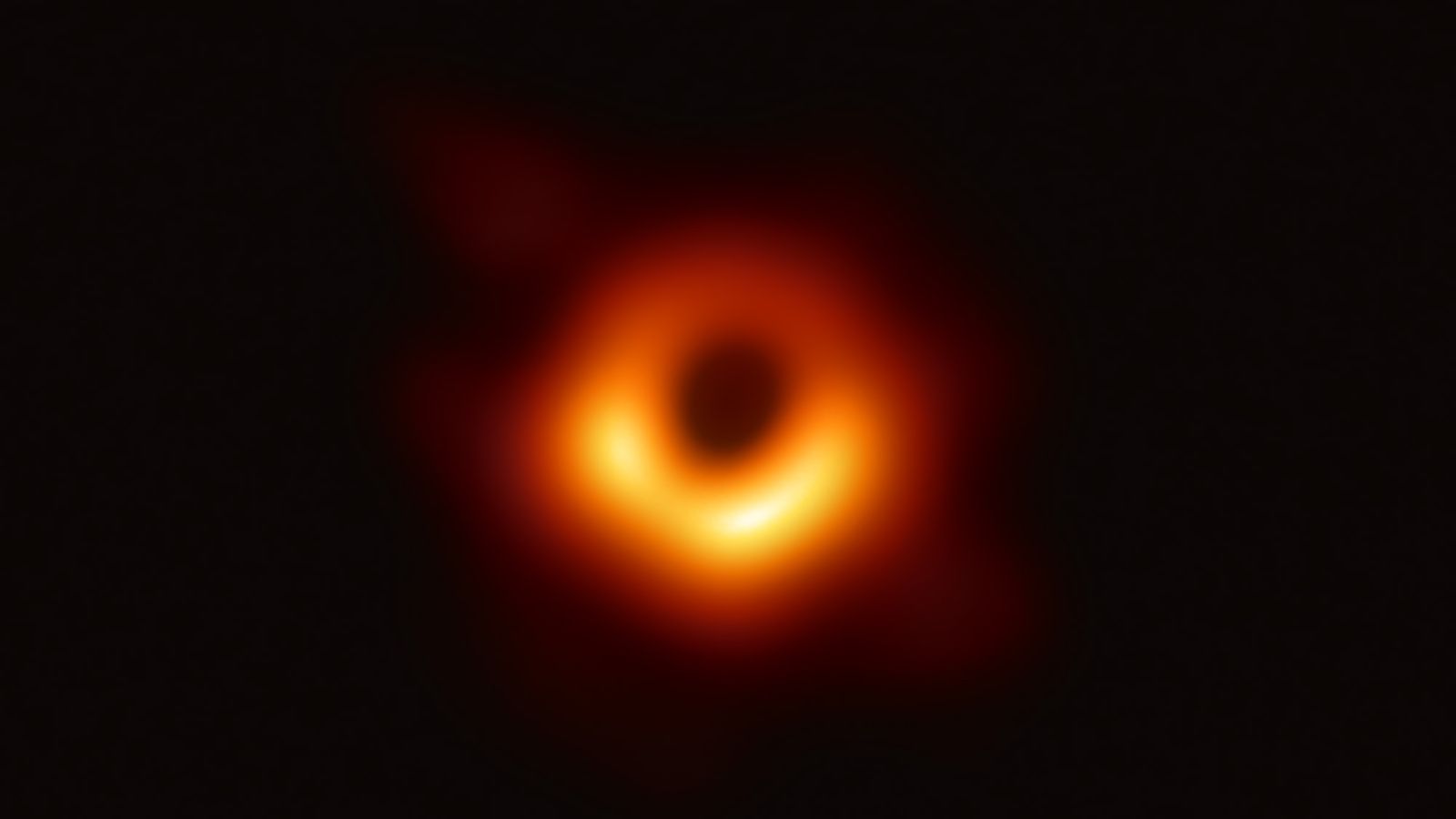
How Black Holes Eventually Die, And the Lab That Glimpsed It Happening
In 1971, Stephen Hawking proved a theorem stating that the surface area of a black hole's event horizon can never decrease. Three years later, he proved himself wrong. The mechanism that makes black holes die has now been observed, not in the sky, but in a chilled laboratory in Israel.
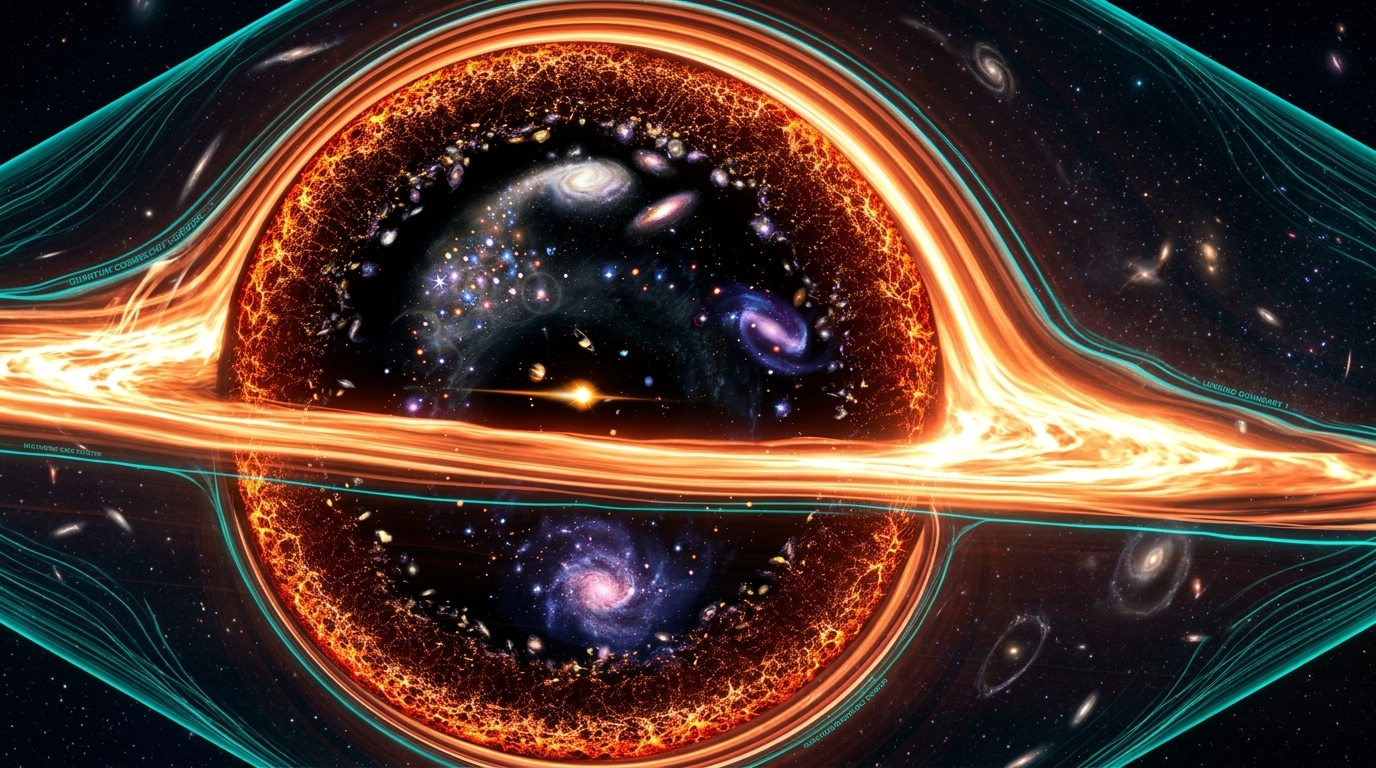
What If Every Black Hole Contains a Universe?
In 1972, the Indian-American physicist Raj Kumar Pathria published a one-page paper in Nature with a single audacious suggestion: the observable universe and a black hole may, mathematically, be the same kind of object. Half a century later, the idea has matured into a serious branch of theoretical cosmology.
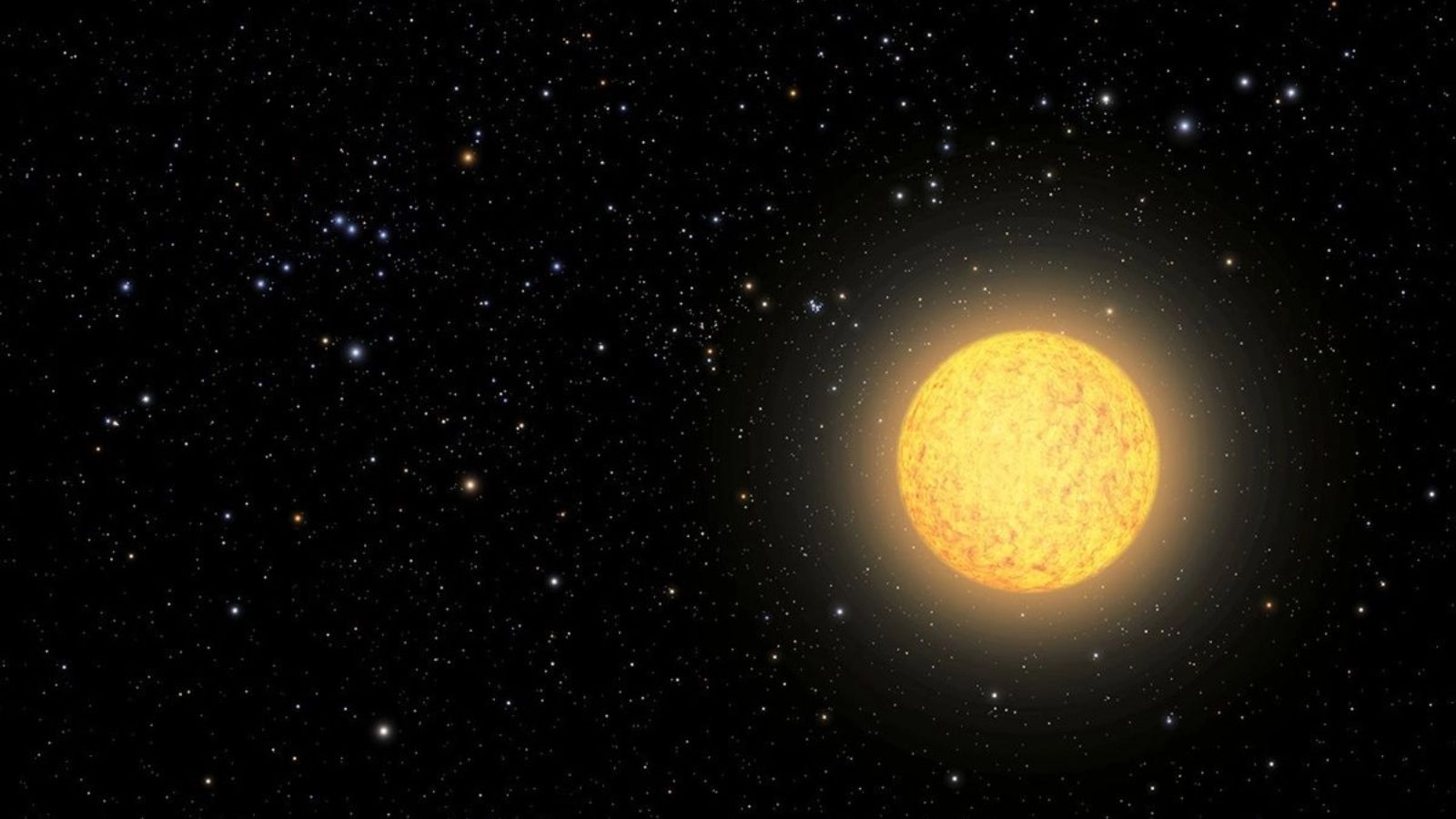
The Universe Has Too Little Lithium. And One of Its Stars Is Older Than It Should Be.
Big Bang nucleosynthesis predicts the universe's first three elements with surgical precision. Hydrogen and helium check out. Lithium is off by a factor of three. And in the constellation Libra, one star appears to be slightly older than the universe itself.
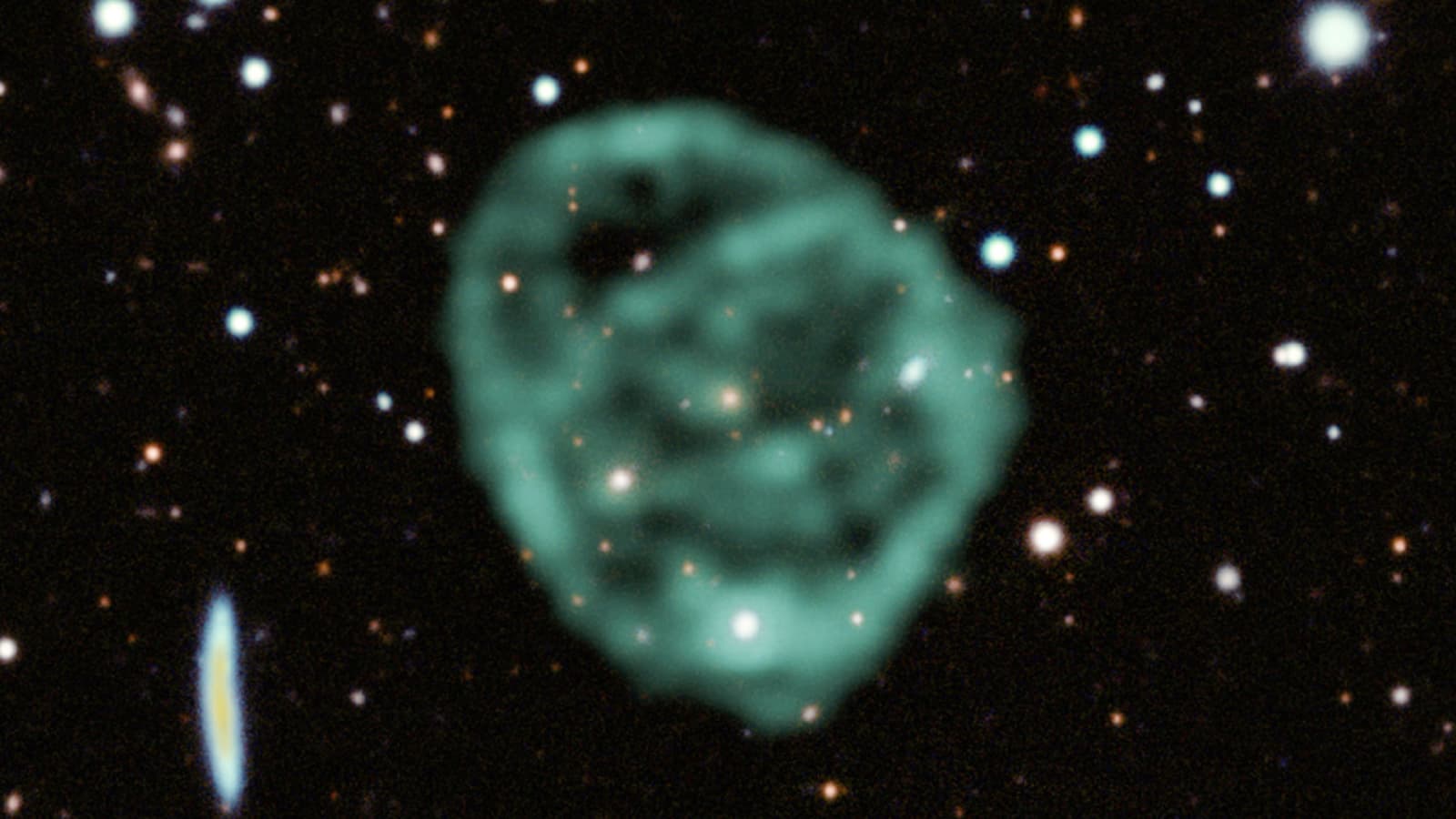
There Are Giant Rings in Deep Space, and Nobody Knows What Made Them
In 2019, an astronomer scrawled 'WTF' across the corner of an image. She had spotted a perfectly circular halo of radio waves a million light-years across, with no obvious cause. Five more have been confirmed since. Astronomers have a name for them, three competing theories about what they are, and no agreement on which is right.
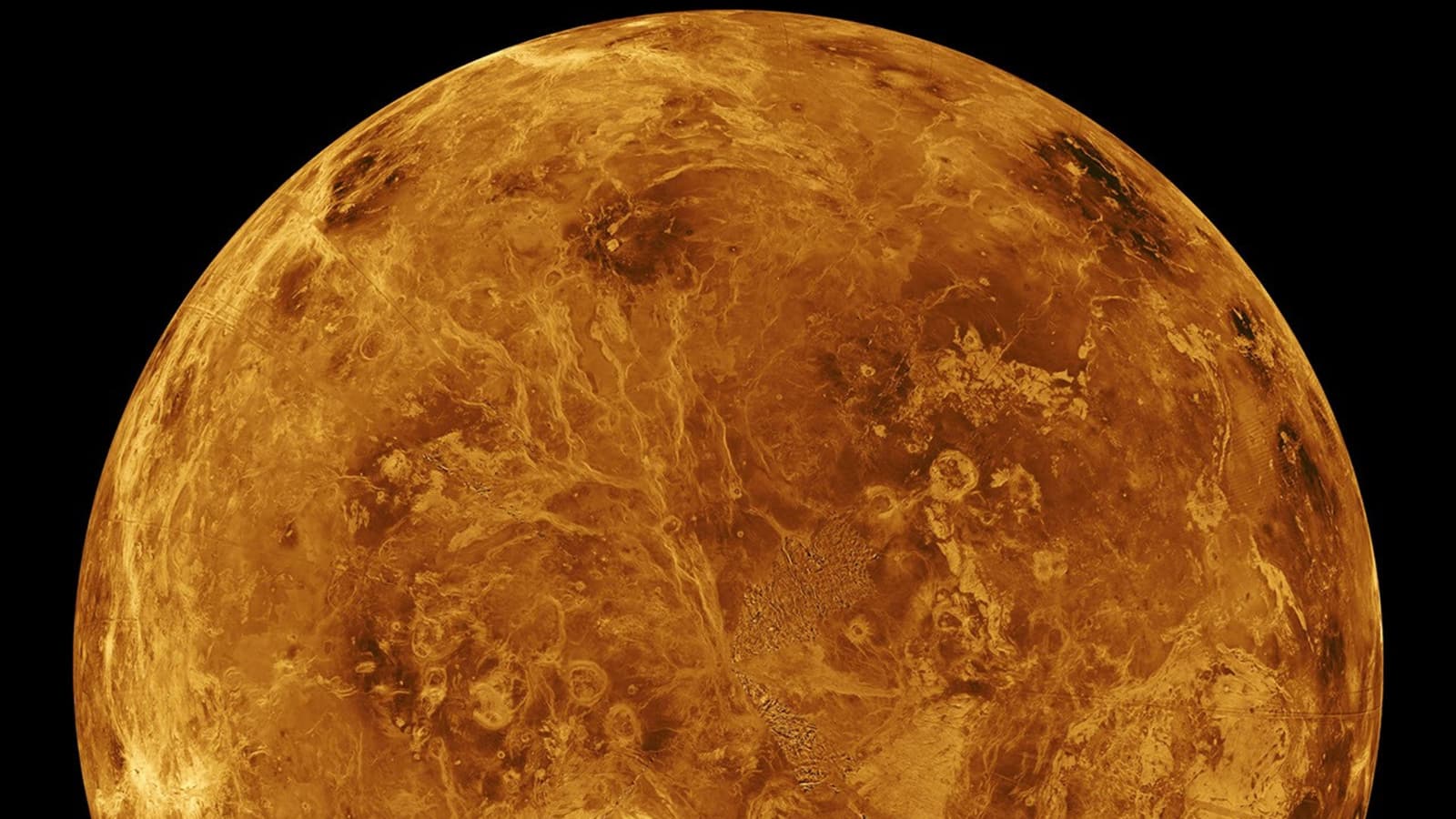
Venus Was Earth's Twin for a Billion Years. Then Something Broke.
Venus formed alongside Earth, from the same cloud of dust, at essentially the same moment. Same size. Same mass. Similar composition. Today it is the solar system's hottest planet. A 2023 paper in Nature Astronomy argues that for a billion years, it also had working plate tectonics.
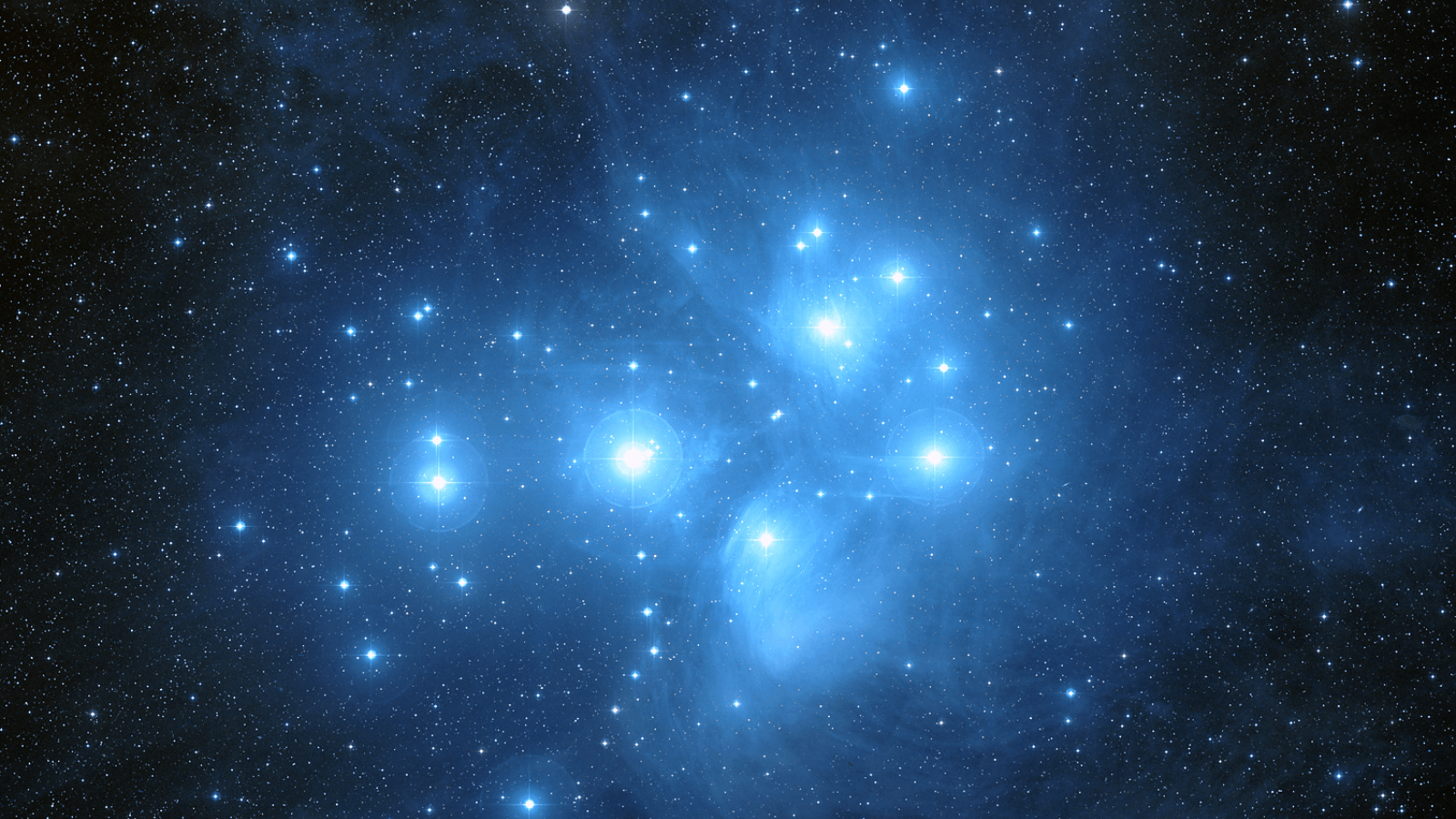
If You Stood on a World in the Pleiades, This Is What You'd See
Messier 45 is the most photographed open cluster in the sky and one of the closest. No planet has ever been confirmed orbiting any of its 1,300 stars. And yet on one of them, a quiet F-type star named HD 23514, colliding embryos appear to be building a planet right now.
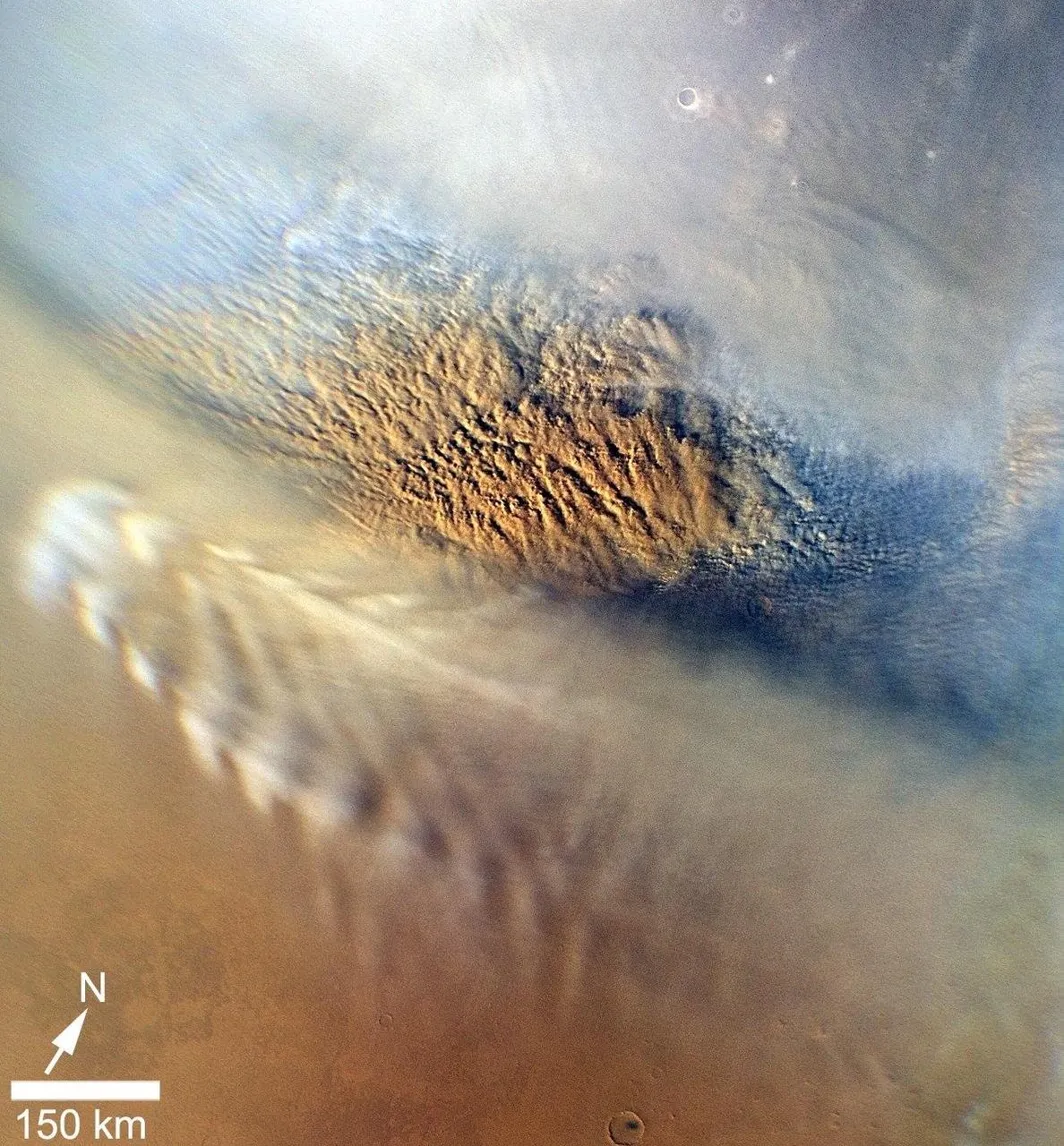
The Sound That Shouldn't Exist on Mars, And What It Changes
For decades, scientists sent instruments to Mars specifically designed to find lightning. They found nothing. Then Perseverance, not looking for lightning at all, picked up 55 faint electrical pops buried in 45 months of audio data.
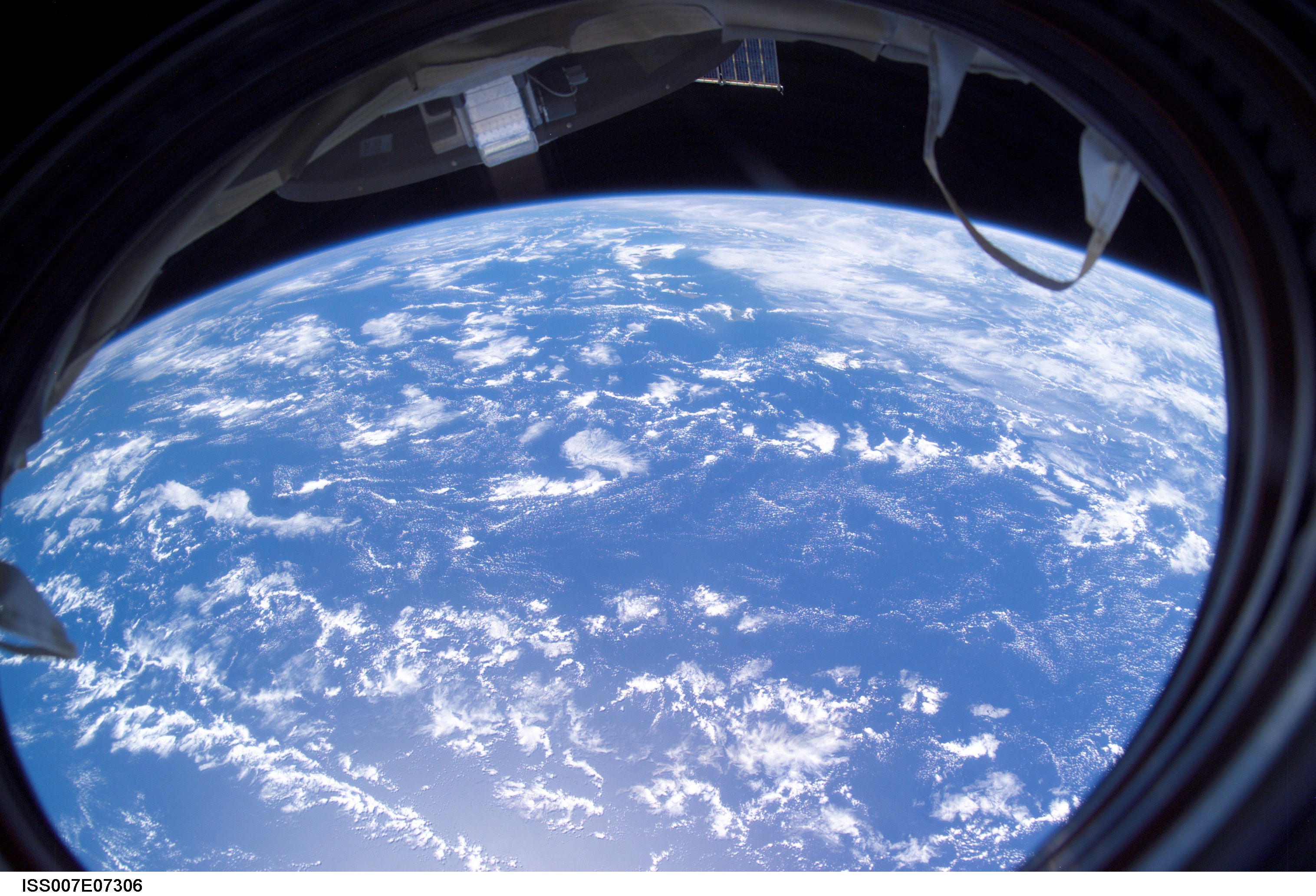
Earth's Oxygen Is Running Out, Just Not on a Human Schedule
The air you are breathing right now took 2.5 billion years to accumulate. It will be gone in roughly 1.08 billion more. A study in Nature Geoscience has calculated, with uncomfortable precision, when Earth's atmosphere will return to the oxygen-starved conditions of the ancient Archaean.
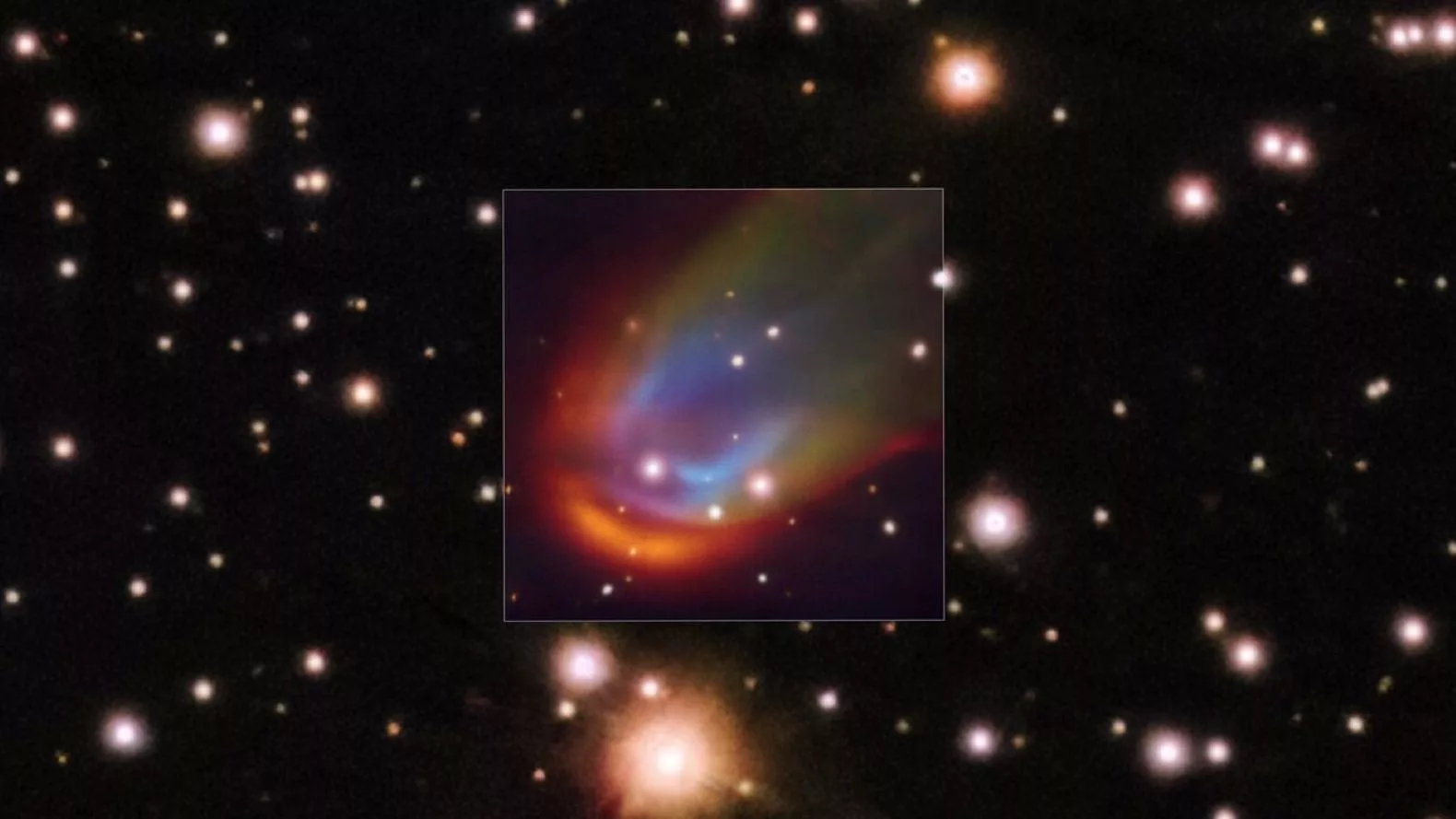
The Dead Star That Shouldn't Be Breathing, And Is
According to everything physicists know, RXJ0528+2838 should not have a shock wave around it. It does, and 12 institutions across seven countries cannot explain why.
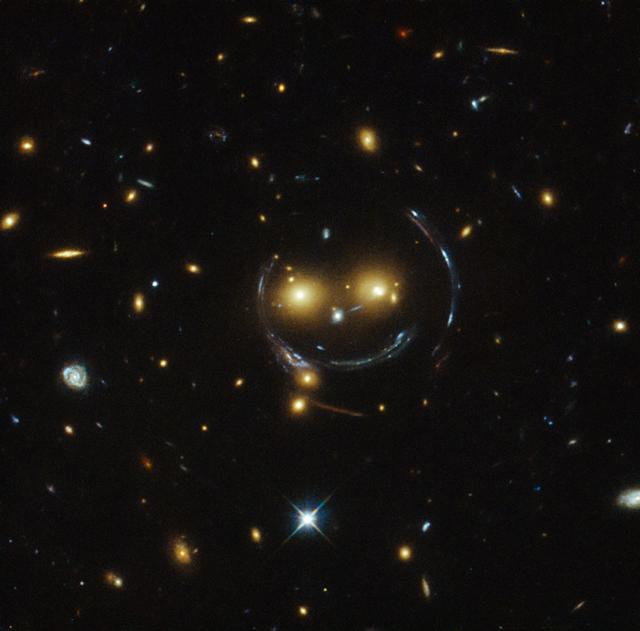
Time Is Not What You Think It Is, And Einstein's Physics Can Prove It
You cannot touch it or hold it in your hands. And yet time governs everything you will ever do. Einstein's answer, buried inside one of the most successful theories in history, is stranger than most people realize.
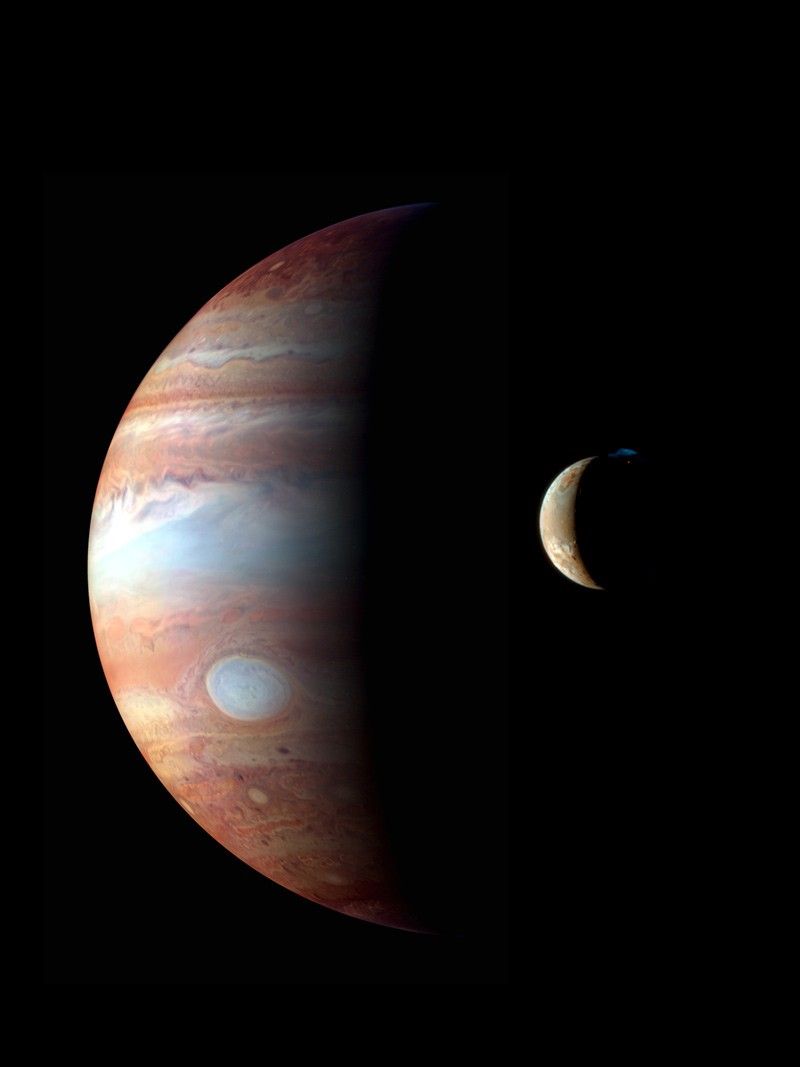
Juno's Last Secrets: What NASA's Most Resilient Probe Revealed About Jupiter
It was supposed to last 20 months. Years after its original mission ended, Juno is still orbiting Jupiter, and nearly everything it found defied what scientists thought they knew.