 Cosmology · Dark Matter · Galaxy Clusters
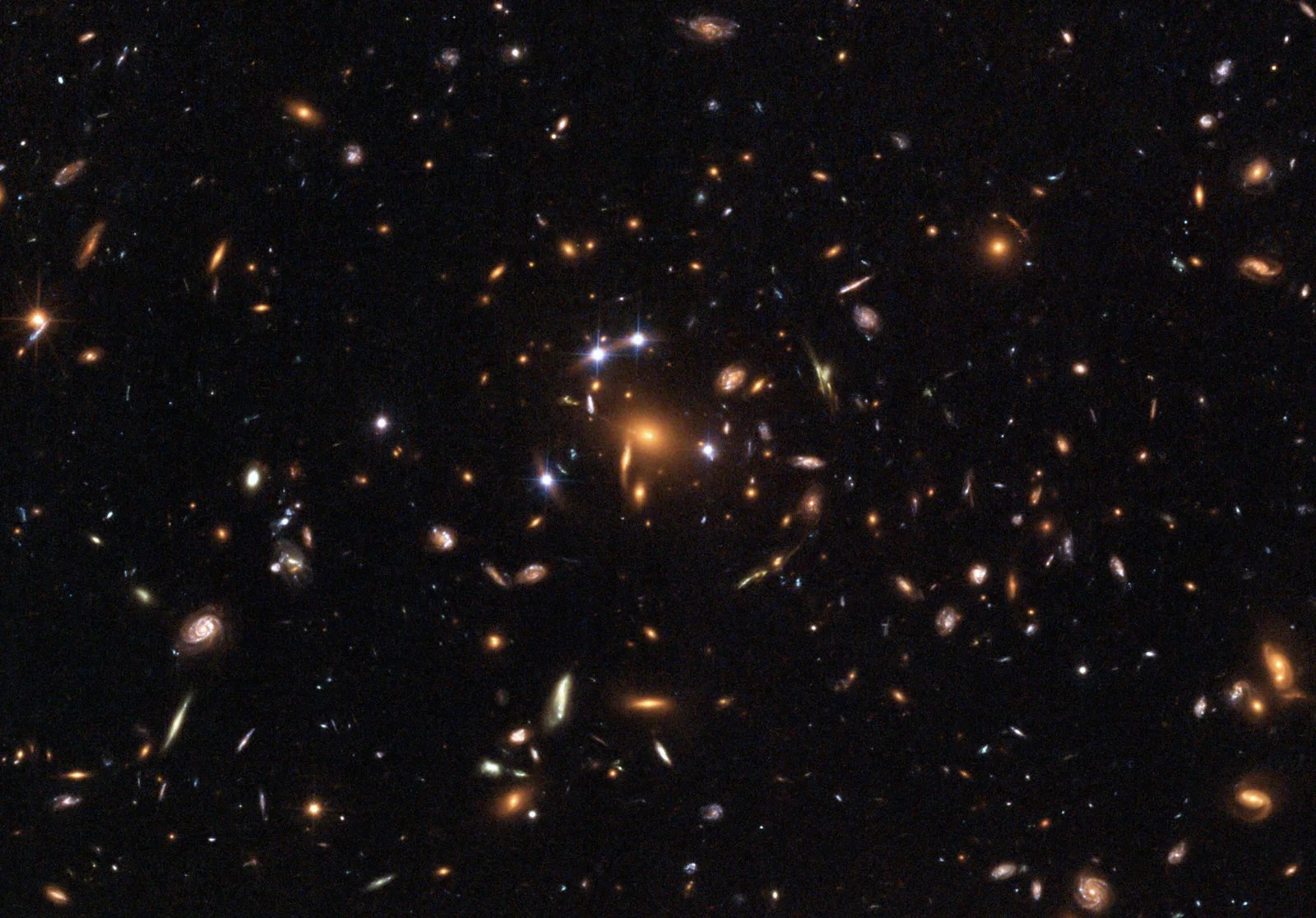
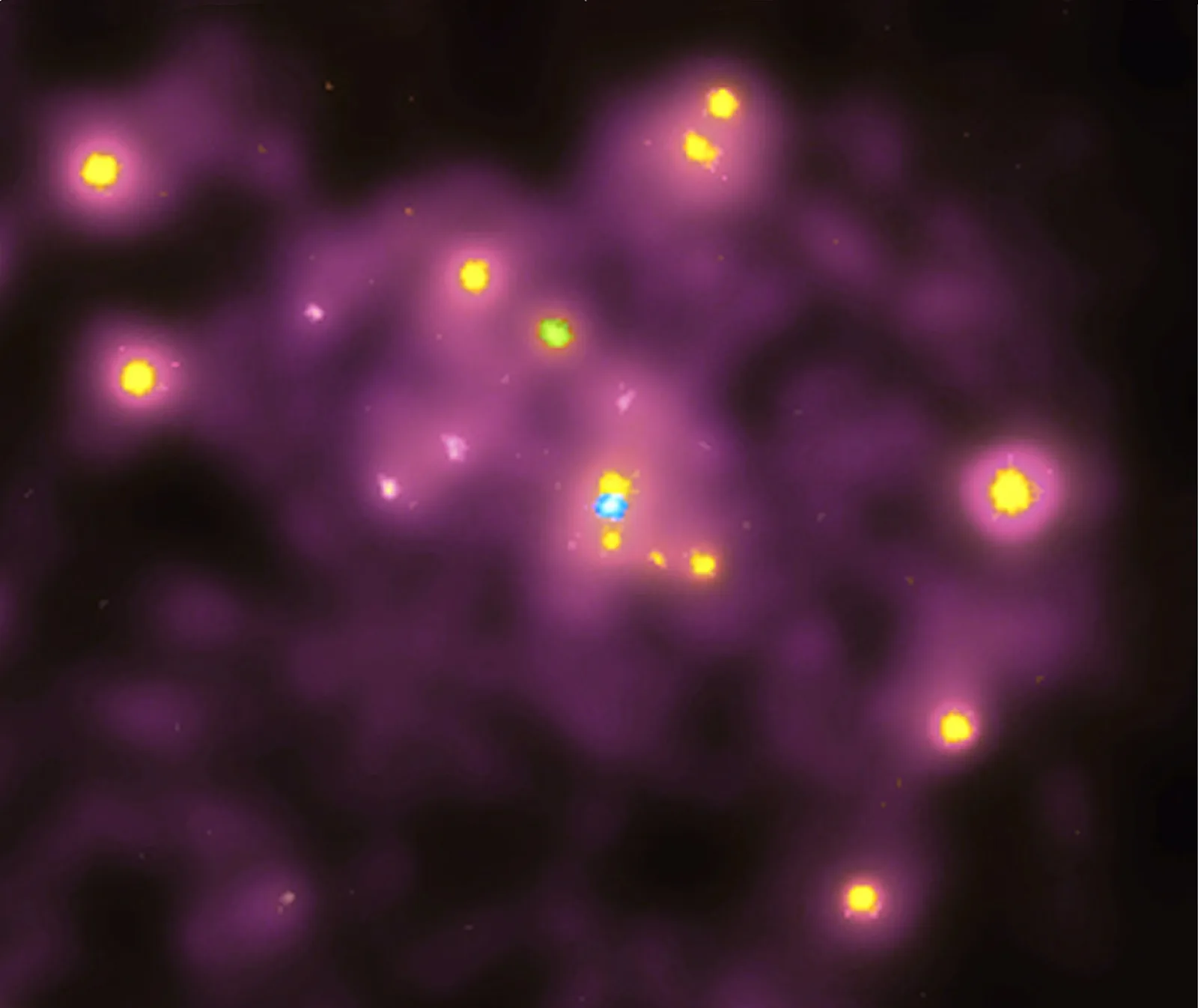
The Collision That Left Its Own Gravity Behind
When two galaxy clusters smashed through each other, the visible matter slowed and the gravity kept going. The gap between them became the closest thing astronomy has to a direct sighting of dark matter.
 Cosmology · Large-Scale Structure · Superclusters
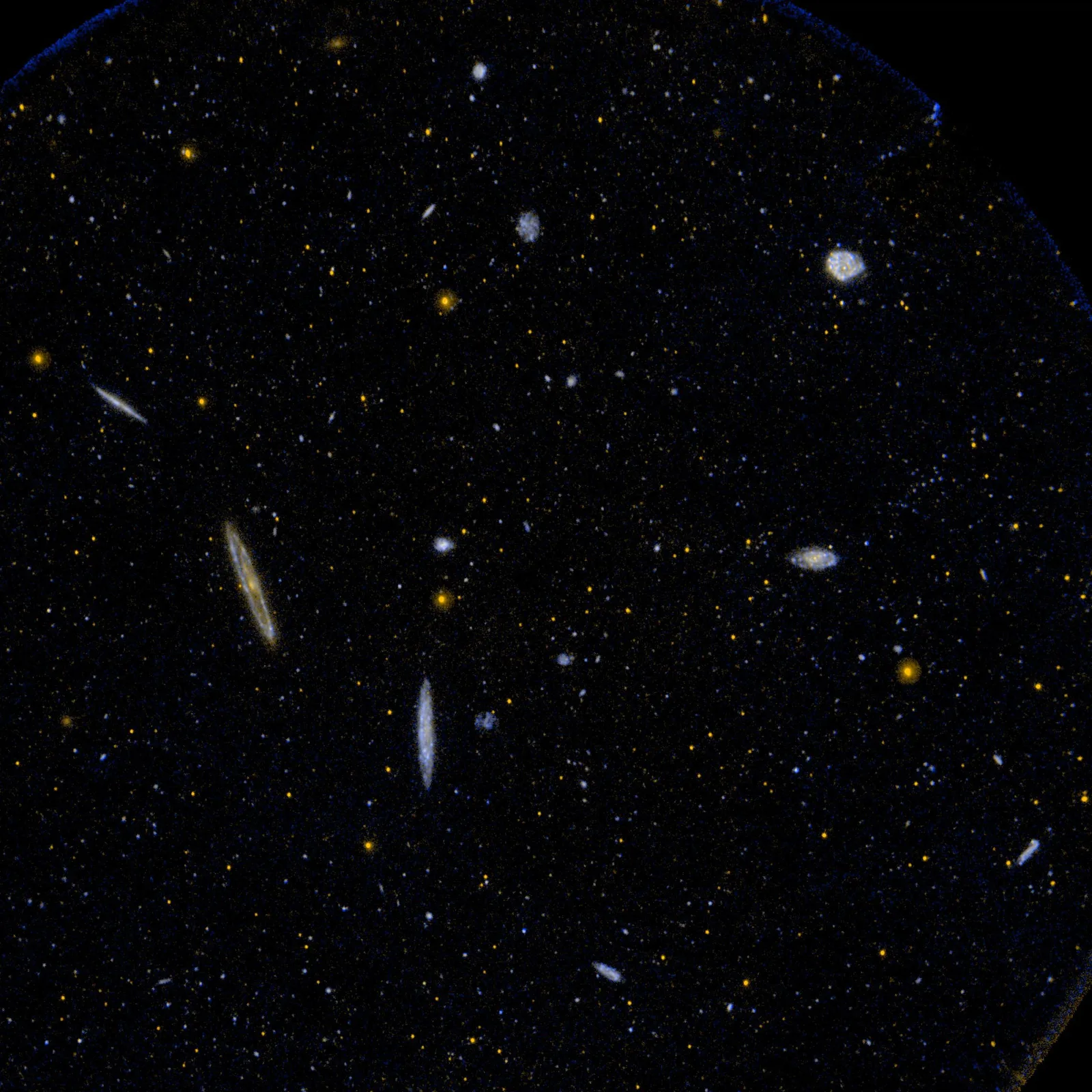
The Thing Pulling Us Across the Universe
The Milky Way is falling toward a gravitational anomaly we cannot easily see, hidden behind the dust of our own galaxy. Three decades of measuring how galaxies move have turned that pull into a map.
 Cosmology · Theoretical Physics · Existential Risk
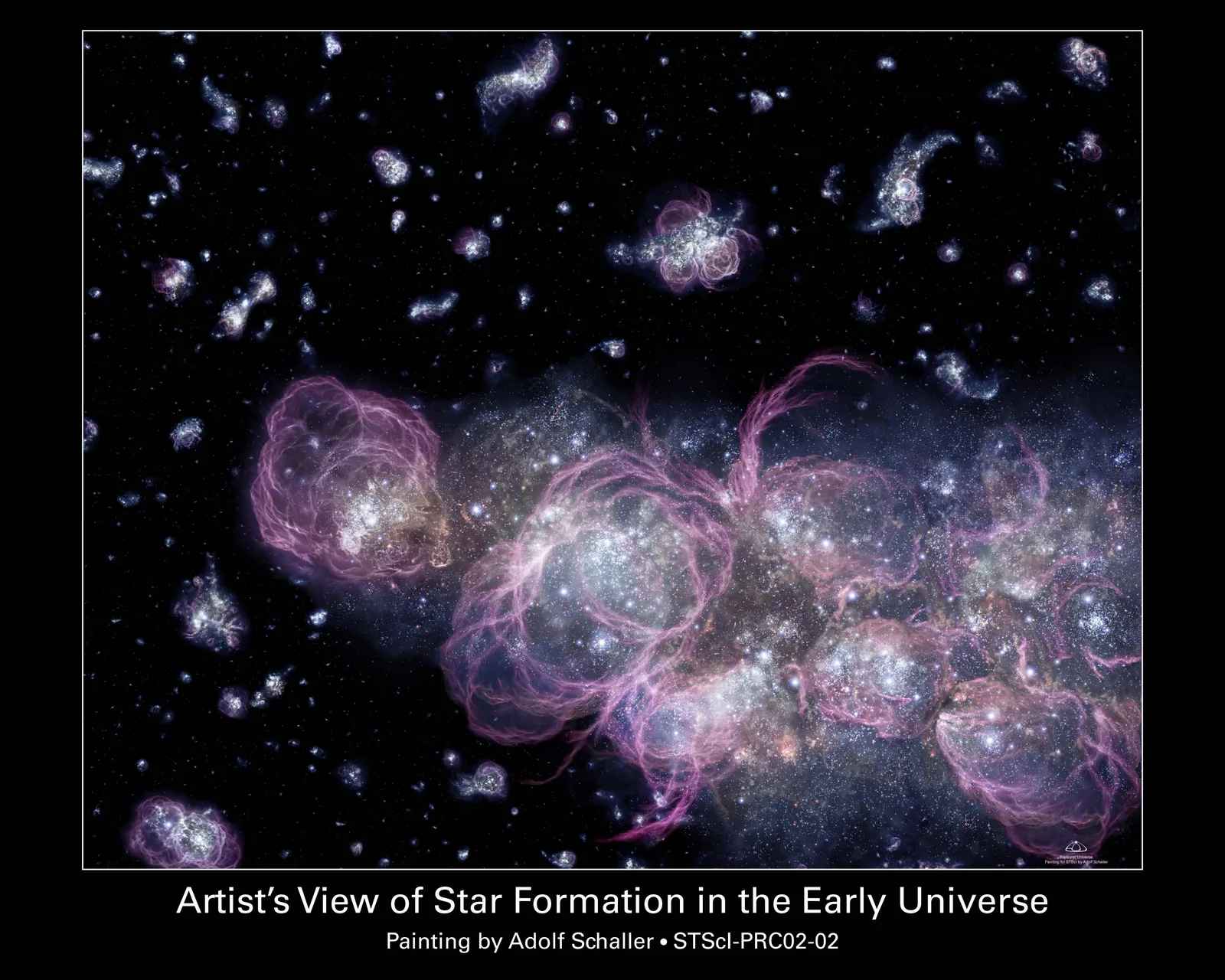
The Universe May Be Sitting on a False Floor
The measured masses of the Higgs boson and the top quark place our universe a hair's breadth from a different state of physics. The vacuum we live in may not be the lowest one available. Here is what that does and does not mean.
 Cosmology · Large-Scale Structure · Voids
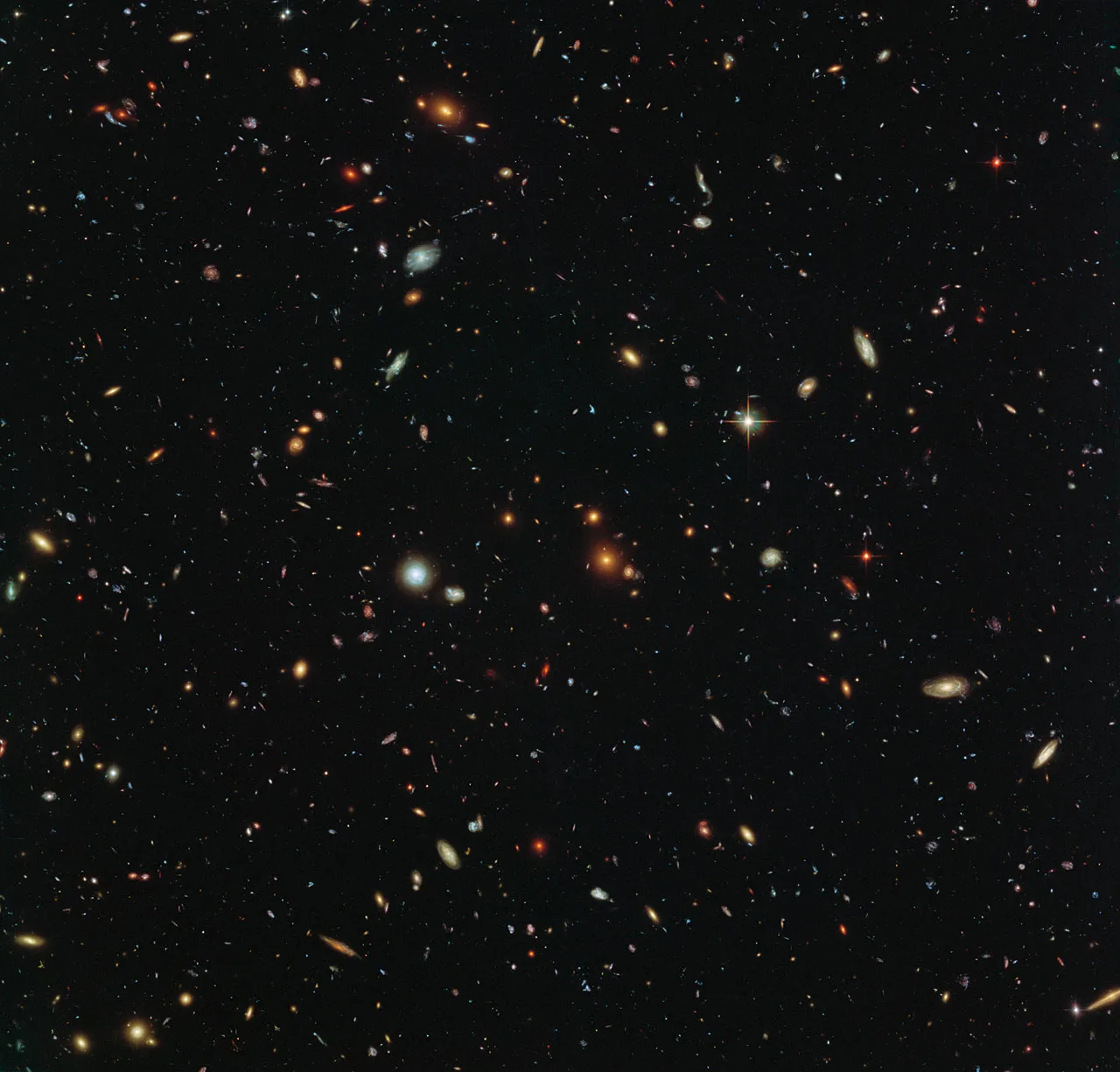
The Great Nothing: A Hole in the Universe 330 Million Light-Years Wide
In 1981, a redshift survey turned up an emptiness so vast that if the Milky Way sat at its center, we might not have learned other galaxies existed until the twentieth century was nearly over.
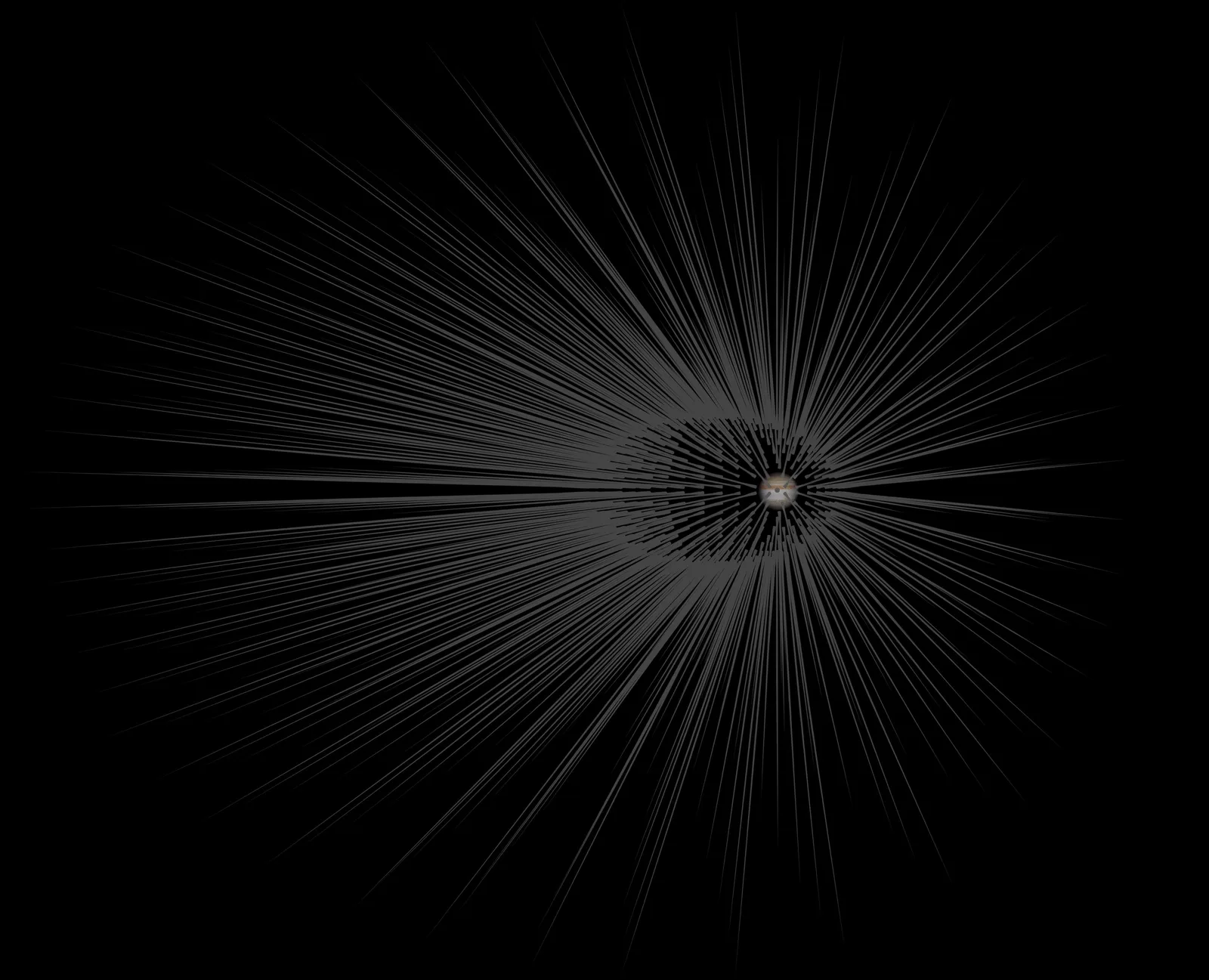 Cosmology · Dark Matter · Particle Physics
The Two Ghosts of the Cosmos May Be Touching
Dark matter and neutrinos are the universe's most elusive residents, each almost incapable of feeling anything. A growing body of cosmological evidence asks whether they feel each other.
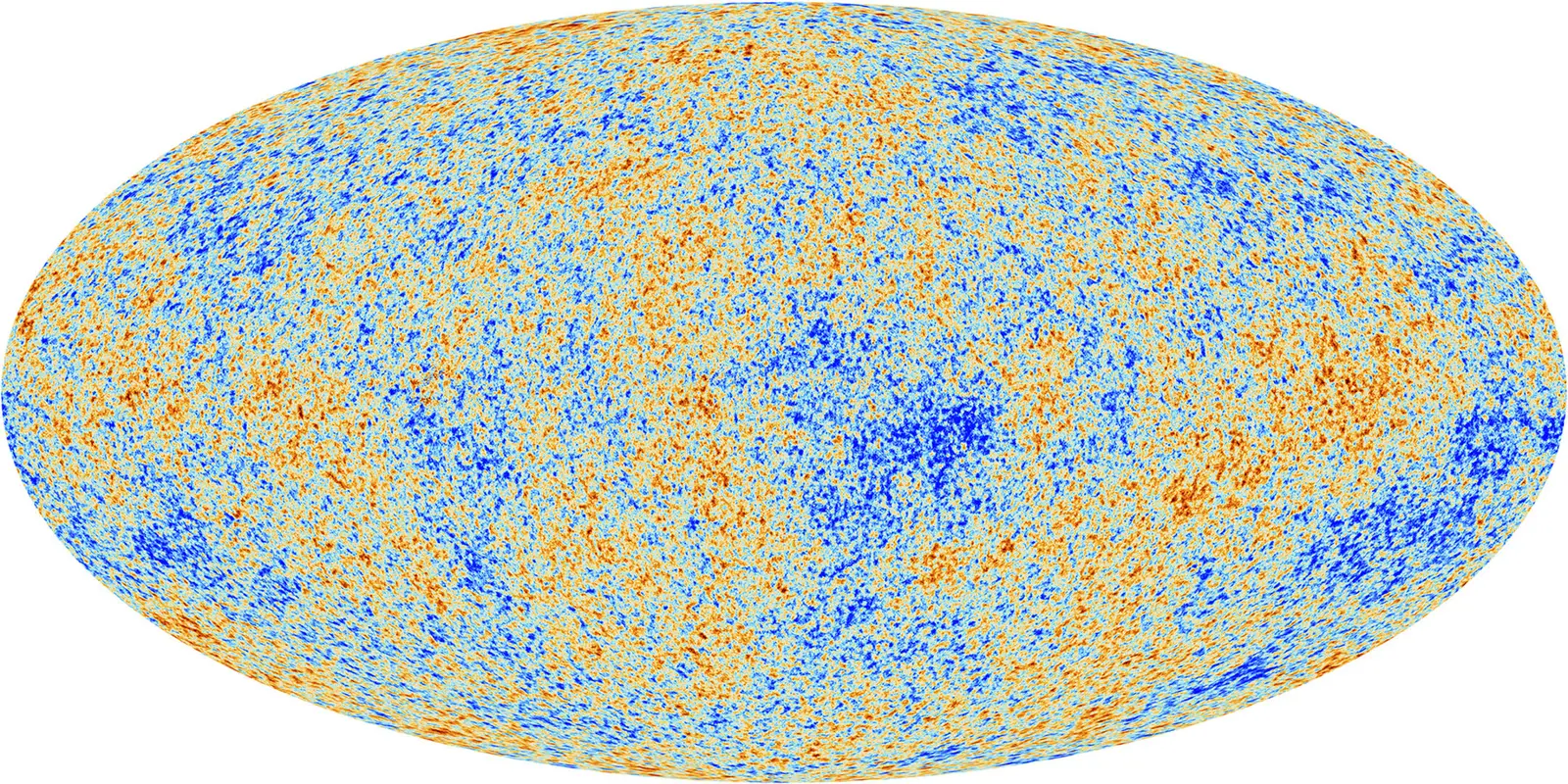 Cosmology · Inflation · Early Universe
The Fraction of a Second That Made Everything
Cosmic inflation says the universe expanded faster than light in its first instant, smoothing space and seeding every galaxy from quantum noise. The proof would be a faint twist in ancient light, and it has not yet been found.
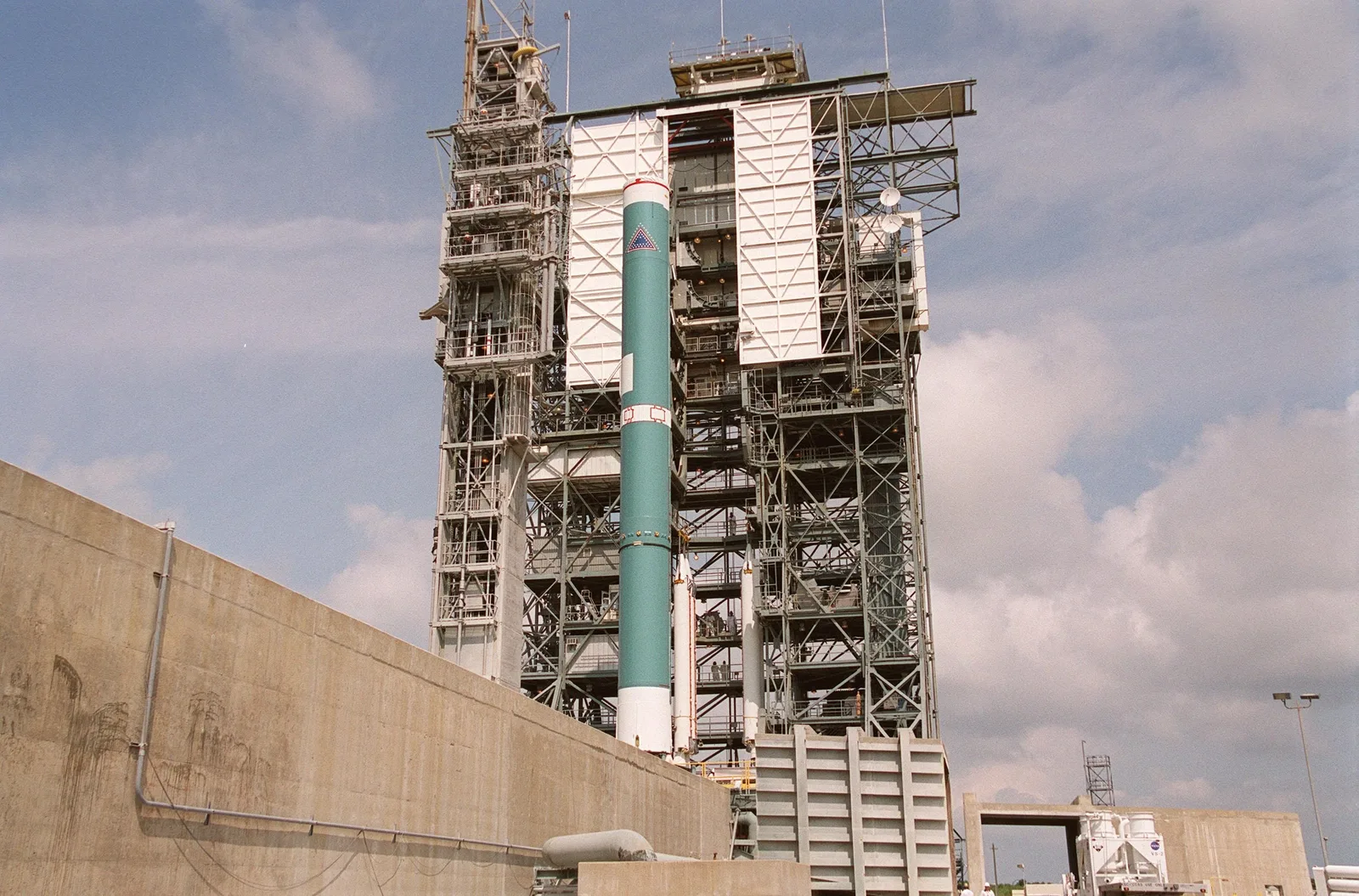 Cosmology · Particle Physics · Big Bang
Why There Is Something Instead of Nothing
The Big Bang should have made matter and antimatter in perfectly equal amounts, and they should have annihilated each other completely, leaving a universe of pure light. Instead, about one particle in a billion survived to build everything. Physics still cannot fully explain why.
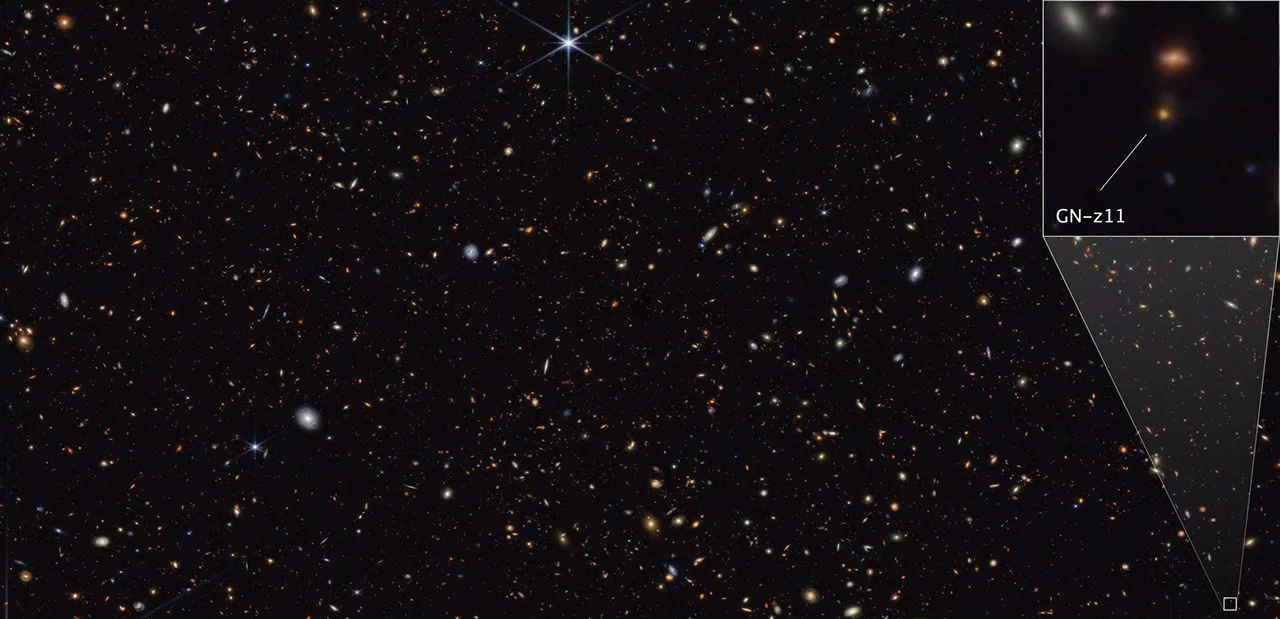 Cosmology · Early Universe · First Stars
The Hunt for a Star Made of Nothing but the Big Bang
The first stars formed from pure hydrogen and helium, with no heavier element to cool the gas, so theory says they grew enormous, burned hot, and died young. None has ever been confirmed. The James Webb Space Telescope is closing in on the ghost.
 Astrophysics · Galaxies · Local Group
The Collision That Might Never Happen
For decades, astronomers told a confident story: in about five billion years, the Milky Way and Andromeda would crash together. New Gaia and Hubble data have turned that near-certainty into something closer to a coin flip.
 Cosmology · Early Universe · Galaxy Formation
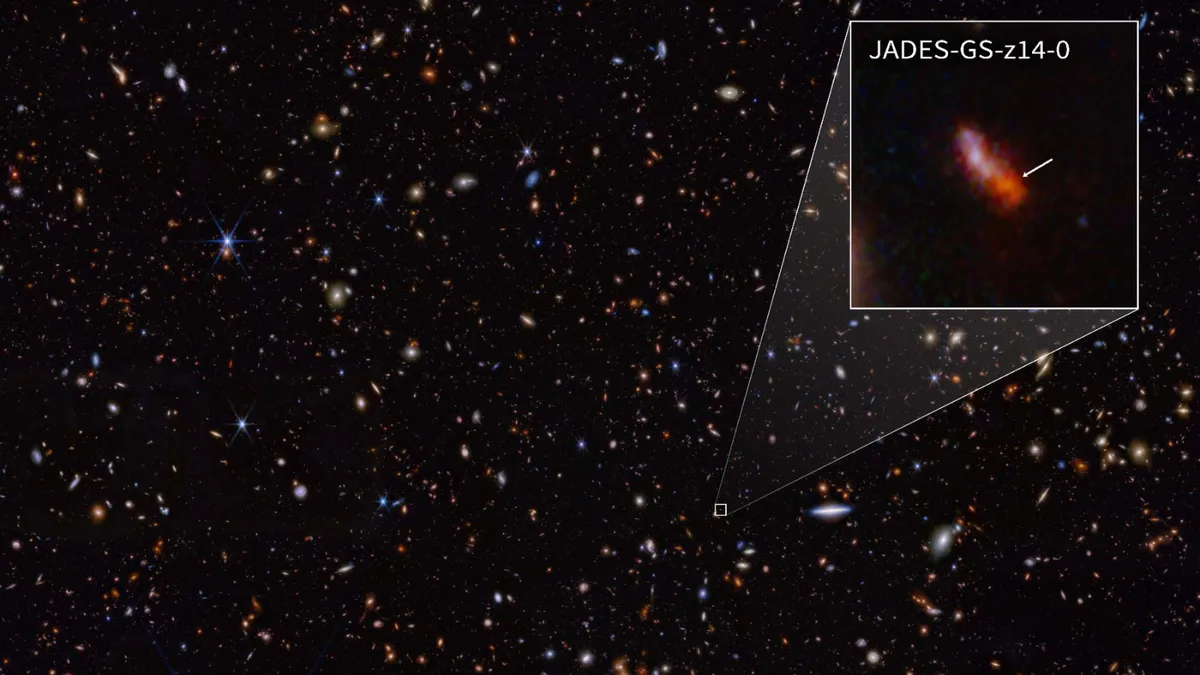
The Galaxy That Shouldn't Exist So Soon
At a redshift of 14.44, MoM-z14 is the farthest galaxy ever confirmed: a bright, nitrogen-rich beacon that switched on just 280 million years after the Big Bang. It looks nothing like the faint, primitive smudge the models predicted.
 Cosmology · Dark Matter · Black Holes
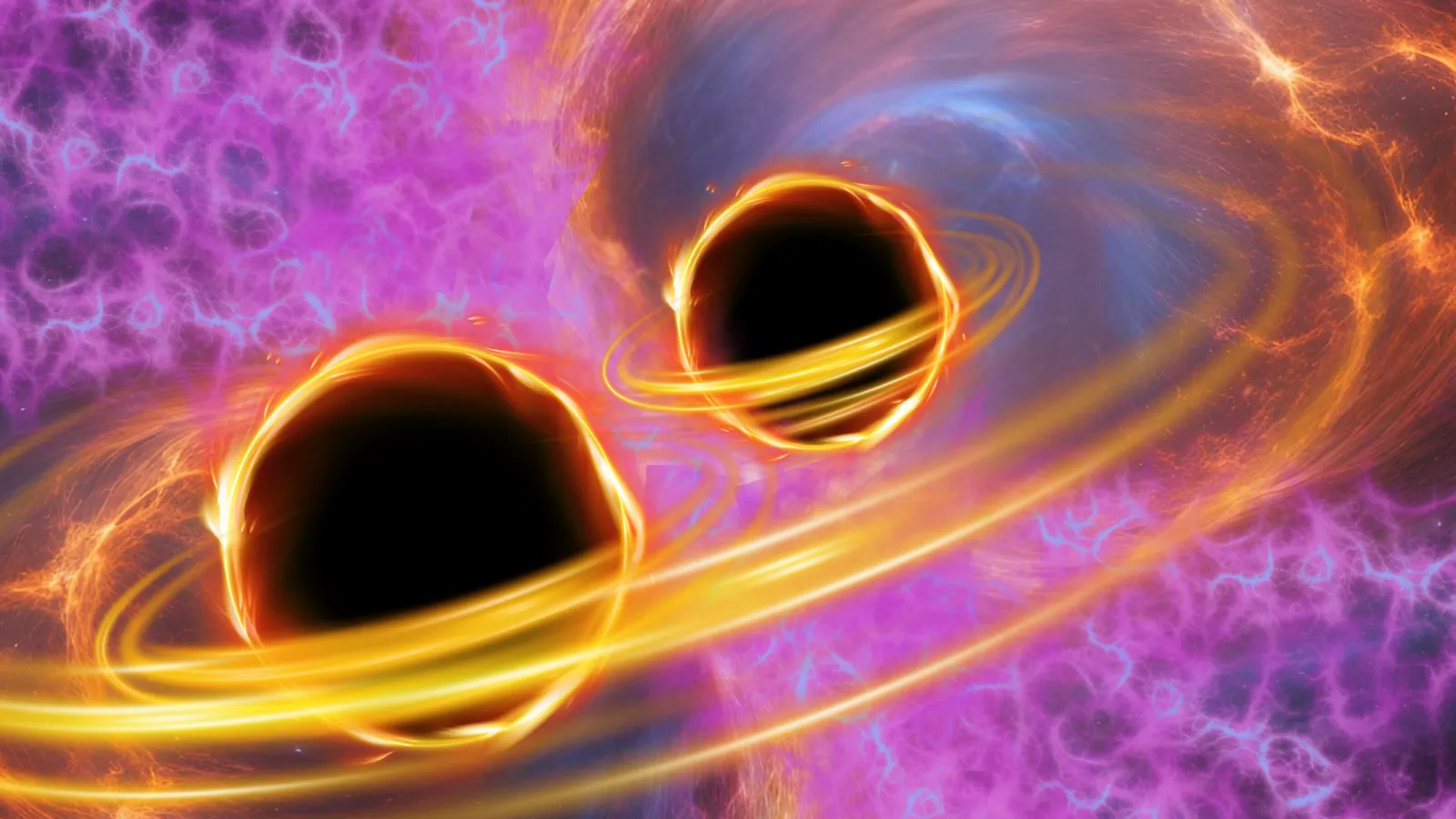
The Quiet Suspect Behind the Universe's First Giant Black Holes
Supermassive black holes appeared too early and grew too fast for standard physics to comfortably explain. A 2026 study proposes an unlikely culprit: dark matter slowly falling apart in the dark.
 Cosmology · Dark Energy · DESI
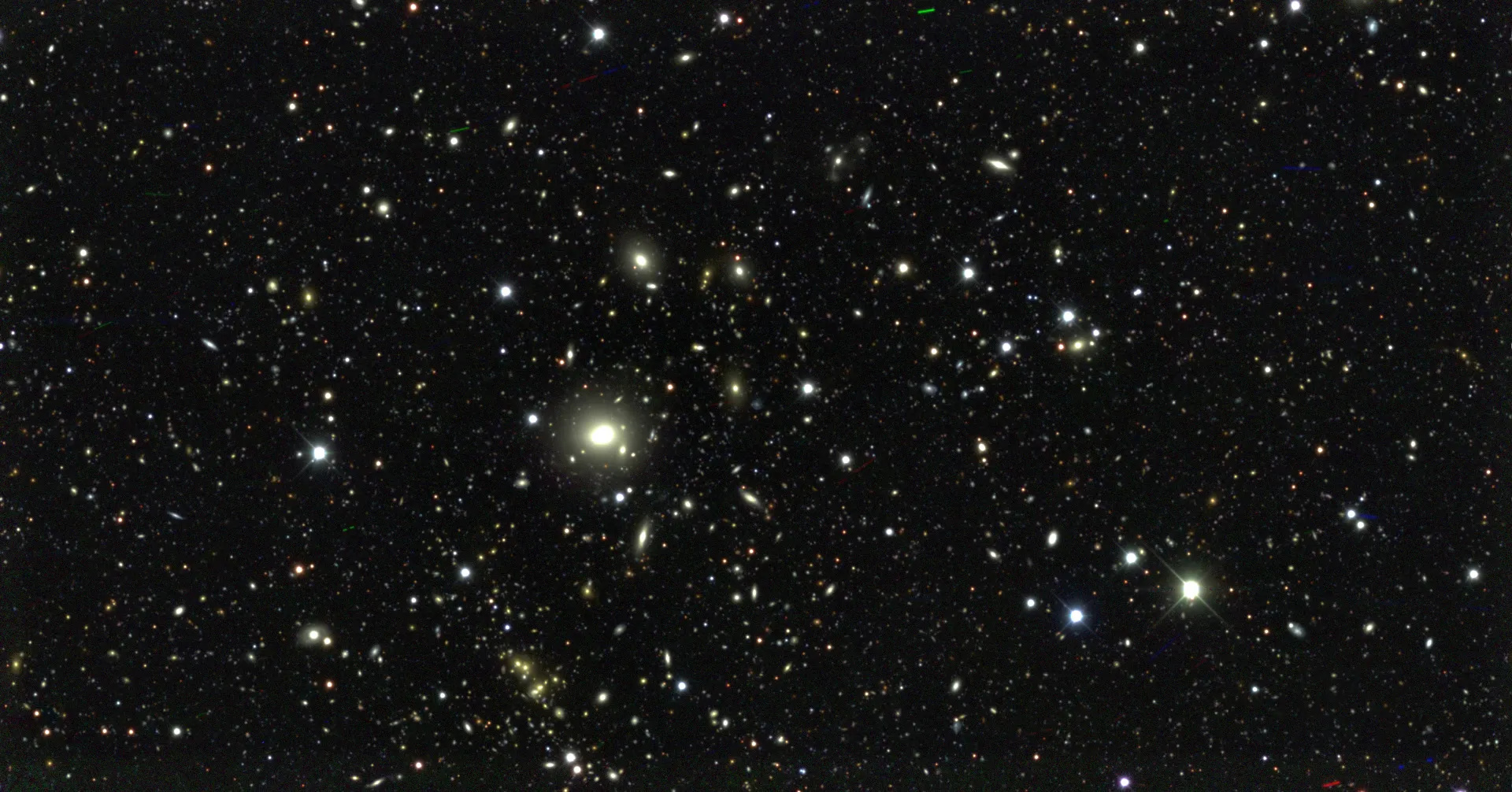
The Force Holding the Universe Apart May Already Be Dying
For thirty years, dark energy has been the most powerful force in cosmology, a steady push driving every galaxy apart forever. In April 2025, a five-year survey of fifteen million galaxies returned a result the standard model cannot explain.
 Cosmology · Hubble Constant · ΛCDM
The Universe Is Expanding at Two Different Speeds, and Cosmology Cannot Reconcile Them
Two independent methods measure how fast the universe is expanding. They agree on the technique but disagree on the answer by ten percent. The discrepancy has been growing for a decade. It now exceeds the threshold for a crisis.
 Astrophysics · Gravitational Waves · Pulsar Timing
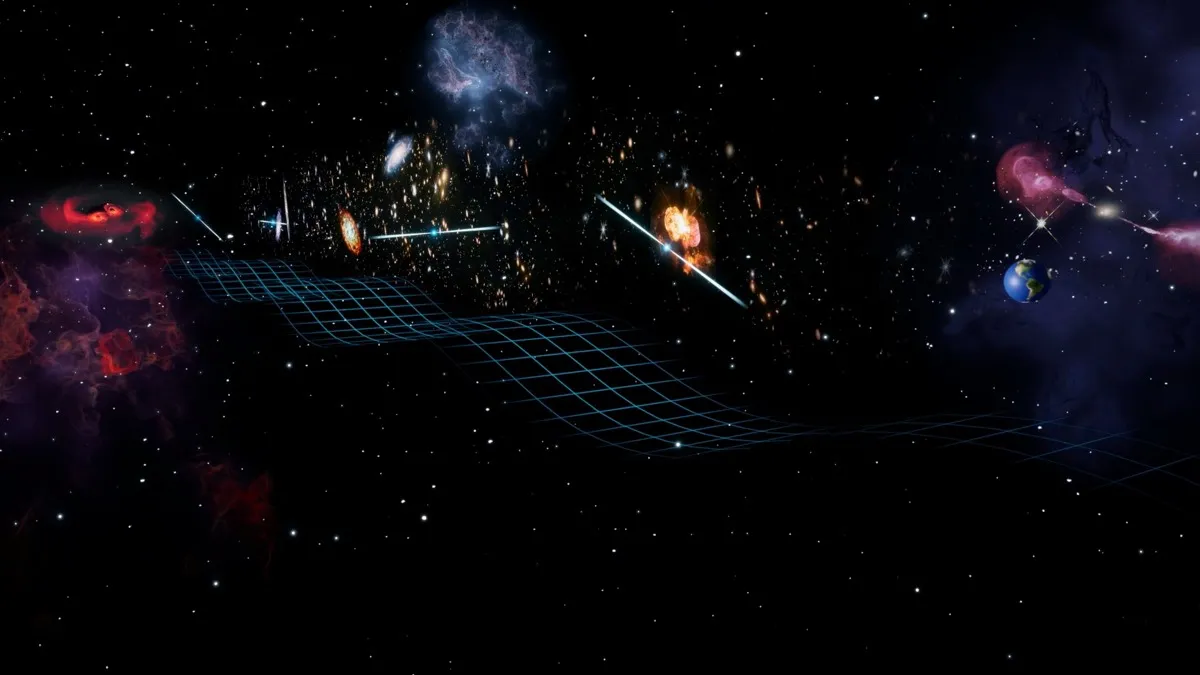
Sixty-Eight Dead Stars Just Detected the Background Hum of the Universe
Earth is bobbing up and down in a sea of gravitational waves that stretches from one end of the cosmos to the other. We have no instrument on Earth big enough to detect them. So NANOGrav built one out of pulsars.
 Cosmology · Dark Matter · Particle Physics
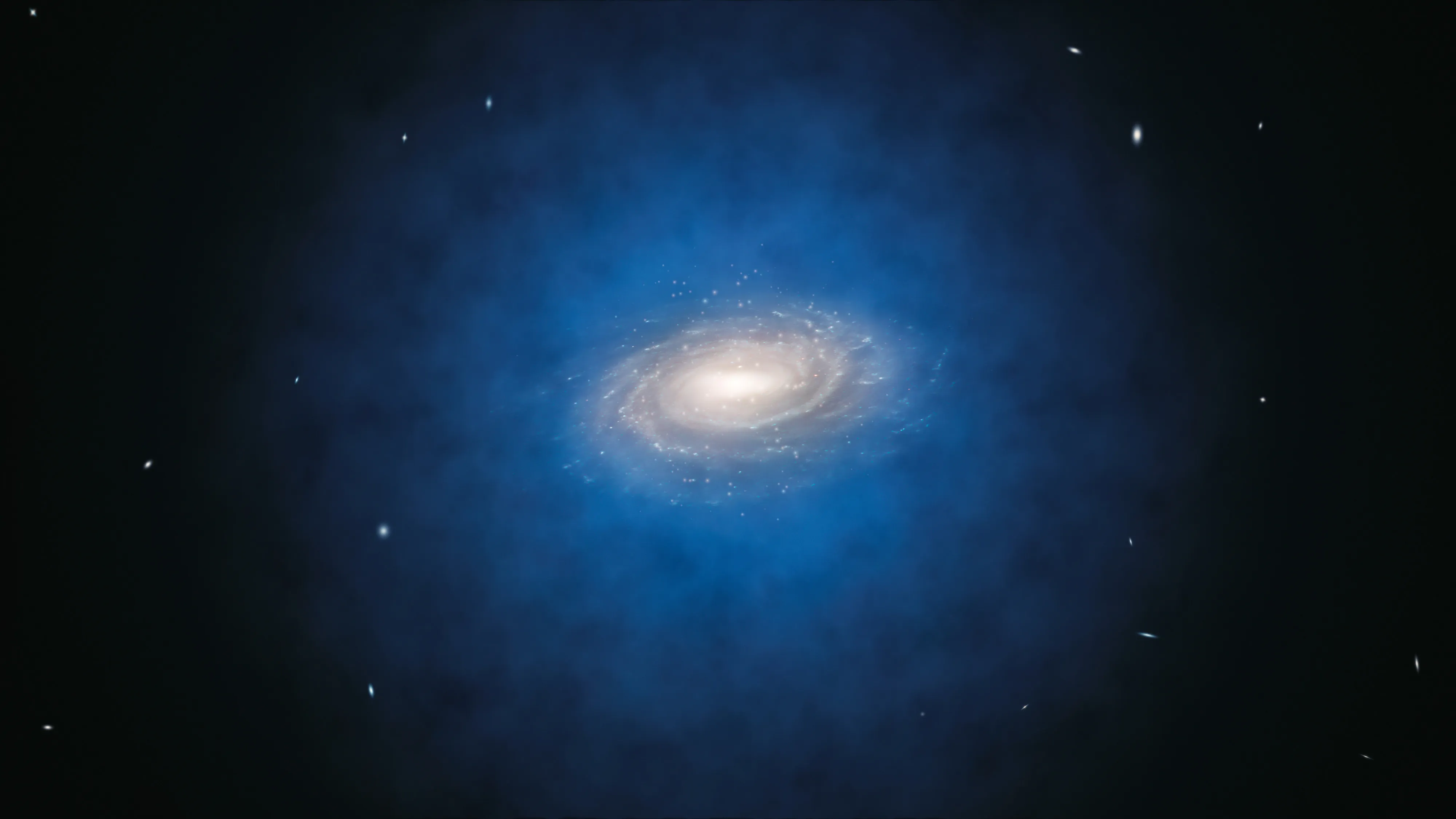
A Physicist Spent Two Years Cleaning Up Old Telescope Data. What Was Left Might Be the First Sight of Dark Matter.
92 years after Fritz Zwicky first identified dark matter, a 2025 paper by Tomonori Totani at the University of Tokyo claims to see its gamma-ray signature in 15 years of Fermi-LAT archival data. If the result holds up, the longest-standing problem in physics has finally cracked.
 Cosmology · Dark Energy · Expansion
What Is the Universe Expanding Into?, and Why the Question Misunderstands Space
It is the most natural question to ask. Galaxies are flying apart. The space between them is growing. So where is it going? The answer turns out to be that the question itself is wrong.
 Cosmology · Large-Scale Structure · Cosmological Principle
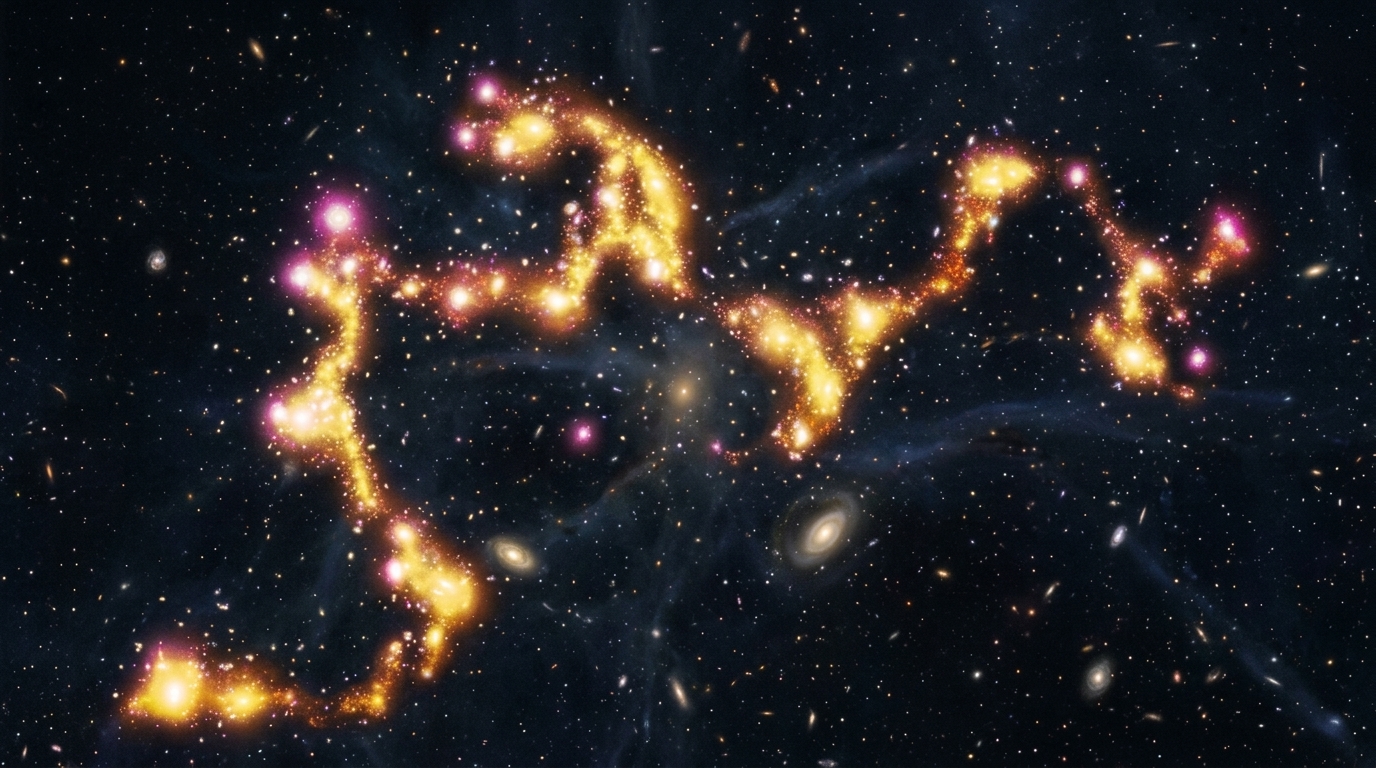
The Largest Things in the Universe Are Things That Shouldn't Exist
The Cosmological Principle says nothing should be larger than about 1.2 billion light-years. The Hercules-Corona Borealis Great Wall is ten billion. Three other structures break the same rule. Astronomers do not yet agree on what to do with them.
 Cosmology · Big Bang Nucleosynthesis · Anomalies
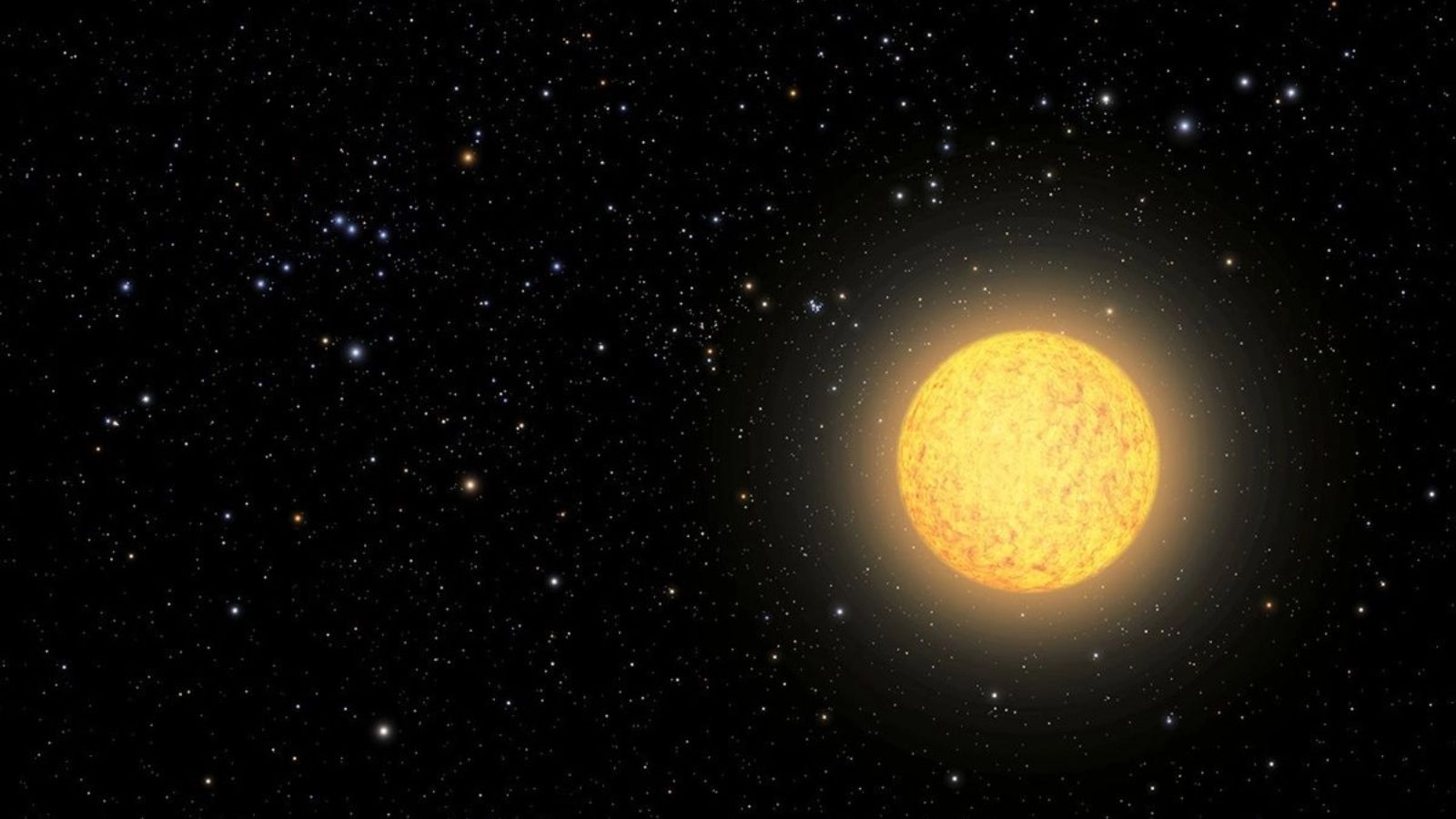
The Universe Has Too Little Lithium. And One of Its Stars Is Older Than It Should Be.
Big Bang nucleosynthesis predicts the universe's first three elements with surgical precision. Hydrogen and helium check out. Lithium is off by a factor of three. And in the constellation Libra, one star appears to be slightly older than the universe itself.
 Astrophysics · Particle Physics · Big Bang Nucleosynthesis
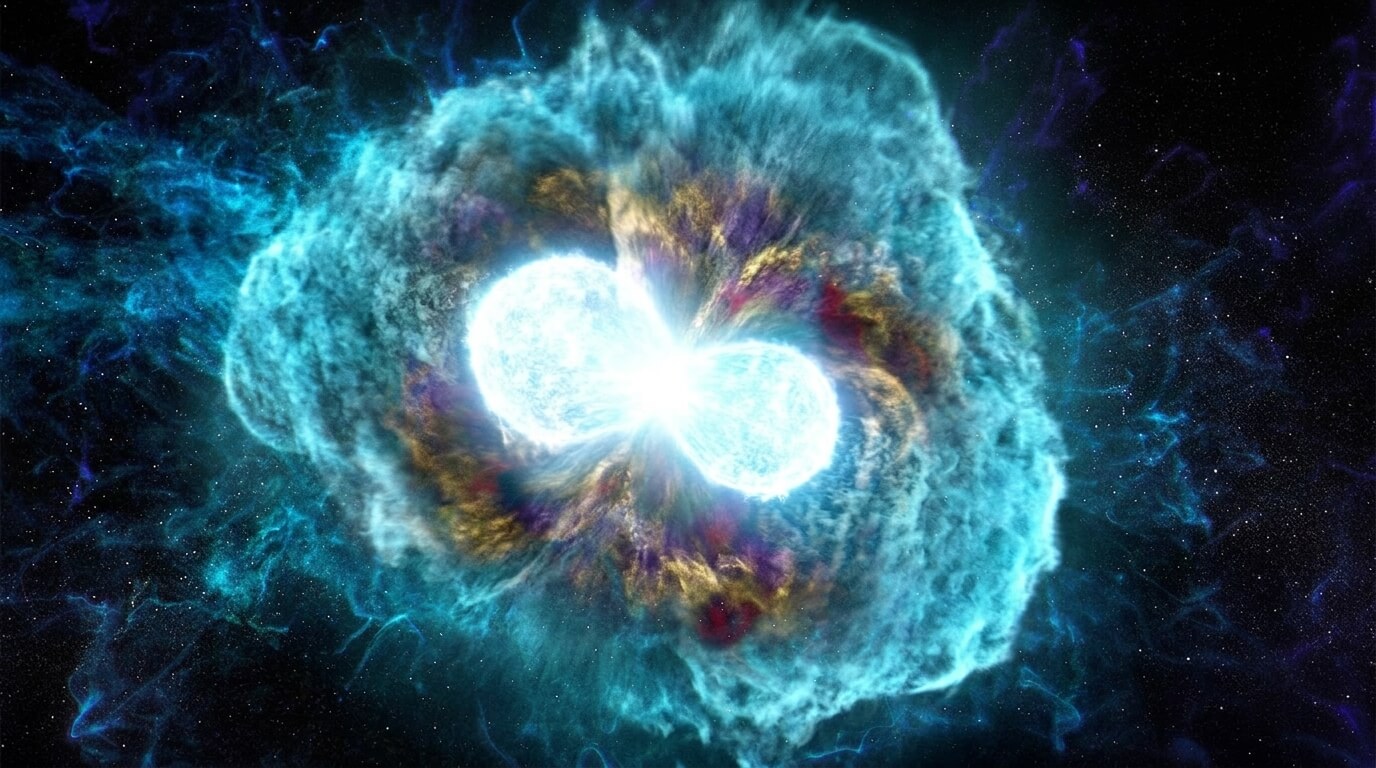
The Particle That Built the Universe Cannot Survive Ten Minutes Alone
A free neutron has a half-life of approximately ten minutes and eleven seconds. Inside an iron nucleus, the same particle is essentially immortal. The 10-minute half-life is the parameter that determined how much helium the Big Bang produced, if it had been five minutes shorter, our universe would be sterile.
 Cosmology · Theoretical Physics · History of Science
The Greatest Idea in Modern Physics Came From a Mathematician the University Refused to Hire
In 1918, Emmy Noether proved that every conservation law in physics comes from a symmetry. Einstein could not get her tenure. The University of Göttingen senate ruled that admitting women would 'overthrow academic order.' Today her theorem underpins everything from particle physics to general relativity, and reveals an uncomfortable truth in cosmology: in our expanding universe, energy is not conserved.
 Cosmology · Einstein's Relativity
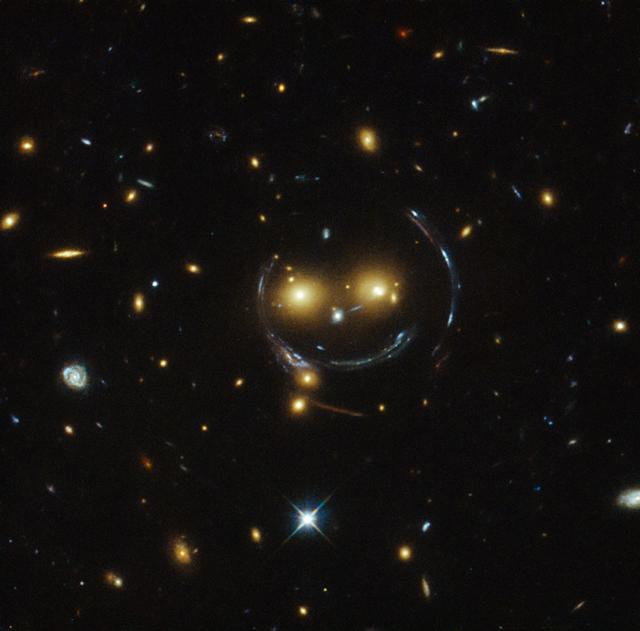
Time Is Not What You Think It Is, And Einstein's Physics Can Prove It
You cannot touch it or hold it in your hands. And yet time governs everything you will ever do. Einstein's answer, buried inside one of the most successful theories in history, is stranger than most people realize.
 Signals & Anomalies · Radio Astronomy · ASKAP
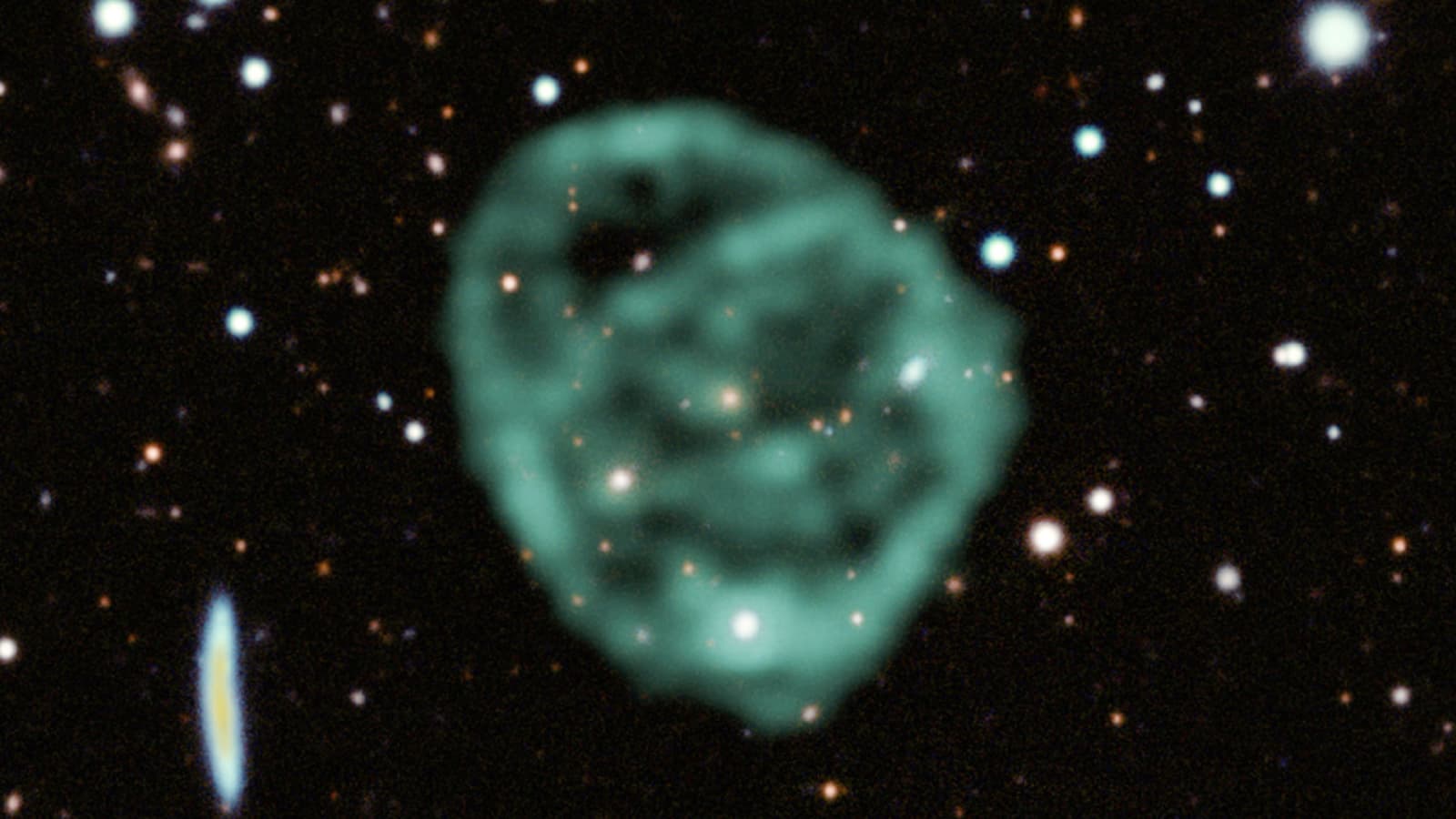
There Are Giant Rings in Deep Space, and Nobody Knows What Made Them
In 2019, an astronomer scrawled 'WTF' across the corner of an image. She had spotted a perfectly circular halo of radio waves a million light-years across, with no obvious cause. Five more have been confirmed since. Astronomers have a name for them, three competing theories about what they are, and no agreement on which is right.
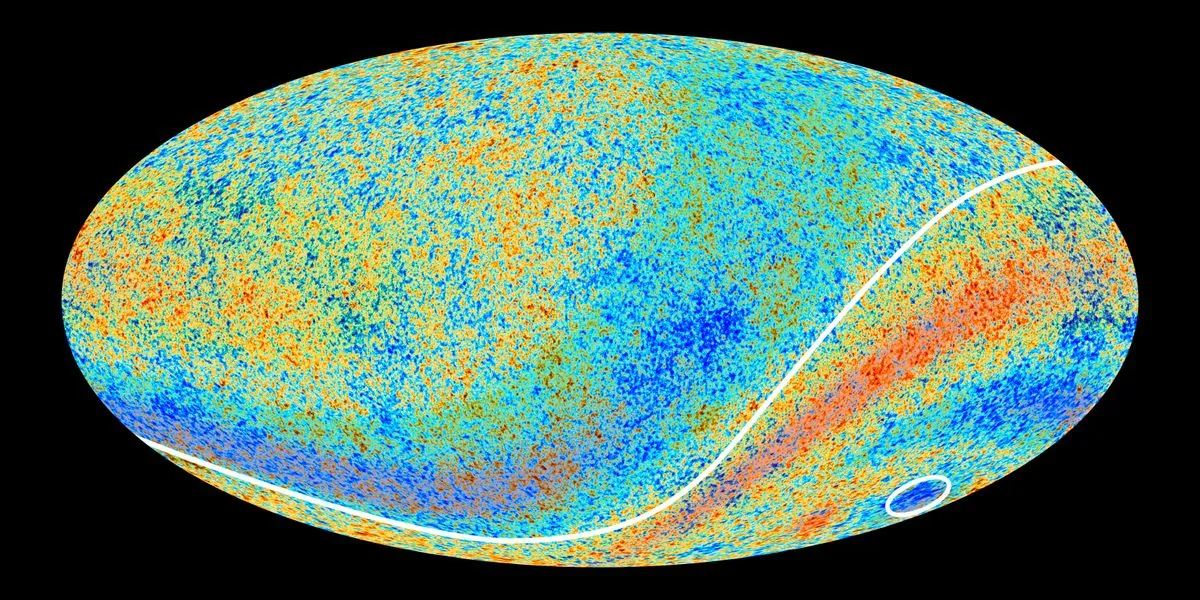
 Cosmology · Early Universe · Cosmic Microwave Background
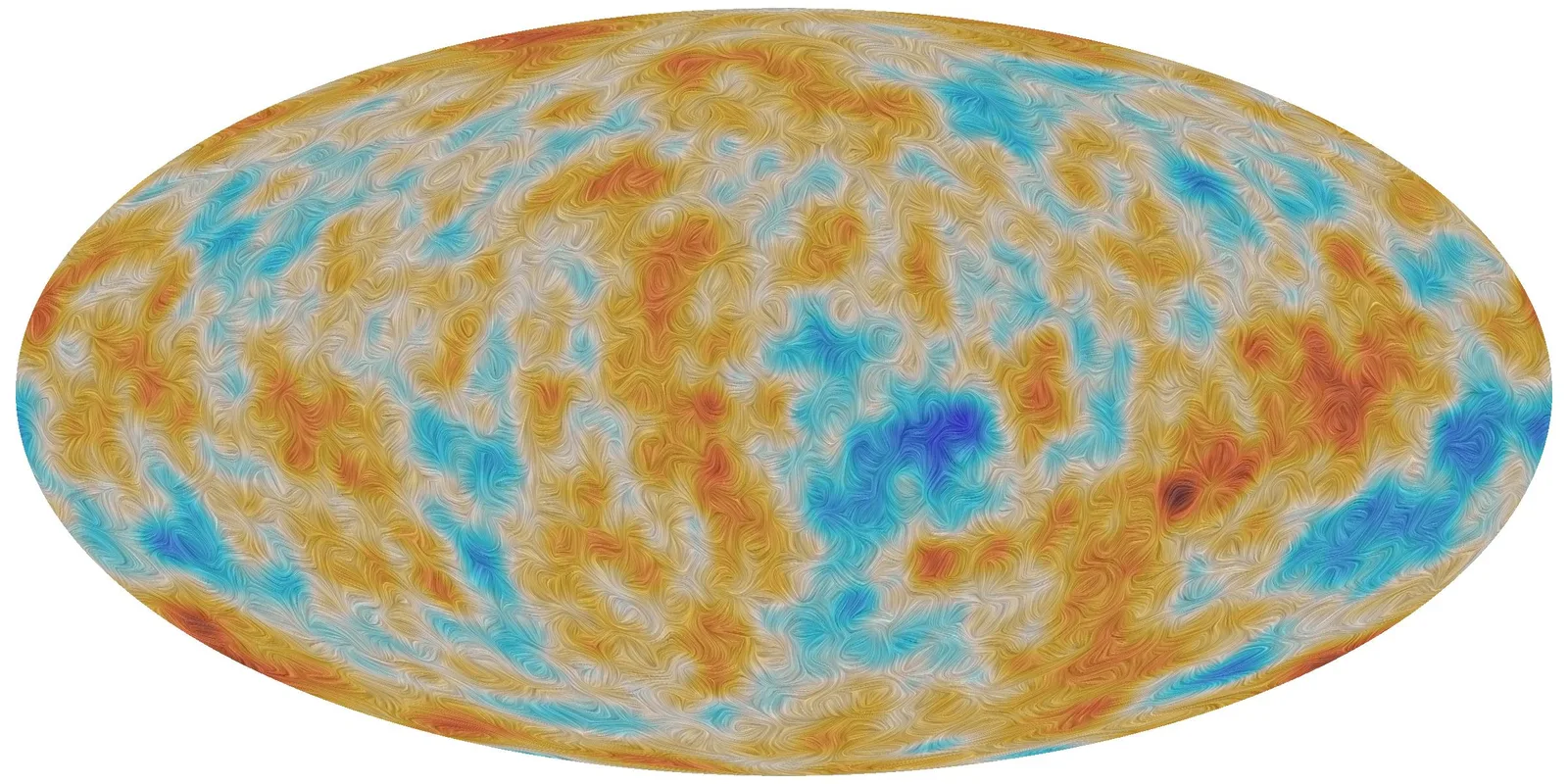
The Oldest Light in the Universe
Everywhere you point a radio dish, a faint glow answers back: the cooled afterglow of the Big Bang, released when the universe was 380,000 years old. It is the oldest light there is.
 Cosmology · Gravitational Lensing · Dark Matter
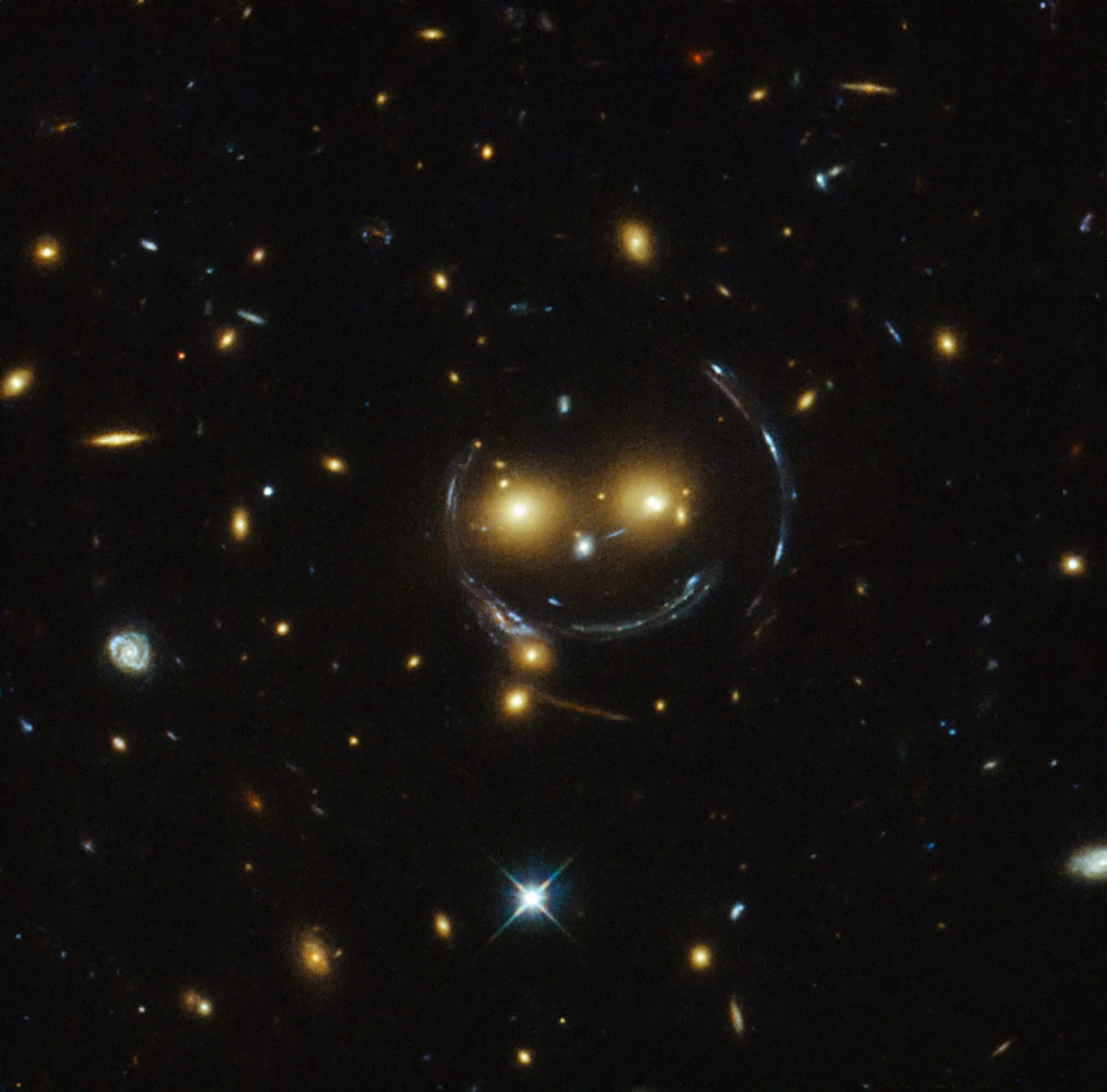
When Gravity Bends the Sky
Mass warps space, and light must follow the curves. Galaxies are smeared into arcs, multiplied into quartets, and bent into perfect rings, a cosmic lens astronomers now use to weigh the invisible.
 Cosmology · Dark Energy · Cosmic Distances
The Exploding Stars That Measure the Universe
A certain kind of stellar explosion always detonates at nearly the same brightness. That reliability turned dying white dwarfs into cosmic measuring rods, and in 1998 they revealed the universe's expansion is speeding up.
 Cosmology · Cosmic Distances · Expansion
How We Measure the Distance to the Stars
You cannot lay a tape measure to a galaxy. Astronomers built a ladder instead, each rung a different method calibrated by the one below, reaching from nearby stars to the edge of the observable universe.
 Space Exploration · ESA · Dark Universe
The Telescope Mapping the Dark Universe
Ordinary matter, everything we can see, is a rounding error in the cosmos. The rest is dark matter and dark energy. A European space telescope is building a 3D map of the invisible across ten billion years.
 Astrophysics · Cosmic Rays · High-Energy
The Fastest Particles in the Universe
Every second, particles from deep space slam into the atmosphere at nearly the speed of light. The most extreme carry the energy of a thrown baseball in a single atomic nucleus, and no one is certain what launches them.
 Astrophysics · Particle Physics · Neutrinos
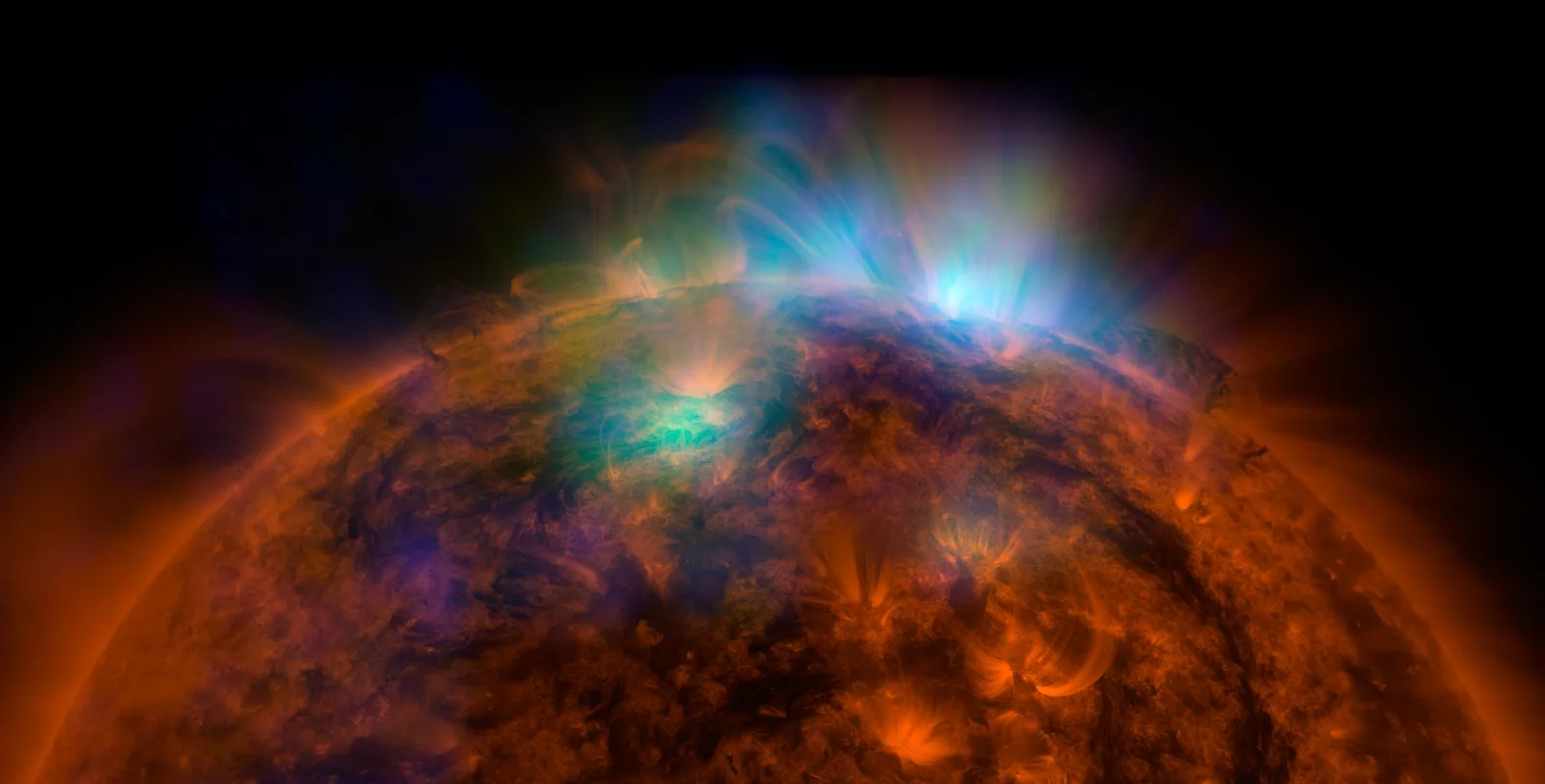
The Ghost Particles Passing Through You
Right now, trillions of them are streaming through your body every second, and almost none will touch a single atom. Catching a few has let us see inside the Sun and watch a star explode.