Topic Cluster

Earth & Deep Time

How far back in our planet's 4.6-billion-year history could a modern human survive? What ended 96 percent of marine life 252 million years ago? And what is the cosmic inventory of things that could still finish us off?

Earth is 4.54 billion years old, and for most of that time it was uninhabitable to anything that breathes oxygen. The atmosphere we depend on did not exist for the first two billion years of the planet's history. It then took another billion and a half years to stabilize at the levels modern human metabolism requires. And a 2021 paper in Nature Geoscience calculated, with uncomfortable precision, that the oxygen window is closing — in roughly 1.08 billion years, photosynthesis will collapse and the atmosphere will return to the methane-dominated chemistry of the ancient Archaean. We are living near the end of the breathable era, not the beginning.

The intervening four and a half billion years contain at least five mass extinction events. The worst is not the one that killed the dinosaurs. The Permian-Triassic extinction of 252 million years ago — the Great Dying — erased 96 percent of marine species and 70 percent of terrestrial vertebrates. The cause was not an asteroid. It was the Siberian Traps, a slow-motion volcanic eruption that lasted two million years, released enough carbon dioxide to acidify the oceans, and crashed the global oxygen supply. The closest geological analog to what is happening now is the worst day in the planet's history, and it lasted longer than our entire species has been around.

The deep-time picture frames a sharper question: how far back could a hundred modern humans, armed only with stone-age tools, actually survive if dropped into Earth's past? The honest answer, based on atmospheric composition and oxygen partial pressures reconstructed from the GEOCARB and COPSE proxy models, is roughly 298 million years ago — the late Carboniferous. Anything earlier, and the air itself becomes lethal. Anything earlier still, and there is no breathable atmosphere at all.

And then there is the question of what could end us next. The list is well-catalogued. Supervolcanoes. Asteroid impacts. Gamma-ray bursts from nearby supernovae. Close stellar passes — the star Gliese 710 will pass within 0.06 light-years of the Sun in roughly 1.3 million years, almost certainly perturbing the Oort Cloud and sending a wave of long-period comets sunward. The articles below cover each entry on the inventory, with the timescales attached.

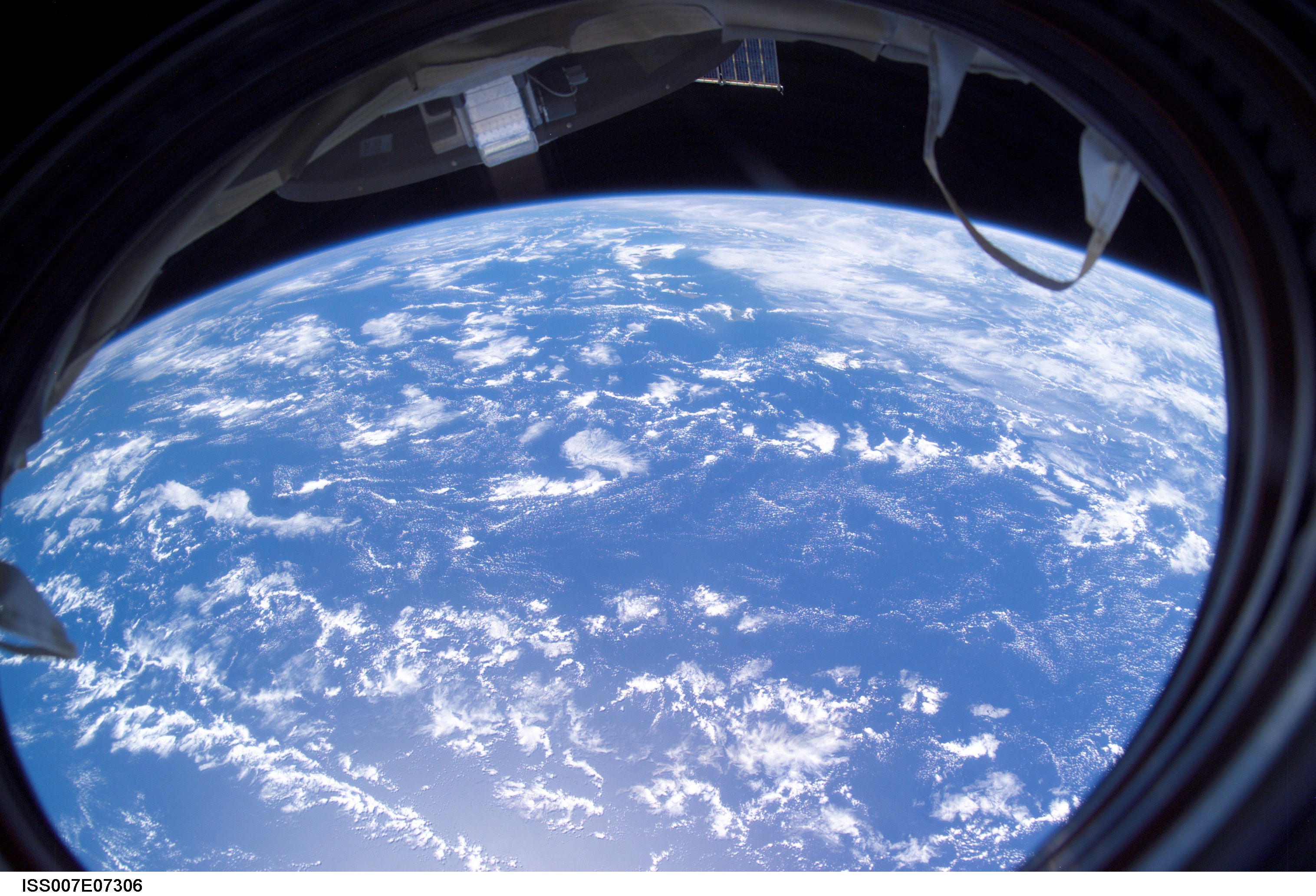
Earth photographed from the International Space Station showing the blue oxygen atmosphere Cosmology · Earth Science

Earth's Oxygen Is Running Out — Just Not on a Human Schedule

The air you are breathing right now took 2.5 billion years to accumulate. It will be gone in roughly 1.08 billion more. A study in Nature Geoscience has calculated, with uncomfortable precision, when Earth's atmosphere will return to the oxygen-starved conditions of the ancient Archaean.
April 20, 2026 15 min read
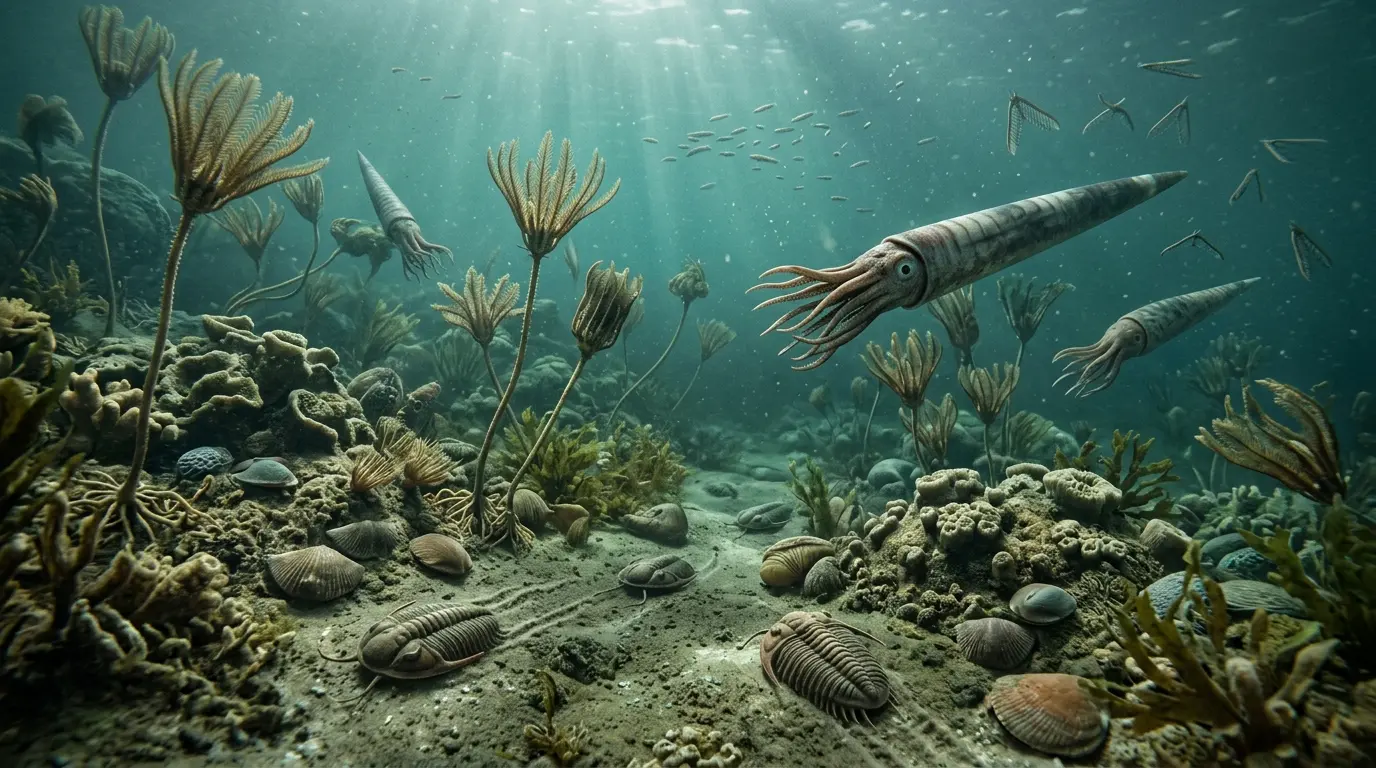
Reconstruction of a late Paleozoic Earth landscape with giant tree ferns Cosmology · Paleoclimate · Habitability

How Far Back in Earth's History Could a Human Community Actually Survive?

Take a hundred modern humans, give them stone-age tools, and drop them into a random point in Earth's 4.6 billion-year history. The honest floor is roughly 298 million years ago. Anything earlier, and the air itself would kill them.
May 13, 2026 14 min read
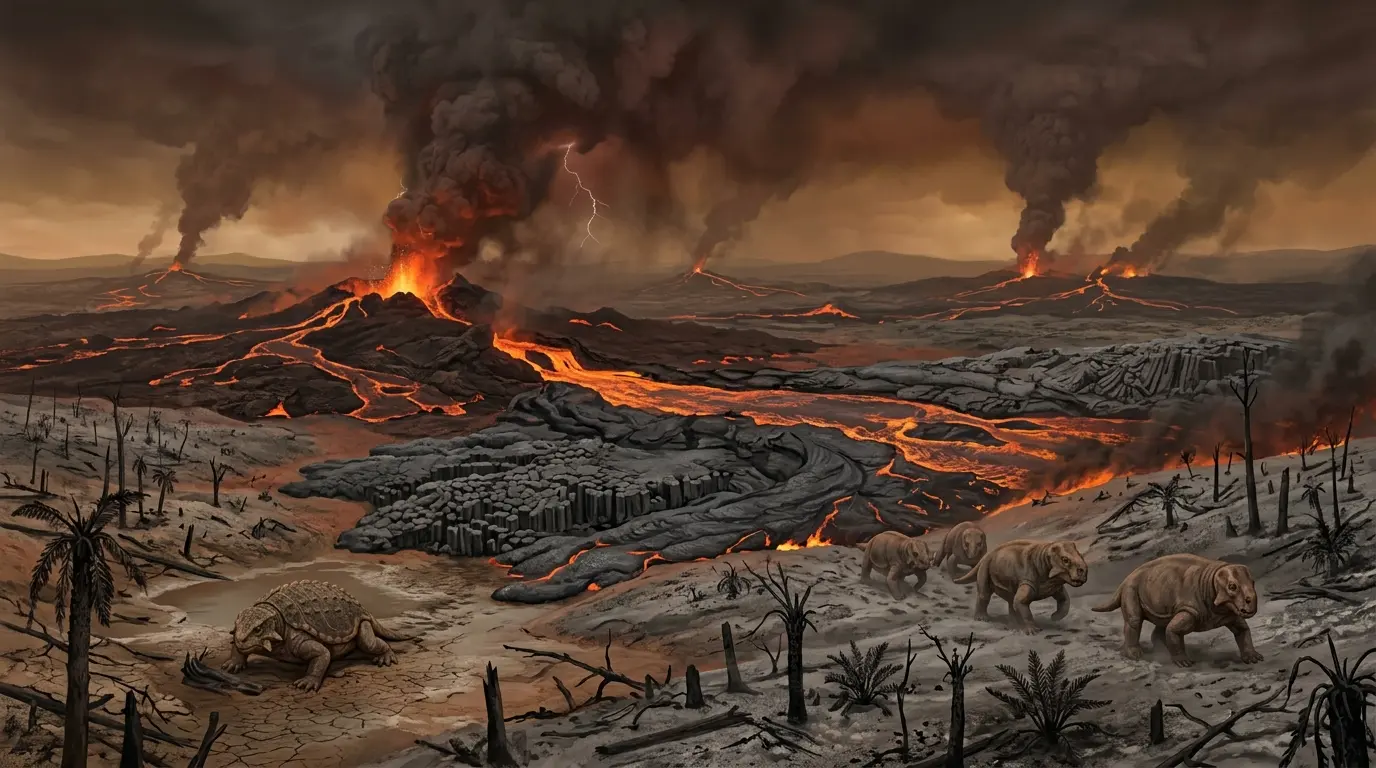
Aerial view of the Siberian Traps — remnants of the eruption that triggered the Permian-Triassic mass extinction Cosmology · Mass Extinction · Paleoclimate

The Worst Day in Earth's History Lasted Two Million Years

252 million years ago, an event the paleontologists now call simply The Great Dying erased 96 percent of all marine species. The cause was something the planet itself did to itself — a slow-motion volcanic eruption in what is now Siberia.
May 14, 2026 15 min read
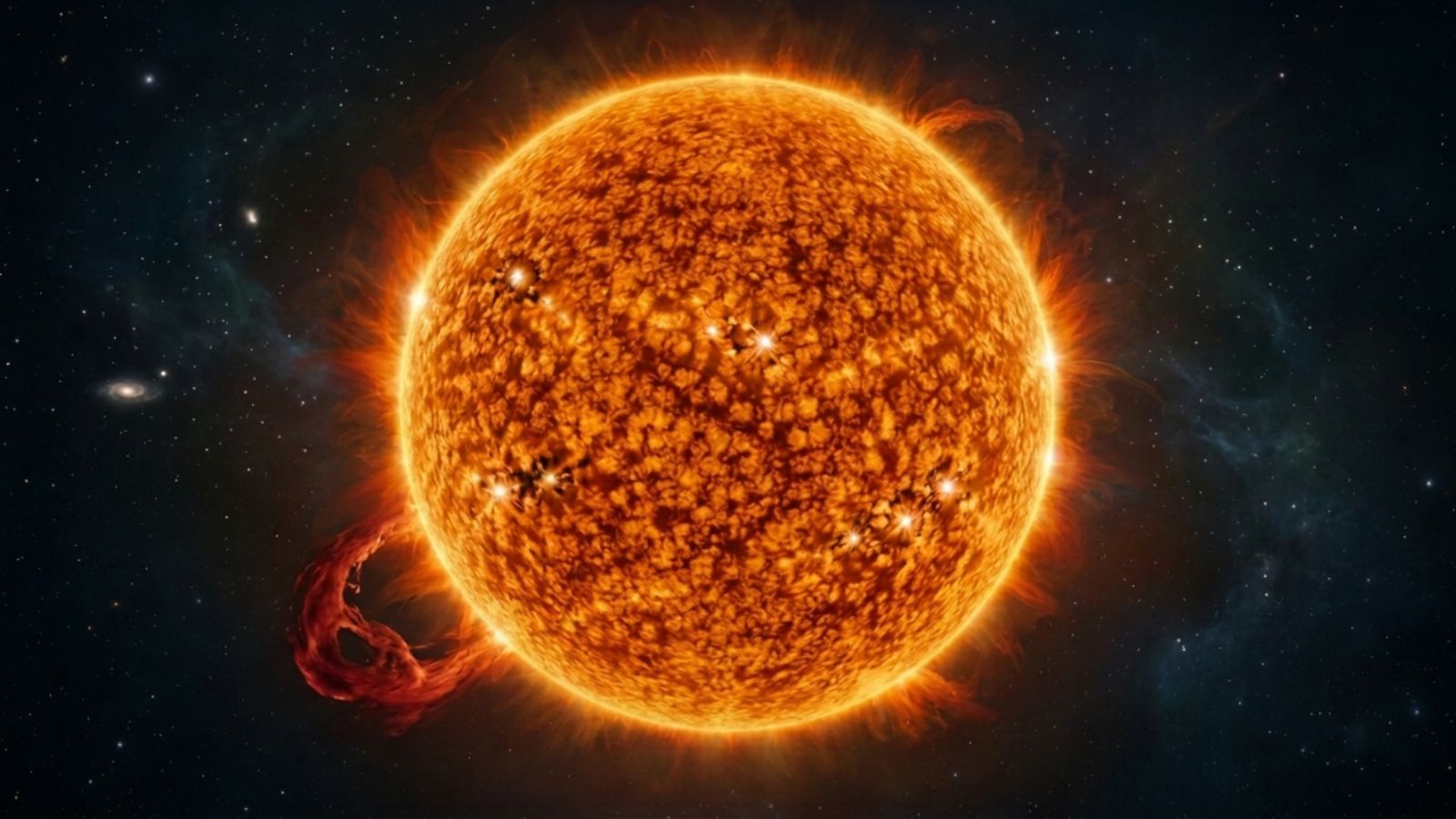
Artist's impression of a close stellar passage perturbing the Sun's outer Oort Cloud Cosmology · Existential Risk · Astrobiology

How Long Could Humanity Last? — A Cosmic Inventory of Things That Could End Us

Roughly 74,000 years ago, our species nearly went extinct. The list of things that could finish what Toba started is well-catalogued, the timescales are surprisingly precise, and one of the entries is a star that will pass 0.06 light-years from the Sun in roughly 1.3 million years.

May 3, 2026 17 min read