Somewhere in the last billion years, two black holes finished a dance that had lasted eons. In their final tenth of a second they whirled around each other hundreds of times, faster and faster, until they touched and became one. The collision released more power than all the stars in the observable universe combined, not as light, which black holes do not emit, but as gravitational waves: ripples in the fabric of space itself. On Earth, that cataclysm registered as a faint, rising chirp, a shiver in a laser beam a fraction the width of a proton.
For most of the last decade, catching such a chirp was a rare event worth a press conference. That era is over. In early 2026 the LIGO-Virgo-KAGRA collaboration released its fourth Gravitational-Wave Transient Catalog, GWTC-4, and in a single stroke more than doubled the entire recorded history of the field. Gravitational-wave astronomy has stopped counting events one at a time. It has started taking a census.
A catalog that doubled the record
GWTC-4 added 128 new gravitational-wave candidates, drawn from the first nine months of the detectors' fourth observing run, between May 2023 and January 2024. Before it, the running total across all previous runs stood at 90. Afterward it was 218. In other words, the observatories detected more collisions in nine months than humanity had recorded in the entire history of the science up to that point.
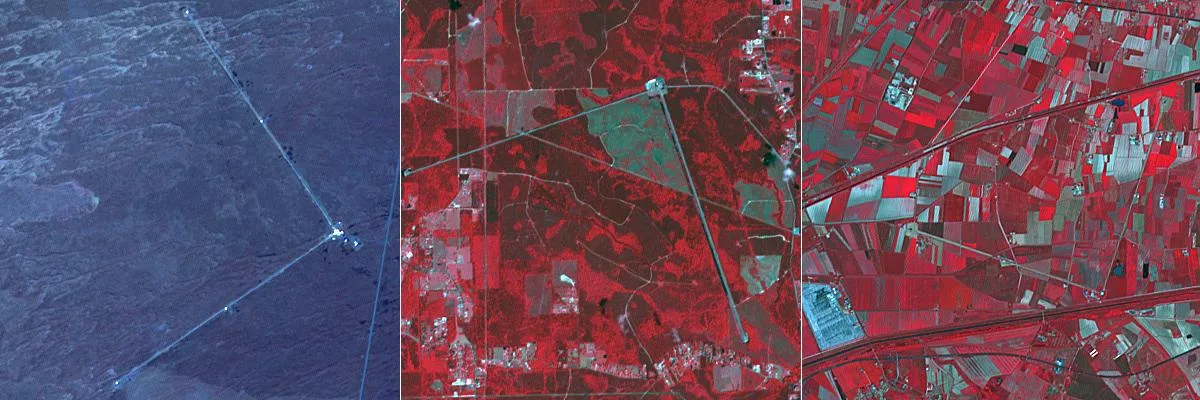
The instruments behind the surge are the two LIGO detectors in the United States, Virgo in Italy, and KAGRA in Japan, each an L-shaped tunnel kilometers on a side, measuring the passage of a gravitational wave by the almost inconceivably small stretching and squeezing it produces in a laser's path. Upgrades between observing runs have made them steadily more sensitive, and sensitivity translates directly into volume: a detector that can hear twice as far can survey eight times as much space, and so hears many times as many events.
The observatories detected more black hole collisions in nine months than the entire field had recorded before.
The monster near the mass gap
The catalog's most striking entry is a collision catalogued as GW231123. It joined two black holes of roughly 130 times the mass of the Sun each, among the most massive ever caught merging. That figure is not just impressive; it is a problem. Theory predicts a forbidden zone, a range of masses in which black holes should not be able to form directly from a single dying star. Stars massive enough to leave behind holes of this size are expected to blow themselves apart entirely in a runaway thermonuclear event called a pair-instability supernova, leaving nothing behind at all.
So where did a 130-solar-mass black hole come from? The leading answer is that it was not born from a star. It was built from earlier black holes. In dense stellar environments, black holes can merge, and the product of one merger can go on to merge again, climbing the mass ladder step by step. Astronomers call these hierarchical mergers, and GWTC-4 strengthened the evidence that some of the black holes now colliding are themselves the remnants of previous collisions: black holes made of black holes.
Reading a population, not an event
The real power of a catalog this size is statistical. A single detection tells you a story; two hundred tell you a distribution. With hundreds of mergers in hand, astronomers can ask how black-hole masses are spread, how fast the holes spin, and whether different kinds of pairs came from different origins. The catalog contained a black hole spinning at close to 40 percent of the speed of light, and pairs with lopsided masses in a two-to-one ratio, each data point a constraint on the messy astrophysics of how massive stars live and die.
Those patterns are beginning to reveal that black holes do not all form the same way. Systems in different mass ranges appear to spin differently, a hint that they were assembled through distinct channels, some from pairs of stars born together, others from black holes that found each other later in crowded clusters. The census is turning a zoo of individual oddities into a demographic map.
Weighing the universe with a chirp
Gravitational waves also carry a second gift. Each merger is a standard siren: from the shape of its chirp, physicists can calculate how far away it happened, directly, without relying on the usual ladder of astronomical distance estimates. Pair that distance with the speed at which the host galaxy is receding, and you get an independent measurement of the Hubble constant, the number that sets the expansion rate of the universe. The GWTC-4 analysis returned a value near 76 kilometers per second per megaparsec.
That matters because cosmology is in the middle of a crisis over exactly this number, with measurements from the early universe and the local universe stubbornly refusing to agree. Gravitational-wave sirens offer a completely independent referee, one that owes nothing to the assumptions behind the other methods. For now the uncertainties are still large, but they shrink with every new detection, and detections are no longer scarce.
Each collision is a fossil of stellar death and a ruler for the cosmos at once. We have gone from hearing them one at a time to counting them by the hundred.
Frequently Asked Questions
What is GWTC-4?
GWTC-4 is the fourth Gravitational-Wave Transient Catalog from the LIGO-Virgo-KAGRA collaboration, released in early 2026. It added 128 new gravitational-wave detections from the detectors' fourth observing run, more than doubling the recorded total to 218 events.
What are gravitational waves?
Gravitational waves are ripples in spacetime produced by violent cosmic events, such as two black holes or neutron stars spiraling together and merging. They were predicted by Einstein in 1916 and first detected directly in 2015 by the LIGO observatories.
Why is the black hole GW231123 a problem?
GW231123 merged two black holes of roughly 130 solar masses each. Stars massive enough to leave black holes that large are expected to destroy themselves completely in a pair-instability supernova, leaving no remnant. Their existence suggests these black holes were built by earlier mergers rather than born from single stars.
What is a hierarchical black hole merger?
It is a merger in which at least one black hole is itself the product of a previous merger. In dense star clusters, black holes can combine repeatedly, climbing to masses that no single collapsing star could produce. GWTC-4 added evidence that some detected black holes formed this way.
How do gravitational waves measure the universe's expansion?
Each merger acts as a standard siren: the shape of its signal reveals its distance directly. Combined with how fast the host galaxy recedes, this yields an independent estimate of the Hubble constant. The GWTC-4 analysis found a value near 76 km/s/Mpc, an independent check on the disputed cosmic expansion rate.
Continue Exploring
- The Little Red Dots That Shouldn't ExistWhen JWST looked deep into the early universe, it found a swarm of tiny, intensely red points of light. The leading...
- The Black Hole Too Small to Be a Star's GhostStars cannot leave a black hole lighter than the Sun. In late 2025 a gravitational-wave detector caught a signal...
- The Collision That Came In SidewaysTheory assumed colliding compact objects settle into near-perfect circles before merging. Then astronomers reanalyzed a...
- The Star We Saw Before It DiedFor the first time, JWST identified the exact star that would become a supernova: a red supergiant hidden inside a...
Sources
- LIGO-Virgo-KAGRA Collaboration (2026). GWTC-4.0: the fourth Gravitational-Wave Transient Catalog. Astrophysical Journal (submitted). detections overview.
- MIT News (2026). "New catalog more than doubles the number of gravitational-wave detections." link.
- Abbott et al. (2016). "Observation of Gravitational Waves from a Binary Black Hole Merger." Physical Review Letters. link.